AI Chatbots Software Resources
Articles, Glossary Terms, Discussions, and Reports to expand your knowledge on AI Chatbots Software
Resource pages are designed to give you a cross-section of information we have on specific categories. You'll find articles from our experts, feature definitions, discussions from users like you, and reports from industry data.
AI Chatbots Software Articles
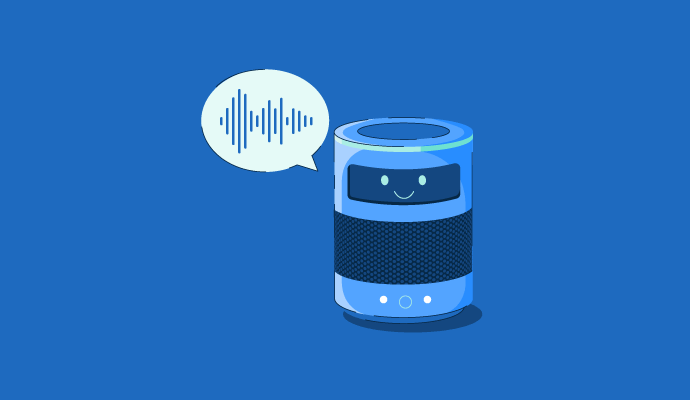
What Is A Voice Assistant? Your Guide to the Talking Tech
5 Methods for Tracking Chatbot Success Rates (+Tool Suggestions)
AI Chatbots Software Glossary Terms
AI Chatbots Software Discussions
"Secure" gets thrown around loosely in this category, so it's worth being specific about what that actually needs to mean before naming any platform. What we're hoping to find:
- Documented, third-party-verified compliance (SOC 2, GDPR, CCPA) rather than a vendor's own claim of being "secure"
- Clear handling of regulated industries specifically, not just general consumer data
- A fallback to a human when the bot hits something it shouldn't handle alone, rather than guessing with sensitive information
- Actual reviewer evidence of this holding up in practice, not just a compliance badge on a pricing page
Within the AI Chatbots category:
- Tidio: Lists SOC 2 Type 2, GDPR, CCPA, EU-US Data Privacy Framework, and CPRA compliance directly, and reviewers confirm the AI agent defers to a human rather than fabricating answers when it's uncertain, which matters when the conversation touches account or order data.
- Podium: One insurance-industry reviewer specifically flagged that onboarding didn't account for TCPA opt-in regulations unique to their sector, requiring extra internal work to stay compliant. Worth treating as a real gap to ask about directly if your industry has its own regulatory layer beyond general data privacy.
For anyone in a regulated industry who's actually vetted one of these: did the vendor's compliance documentation hold up under your own legal or compliance team's review, or did you find gaps once you looked closely?
The strongest test is whether the chatbot’s security controls hold up beyond baseline privacy certifications. I’d look at data retention, model-training policies, access controls, audit logs, and escalation behavior alongside SOC 2 or GDPR claims—especially for healthcare, finance, or other regulated workflows.
"Secure" gets thrown around loosely in this category, so it's worth being specific about what that actually needs to mean before naming any platform. What we're hoping to find:
- Documented, third-party-verified compliance (SOC 2, GDPR, CCPA) rather than a vendor's own claim of being "secure"
- Clear handling of regulated industries specifically, not just general consumer data
- A fallback to a human when the bot hits something it shouldn't handle alone, rather than guessing with sensitive information
- Actual reviewer evidence of this holding up in practice, not just a compliance badge on a pricing page
Within the AI Chatbots category:
- Tidio: Lists SOC 2 Type 2, GDPR, CCPA, EU-US Data Privacy Framework, and CPRA compliance directly, and reviewers confirm the AI agent defers to a human rather than fabricating answers when it's uncertain, which matters when the conversation touches account or order data.
- Podium: One insurance-industry reviewer specifically flagged that onboarding didn't account for TCPA opt-in regulations unique to their sector, requiring extra internal work to stay compliant. Worth treating as a real gap to ask about directly if your industry has its own regulatory layer beyond general data privacy.
For anyone in a regulated industry who's actually vetted one of these: did the vendor's compliance documentation hold up under your own legal or compliance team's review, or did you find gaps once you looked closely?
The strongest test is whether the chatbot’s security controls hold up beyond baseline privacy certifications. I’d look at data retention, model-training policies, access controls, audit logs, and escalation behavior alongside SOC 2 or GDPR claims—especially for healthcare, finance, or other regulated workflows.
Trust here means something specific: a leader needs confidence that the bot won't invent answers, won't leave customers stranded, and will actually reduce ticket load rather than just relocate it. Looking at reviewer accounts in the AI Chatbots category, two names came up most consistently for genuine customer support trust: Tidio and Podium.
- Tidio: Reviewers highlight the ability to reassign, reopen, and track chats without creating duplicate tickets, and its Lyro AI agent hands off to a human when it's uncertain rather than guessing, which reviewers credit with building trust between the bot and customers.
- Podium: Reviewers in regulated industries like insurance specifically value the phone call recording and transcript features to avoid misunderstandings and describe them as centralizing customer communication that used to be scattered across tools.
For leaders who've rolled one of these out company-wide: how long did it take before your team actually trusted the bot's handoffs enough to stop double-checking every escalation?
The "when do teams stop verifying every escalation" question usually resolves through sampling, not time. Leaders stop checking every handoff once they can check a random slice of them cheaply, which means the underrated feature is whether escalations come with the bot's reasoning attached: what it was asked, what it was unsure about, why it handed off. A bot that escalates correctly but opaquely gets verified forever; one whose handoffs are auditable in thirty seconds earns trust in weeks. Has anyone actually formalized that, like reviewing 10% of handoffs weekly until the error rate justified stopping?