Virtual Desktop Infrastructure (VDI) Software Resources - Page 4
Articles, Glossary Terms, Discussions, and Reports to expand your knowledge on Virtual Desktop Infrastructure (VDI) Software
Resource pages are designed to give you a cross-section of information we have on specific categories. You'll find articles from our experts, feature definitions, discussions from users like you, and reports from industry data.
Virtual Desktop Infrastructure (VDI) Software Articles

How to Turn VDI Into a Remote Worker's Dream

What Is Software-defined Storage? Benefits and Best Solutions

How to Stay Organized When Closing Books Remotely
How VDI Security Can Offer Your Business Peace of Mind
VDI Implementation: It Doesn't Have to Be a Headache

How COVID-19 Is Impacting Data Professionals

The G2 on the Cloud: The History of Cloud Adoption
Virtual Desktop Infrastructure (VDI) Software Glossary Terms
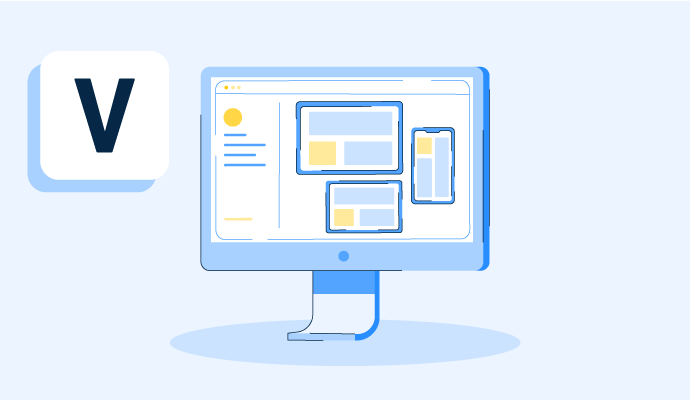
A virtual desktop is an operating system hosted on a central server and streamed to any device. Learn how virtual desktops work, plus their pros and cons.

Hyperconverged storage is an element of hyperconverged infrastructure. Discover how hyperconvergence works and helps organizations scale.
Virtual Desktop Infrastructure (VDI) Software Discussions
The uptime and data loss question is where marketing claims and review reality tend to diverge the most. Every VDI vendor promises reliability. What reviewers actually describe is more nuanced and worth paying attention to.
From reviews in the virtual desktop infrastructure (VDI) category, where reliability and data protection are mentioned:
- V2 Cloud: The reliability pattern in reviews is notably consistent. Multiple reviewers describe it as a platform where "nothing breaks," and one described great uptime as the primary reason for staying after two-plus years. One reviewer at an accounting firm specifically described it as preventing client files from being stored on personal computers, which is both a data-loss prevention and a compliance tool. The support team's response time is what reviewers cite when something does go wrong: phone and chat responses are described as fast and effective at resolving issues.
- Nerdio Manager inherits the Azure infrastructure SLA. Reviewers describe using it to enforce consistent security and compliance standards across all desktops simultaneously, with monitoring and visibility into endpoint performance. One reviewer described the platform as keeping everything organized so that when something goes wrong, the source is visible rather than requiring a search through disconnected systems. The autoscaling behavior is the one area reviewers flag for careful setup: misconfigured scaling rules can have downstream cost and availability effects.
- Kasm Workspaces: Data loss prevention is built into the product architecture. Ephemeral sessions mean that by default, nothing persists after a session ends, which is the DLP model some security teams explicitly want. Reviewers describe using this intentionally: spin up a session, do the work, close it, and nothing survives. For organizations handling sensitive files or working in regulated environments, this is the most defensible data posture in the category.
- Citrix DaaS: Enterprise reviewers describe it as the solution that keeps large organizations running when local hardware fails. Centralized management means a machine issue doesn't become a loss of user productivity, because the desktop exists in the cloud. The performance-related criticisms (latency under bandwidth stress, Teams audio issues) don't affect uptime per se but do affect the reliability of the user experience.
When you're evaluating uptime promises, are you looking at infrastructure SLAs or at actual user-reported experience consistency? Those are different numbers, and they tell different stories.
Your distinction between SLA and lived consistency is useful and often challenging for vendors. Workspot, which reports 99.95% availability, supports this with positive reviews, showing improved work-from-home setups and fewer on-prem troubleshooting issues. However, its specs are limited to prebuilt VM sizes, so while consistency is high, the maximum is lower. The SLA sets the minimum, and reviews indicate how closely daily performance matches it.
I’d look at both, but actual user-reported consistency would matter more after confirming the SLA meets the contractual requirement. A 99.9% infrastructure SLA doesn’t necessarily mean users experience 99.9% productive availability. I’d want to know how often sessions disconnect, performance becomes unusable, or recovery requires support intervention alongside the formal uptime figure.
Kasm Workspaces building data loss prevention into the architecture itself through ephemeral sessions, so nothing persists once the session closes, seems like a more defensible posture for regulated or sensitive work than relying on policy alone.
The mid-market VDI question looks different from both the SMB and enterprise versions. You've got enough users that individual management doesn't scale, but you probably don't have a dedicated VDI team. Managers at this size are looking for something that can be administered by a generalist IT person without weeks of training, with predictable costs, and that doesn't require an emergency whenever someone leaves or joins.
Looking at the Mid-Market Grid for virtual desktop infrastructure (VDI) and filtering reviews by mid-market company segments, three platforms stand out: Nerdio Manager, VirtualBox, and Citrix DaaS.
- Nerdio Manager: The only Leader on the Mid-Market Grid, and the review evidence explains why. Managers at growing companies describe it as solving the problem of managing cloud workstations for a distributed workforce without manually setting up each machine. One review described the platform bringing structure to virtual desktop management that didn't require constant babysitting of individual configurations. For Microsoft-based environments, the Azure cost savings from autoscaling are particularly relevant at mid-market scale, where cloud spend is meaningful but not yet managed by a dedicated FinOps team.
- VirtualBox: A Contender on the Mid-Market Grid, with 95 mid-market reviews, the second-highest segment count in this category. Mid-market reviewers describe it as the go-to tool for running multiple OS environments on existing hardware, particularly for development, testing, and cross-platform work. The base product is free and open source, which is a meaningful cost consideration at this scale. The reviewers' most-often-cited limitation is that it's a workstation hypervisor, not a fleet management platform, so it works well for individual use cases but doesn't scale to centralized desktop management without additional tooling.
- Citrix DaaS: 141 mid-market reviews, the highest segment count. Mid-market managers describe it as what they use when they need consistent remote access for a large group of users across locations. The recurring concern at this scale is cost: licensing is designed for enterprise-scale deployments, and mid-market teams cite per-user licensing as a main reason they evaluate alternatives.
- Amazon WorkSpaces: Listed as a Mid-Market Contender (G2 score 63). Worth evaluating for AWS-centric environments. The integration with existing AWS infrastructure is the primary mid-market draw; the satisfaction score (39 in this segment) reflects trade-offs in usability that reviewers consistently flag.
For mid-market IT managers who've evaluated more than one of these, what was the deciding factor? Was it pricing structure, ease of management, or something about how the platform handles scale?
It is also worth mentioning V2 Cloud, which offers straightforward flat pricing and a low management burden, as well as Dizzion, suited for teams that require multi-cloud capabilities and compliance controls without maintaining their own infrastructure.
The mid-market VDI question looks different from both the SMB and enterprise versions. You've got enough users that individual management doesn't scale, but you probably don't have a dedicated VDI team. Managers at this size are looking for something that can be administered by a generalist IT person without weeks of training, with predictable costs, and that doesn't require an emergency whenever someone leaves or joins.
Looking at the Mid-Market Grid for virtual desktop infrastructure (VDI) and filtering reviews by mid-market company segments, three platforms stand out: Nerdio Manager, VirtualBox, and Citrix DaaS.
- Nerdio Manager: The only Leader on the Mid-Market Grid, and the review evidence explains why. Managers at growing companies describe it as solving the problem of managing cloud workstations for a distributed workforce without manually setting up each machine. One review described the platform bringing structure to virtual desktop management that didn't require constant babysitting of individual configurations. For Microsoft-based environments, the Azure cost savings from autoscaling are particularly relevant at mid-market scale, where cloud spend is meaningful but not yet managed by a dedicated FinOps team.
- VirtualBox: A Contender on the Mid-Market Grid, with 95 mid-market reviews, the second-highest segment count in this category. Mid-market reviewers describe it as the go-to tool for running multiple OS environments on existing hardware, particularly for development, testing, and cross-platform work. The base product is free and open source, which is a meaningful cost consideration at this scale. The reviewers' most-often-cited limitation is that it's a workstation hypervisor, not a fleet management platform, so it works well for individual use cases but doesn't scale to centralized desktop management without additional tooling.
- Citrix DaaS: 141 mid-market reviews, the highest segment count. Mid-market managers describe it as what they use when they need consistent remote access for a large group of users across locations. The recurring concern at this scale is cost: licensing is designed for enterprise-scale deployments, and mid-market teams cite per-user licensing as a main reason they evaluate alternatives.
- Amazon WorkSpaces: Listed as a Mid-Market Contender (G2 score 63). Worth evaluating for AWS-centric environments. The integration with existing AWS infrastructure is the primary mid-market draw; the satisfaction score (39 in this segment) reflects trade-offs in usability that reviewers consistently flag.
For mid-market IT managers who've evaluated more than one of these, what was the deciding factor? Was it pricing structure, ease of management, or something about how the platform handles scale?
It is also worth mentioning V2 Cloud, which offers straightforward flat pricing and a low management burden, as well as Dizzion, suited for teams that require multi-cloud capabilities and compliance controls without maintaining their own infrastructure.