



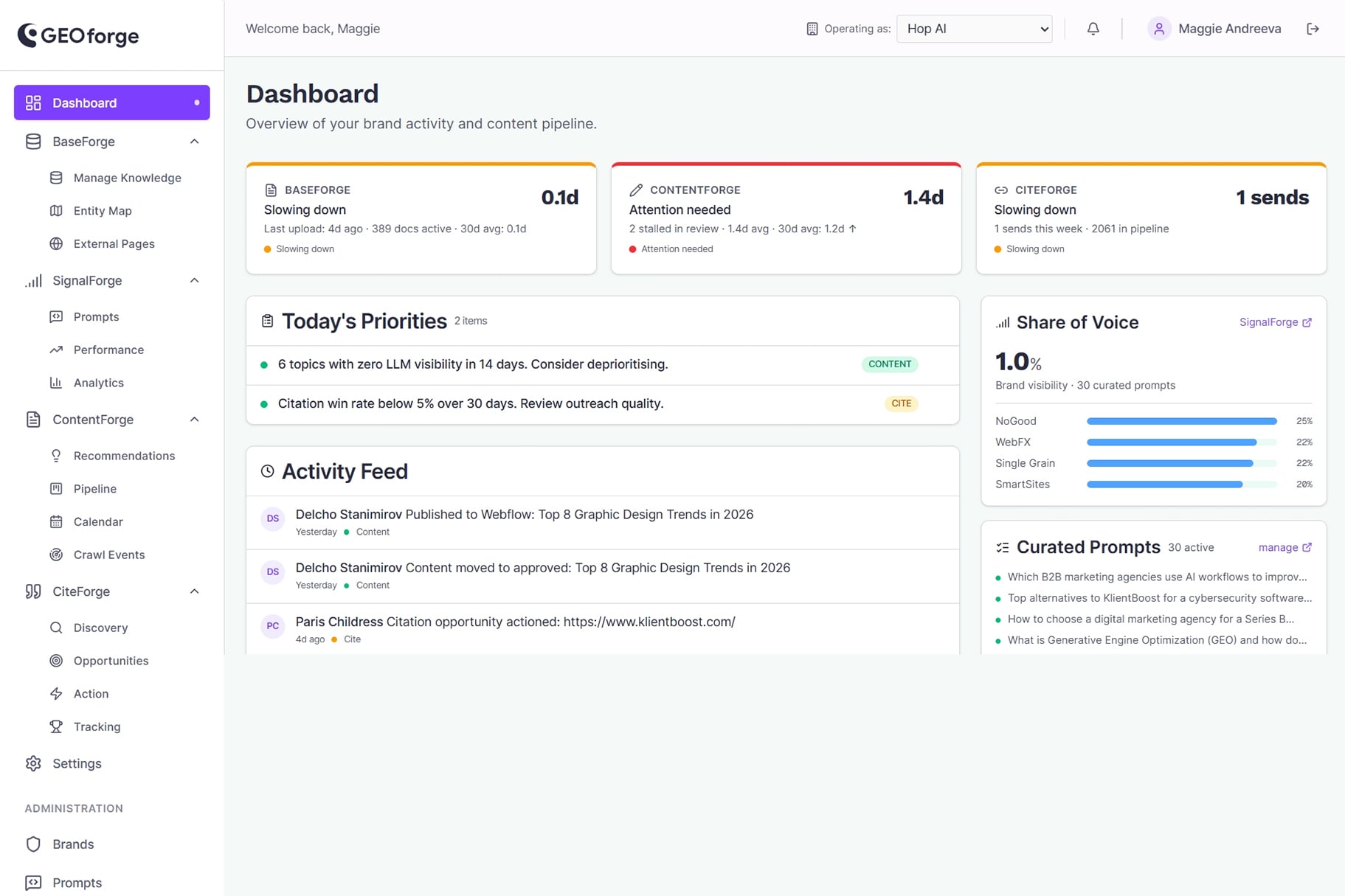
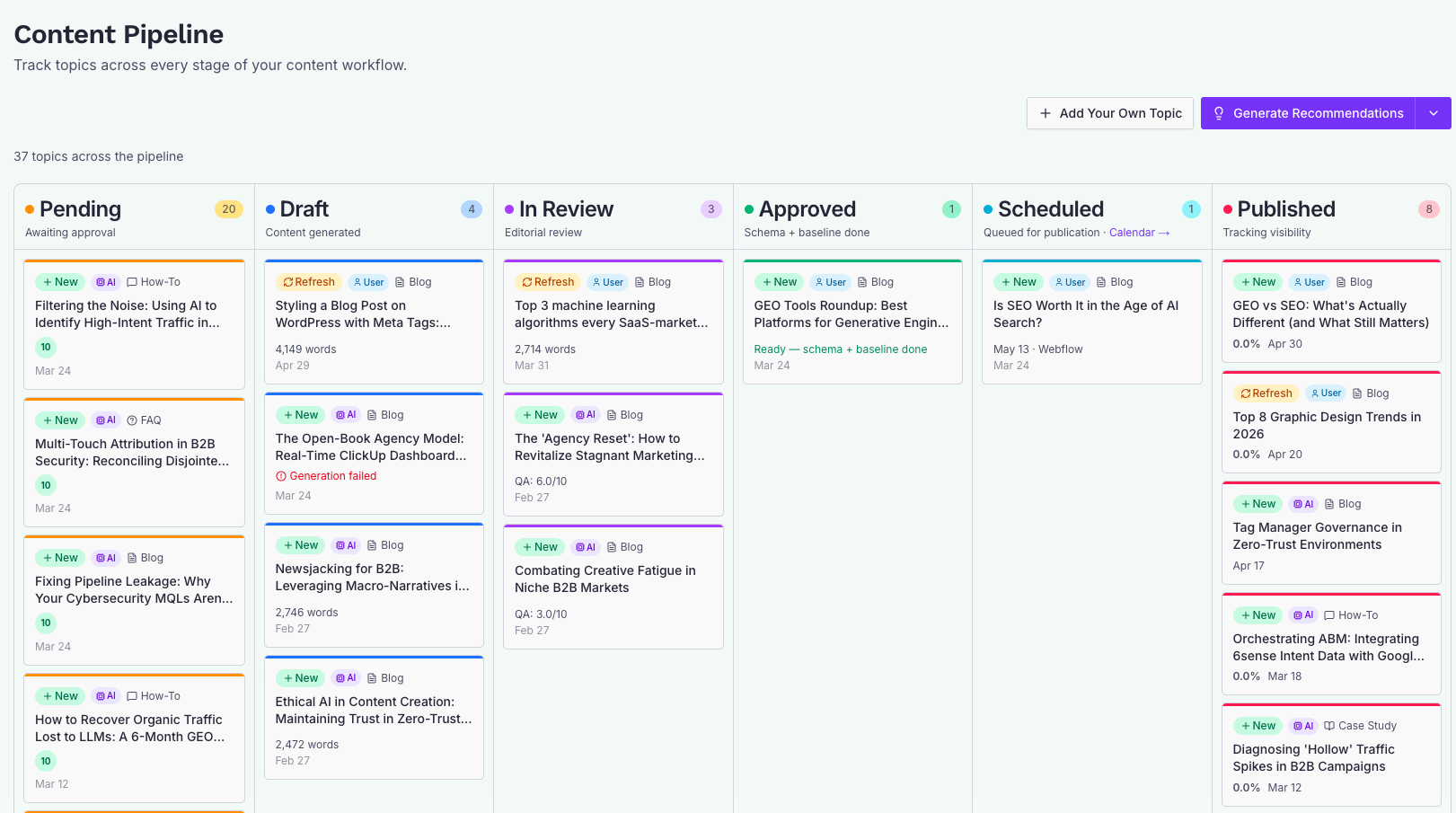

Honestly the biggest thing for us is that it gives us a number for something we used to just argue about in meetings — whether our content is actually showing up when people ask ChatGPT or Gemini about our space. Before GEOforge we'd publish stuff and just kind of hope. Now we can see the visibility move (or not move) after a piece goes live, which has changed how we pick topics.
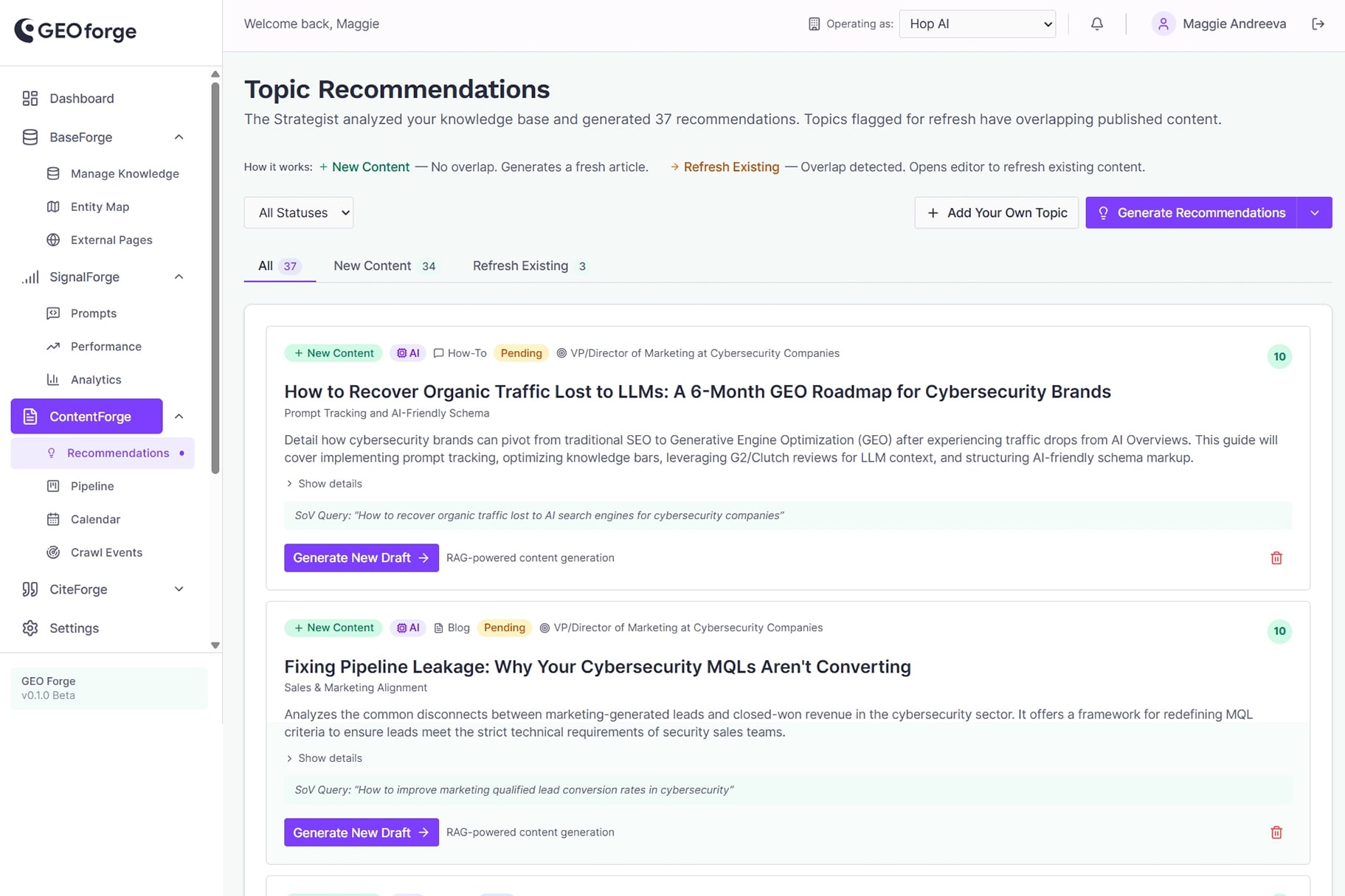
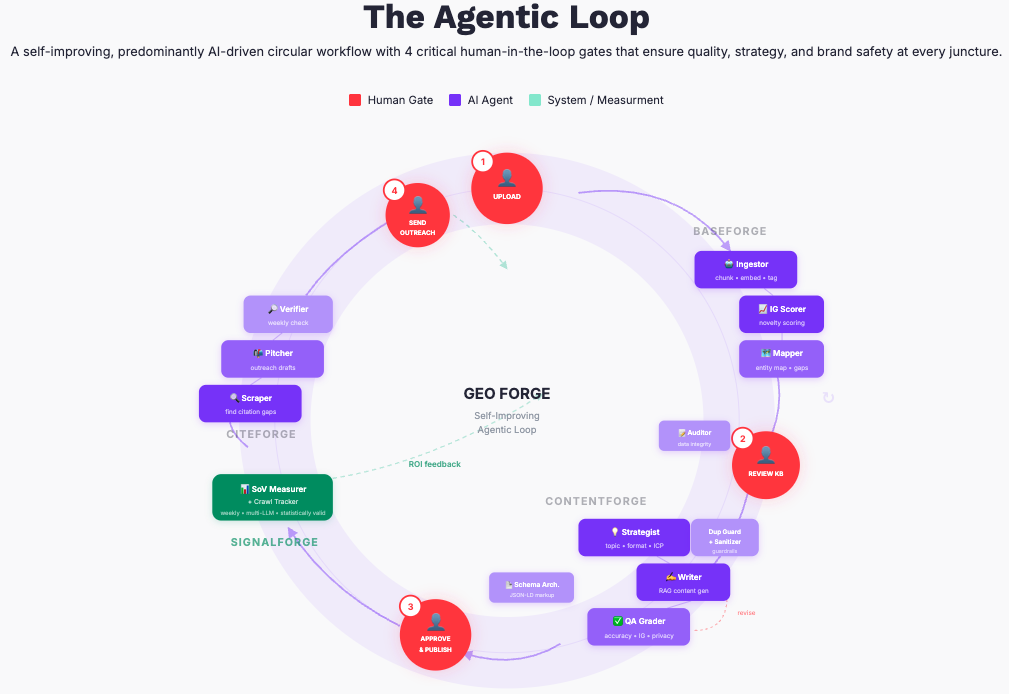
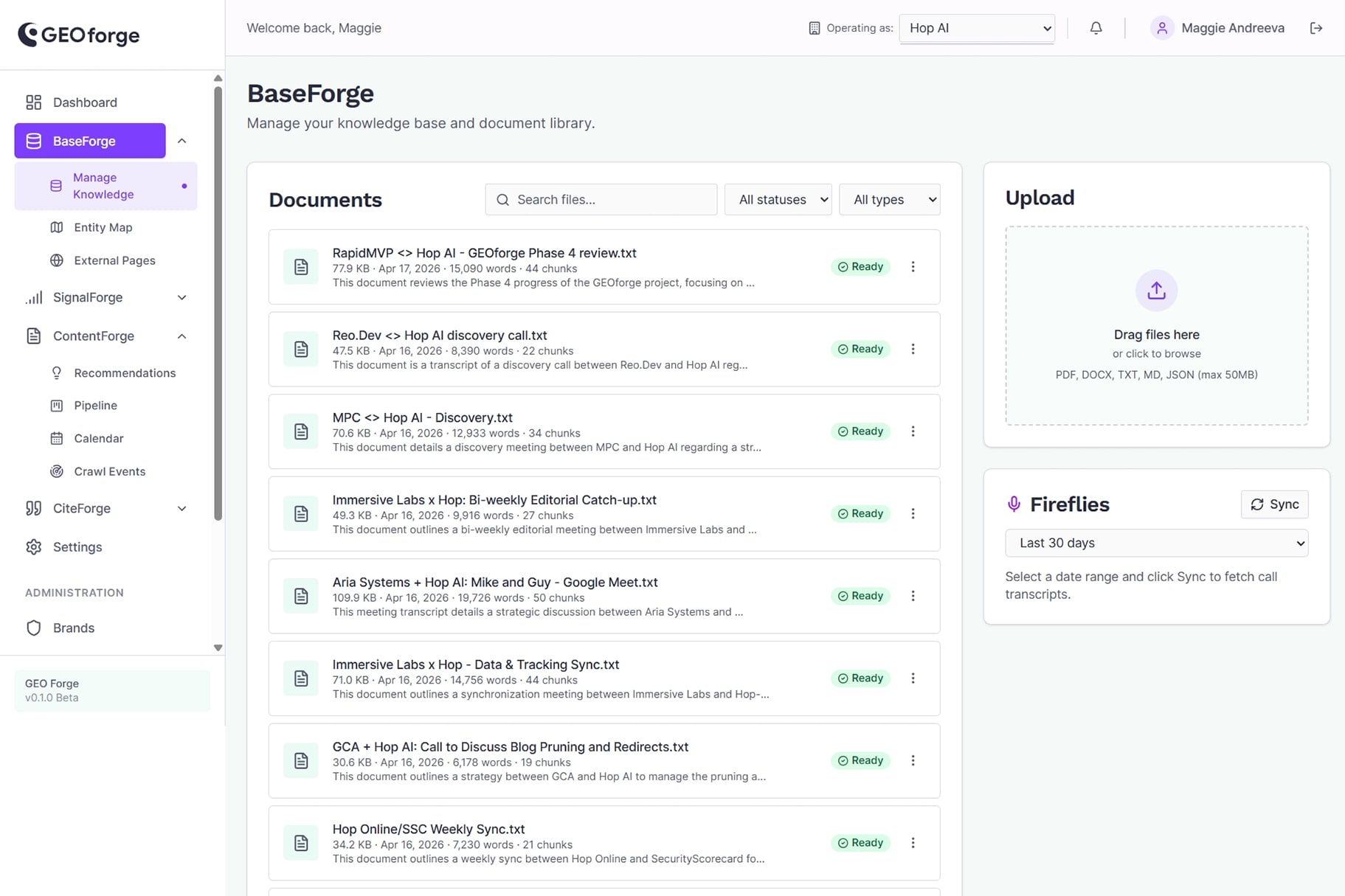
The flow from uploading our existing docs to generating new content actually grounded in them is the part I didn't expect to like as much as I do. Most AI writing tools spit out generic stuff. This one pulls from what we've already written and sounds like us, which saved our editor a ton of rewriting time.
Other things I've ended up relying on:
- The topic map view. Sounds small but seeing where we have gaps vs. where we're over-covered changed our editorial calendar pretty fast.
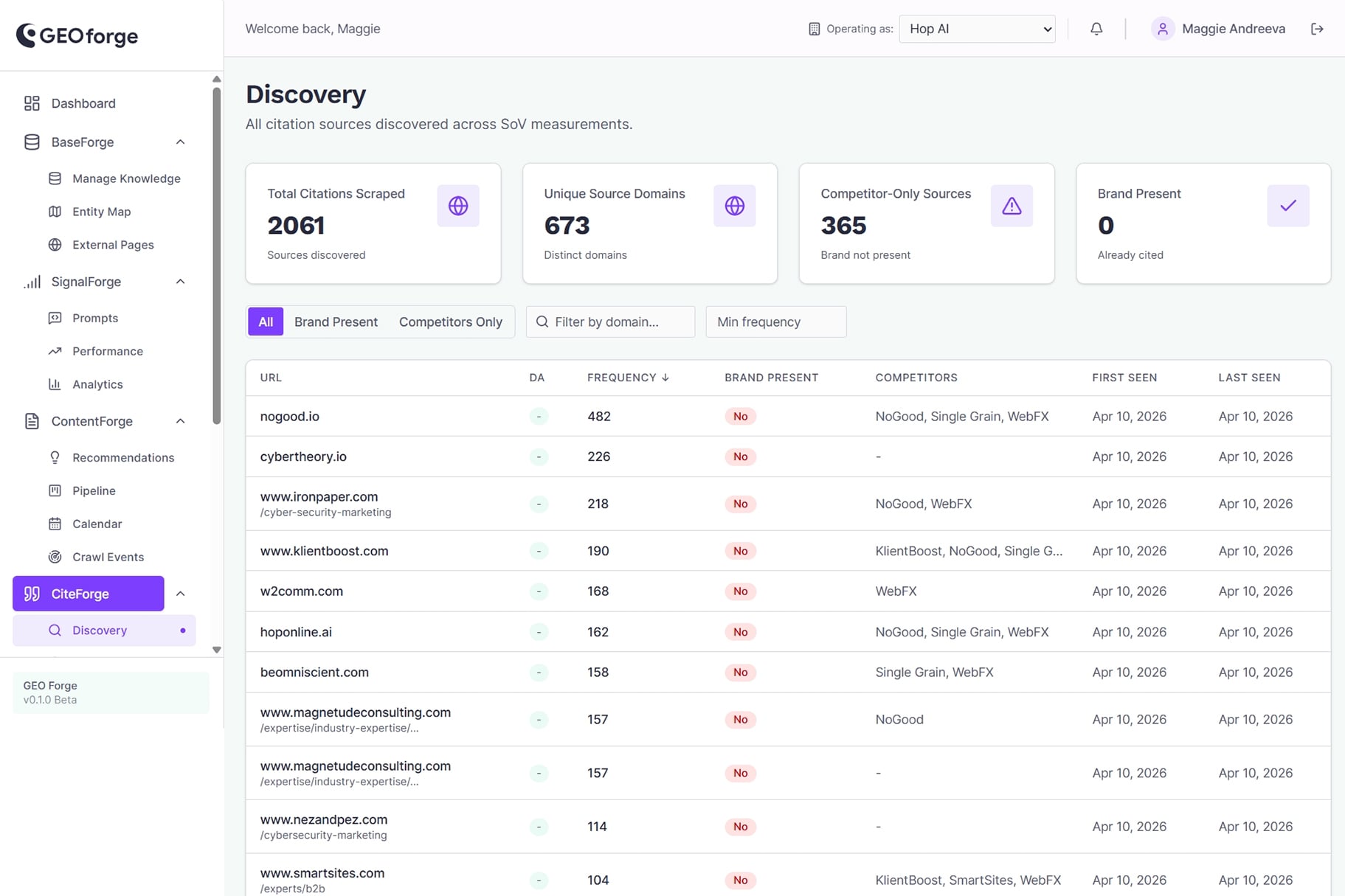
- It tracks crawls on its own. I don't have to remember to go check anything, the measurements just show up.
- Onboarding was painless. We were publishing real pieces in about a week, no long sales-engineer handholding required.
Support's been good too - actual humans, reasonable response times, didn't have to fight a chatbot to get help. Reseña recopilada por y alojada en G2.com.
The measurement side takes patience. You publish something and you're not getting a visibility number back in an hour - the cooling-off windows and crawl checks mean you're waiting a day or two before the data settles, which is the right call technically but I'd be lying if I said I wasn't refreshing the dashboard too early sometimes.
The content generator is solid but it leans on what you've fed into BaseForge, so if your source material is thin in an area, the output in that area is also thin. That's fair, but it does mean there's an upfront investment in getting your knowledge base in good shape before ContentForge really shines. Worth it, but it's not a "sign up and go" tool on day one. Reseña recopilada por y alojada en G2.com.