# Best Cryptocurrency Wallets for Small Business - Page 2

*By [Brandon Summers-Miller](https://research.g2.com/insights/author/brandon-summers-miller)*


Products classified in the overall Cryptocurrency Wallets category are similar in many regards and help companies of all sizes solve their business problems. However, small business features, pricing, setup, and installation differ from businesses of other sizes, which is why we match buyers to the right Small Business Cryptocurrency Wallets to fit their needs. Compare product ratings based on reviews from enterprise users or connect with one of G2&#39;s buying advisors to find the right solutions within the Small Business Cryptocurrency Wallets category.

In addition to qualifying for inclusion in the Cryptocurrency Wallets category, to qualify for inclusion in the Small Business Cryptocurrency Wallets category, a product must have at least 10 reviews left by a reviewer from a small business.


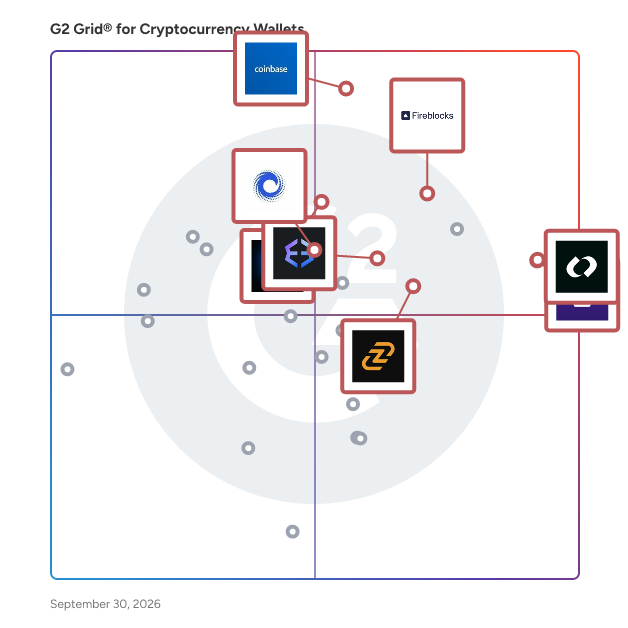
## G2 Grid® for Cryptocurrency Wallets
![G2 Grid® for Cryptocurrency Wallets plotting products by satisfaction and market presence](https://www.g2.com/categories/cryptocurrency-wallets/grids.png?focus%5B%5D=55212&focus%5B%5D=146518&focus%5B%5D=1343023&focus%5B%5D=1573377&focus%5B%5D=162649&focus%5B%5D=55190&focus%5B%5D=142528&focus%5B%5D=49492)
Highlighted products: Coinbase Wallet, Fireblocks, Dfns, Utila, Zengo Wallet, Exodus, Metamask, and BitGo.
Underlying data: [Grid® JSON](https://www.g2.com/categories/cryptocurrency-wallets/grids.json?focus%5B%5D=coinbase-wallet&amp;focus%5B%5D=fireblocks&amp;focus%5B%5D=dfns&amp;focus%5B%5D=utila&amp;focus%5B%5D=zengo-wallet&amp;focus%5B%5D=exodus-exodus&amp;focus%5B%5D=metamask&amp;focus%5B%5D=bitgo&amp;segment=small-business)


## How Many Cryptocurrency Wallets Products Does G2 Track?
**Total Products under this Category:** 125

### Category Stats (Jul 2026)
- **Average Rating**: 4.24/5 (↑0.02 vs Jun 2026) The average rating of products in this category, based on all submitted ratings
- **Top Trending Product**: Metamask (+0.32%) - Among all products in this category, Metamask recorded the largest rating increase compared to last month
*Last updated: July 16, 2026*


## How Does G2 Rank Cryptocurrency Wallets Products?

**Why You Can Trust G2's Software Rankings:**

- 30 Analysts and Data Experts
- 900+ Authentic Reviews
- 125+ Products
- Unbiased Rankings

G2's software rankings are built on verified user reviews, rigorous moderation, and a consistent research methodology maintained by a team of analysts and data experts. Each product is measured using the same transparent criteria, with no paid placement or vendor influence. While reviews reflect real user experiences, which can be subjective, they offer valuable insight into how software performs in the hands of professionals. Together, these inputs power the G2 Score, a standardized way to compare tools within every category.


---

**Sponsored**

### Fathom

Fathom is the #1-rated AI meeting partner that captures what matters and turns every conversation into clear, actionable outcomes. It surfaces decisions, makes every meeting searchable, and syncs insights directly into CRM and productivity tools – eliminating manual work. Named to G2’s 2026 Best Software Awards Top 100, and recognized by HubSpot as its 2025 Most Used App of the Year, Fathom is trusted by hundreds of thousands of companies worldwide to help individuals stay focused, teams stay aligned, and organizations move faster.


[Visit website](https://www.g2.com/external_clickthroughs/record?secure%5Bad_program%5D=ppc&amp;secure%5Bad_slot%5D=category_product_list&amp;secure%5Bcategory_id%5D=1226&amp;secure%5Bchosen_at%5D=2026-07-17T00%3A20%3A04Z&amp;secure%5Bdisplayable_resource_id%5D=1567&amp;secure%5Bdisplayable_resource_type%5D=Category&amp;secure%5Bmedium%5D=sponsored&amp;secure%5Bplacement_reason%5D=retargeted_product&amp;secure%5Bplacement_resource_ids%5D%5B%5D=156120&amp;secure%5Bprioritized%5D=false&amp;secure%5Bproduct_id%5D=156120&amp;secure%5Bresource_id%5D=1226&amp;secure%5Bresource_type%5D=Category&amp;secure%5Bsource_type%5D=category_page&amp;secure%5Bsource_url%5D=https%3A%2F%2Fwww.g2.com%2Fcategories%2Fcryptocurrency-wallets%2Fsmall-business%3Fpage%3D2&amp;secure%5Btoken%5D=376e56b86b74f581c71c8076b89681230c1c9e4311f264b336ada00f9a2853d2&amp;secure%5Burl%5D=https%3A%2F%2Fwww.fathom.ai%2F%3Futm_campaign%3Dg2_ads%26utm_source%3Dg2%26utm_medium%3Dpaidsearch%26utm_content%3Dclick_all&amp;secure%5Burl_type%5D=custom_url)

---


## What Is Cryptocurrency Wallets?

[Cryptocurrency Software](https://www.g2.com/categories/cryptocurrency)

## What Software Categories Are Similar to Cryptocurrency Wallets?

- [ Cryptocurrency Payment Gateways](https://www.g2.com/categories/cryptocurrency-payment-gateways)
- [Cryptocurrency Custody Software](https://www.g2.com/categories/cryptocurrency-custody)


---

## How Do You Choose the Right Cryptocurrency Wallets?

### What You Should Know About Cryptocurrency Wallets

### What are crypto wallets?

Crypto wallets are necessary for anyone looking to invest and use digital currencies. They allow users to store and trade cryptocurrencies with other blockchain users. Owners can access their wallet from a desktop, web, or mobile app (iOS or Android) using their username and password, along with the [seed phrase](https://www.g2.com/articles/seed-phrase) for authentication. Every cryptocurrency wallet generates a seed phrase that provides access to its digital assets.&amp;nbsp;

### What are the common features of crypto wallets?

While the features of a cryptocurrency wallet may vary depending on the type of wallet, the following are some core features that can help users safely access their cryptocurrencies:

- [Key management](https://www.g2.com/glossary/encryption-key-management-definition) **:** Key management allows users to manage their private encryption keys that are used to enable transactions.
- **Authentication:** Security is a major concern for crypto wallets. Authentication mechanisms such as [multi-factor authentication](https://www.g2.com/categories/multi-factor-authentication-mfa) are vital for a cryptocurrency wallet to be used safely.
- **Debit or credit card support:** Buyers can use their credit or debit cards to buy cryptocurrencies, [non-fungible tokens (NFTs)](https://www.g2.com/articles/nft), digital collectibles, or other digital assets.
- **Multi-signature:** Multi-signature adds another layer of security to cryptocurrency wallet transactions. It uses a digital signature, which requires more than one private key to sign an ongoing transaction.
- **Price tracking:** Although cryptocurrency wallets are predominantly used for accessing funds, some wallets enable users to track cryptocurrency prices and charts.
- **Access decentralized applications (DApps or dApps):** DApps run on a blockchain network and can be accessed using some modern crypto wallets. Buyers may discover decentralized finance (DeFi) apps while researching online wallet products. In essence, they’re applications that are based on an emerging financial technology that’s, in turn, based on secure distributed ledgers similar to those used by cryptocurrency.

### What types of crypto wallets exist?

There are multiple ways to differentiate cryptocurrency wallets. One way to label them is by splitting them into two broad categories: custodial and non-custodial wallets. A second way to label them is as hot and cold wallets, which is determined by their connection to the internet.&amp;nbsp;

Another way to differentiate crypto wallets is by their access mechanisms, such as software, [hardware](https://www.g2.com/articles/hardware-wallet), and paper wallets. Based on their working mechanisms, software wallets are grouped under hot wallets, and hardware and paper wallets are grouped under cold wallets. The cryptocurrency wallets buyers would see on G2.com are predominately software wallets.

- **Custodial wallets:** A custodial cryptocurrency wallet is one in which a third party holds the cryptocurrency assets in custody for the user. The third-party will be responsible for holding and managing the private keys on behalf of the user. This also means that the users won’t have full control over their funds, nor will they be able to sign transactions. However, this isn’t necessarily a bad thing. The custodian will keep the cryptocurrency safe, so the user doesn’t have to worry about losing their private keys.
- **Non-custodial wallets:** As the name suggests, a non-custodial cryptocurrency wallet is one in which the user or the holder possesses private keys. They can have full control over their funds, which means they’re fully responsible for keeping their private keys safe. Unlike custodial wallets, non-custodial wallets don’t have any know-your-customer (KYC) requirements and typically have lower transaction costs.
- **Hot wallets:** Any wallet connected to the internet in some way is called a hot wallet. They’re easy to set up and are the most popular among cryptocurrency traders and frequent wallet users. Also, the funds are easily accessible with hot wallets.
- **Cold wallets:** Cold wallets don’t connect to the internet. They’re notably safer because they use a physical medium to store the keys offline. This method of storing cryptocurrencies is called cold storage and is specifically suitable for long-term investors.
- **Software wallets:** As the name suggests, software wallets are applications that can be accessed via a browser or installed on a computer or mobile device. They are usually connected to the internet through a desktop or mobile wallet app. They support touchscreen user interfaces and make it easy to manage your crypto like other online payment systems or brokerages.
- **Hardware wallets:** Hardware wallets are physical devices, like a USB drive, that aren’t connected to the internet. They use a random number generator (RNG) to generate private and public keys. They’re less user-friendly and make it harder to access cryptocurrencies than software wallets.
- **Paper wallets:** A paper wallet, as the name implies, is a piece of paper on which a cryptocurrency address is physically printed out in the form of [QR codes](https://www.g2.com/glossary/qr-codes-definition), along with its private keys. They are highly resistant to online attacks but have numerous associated flaws.&amp;nbsp;

### What are the benefits of cryptocurrency wallets?

Cryptocurrency wallets are a secure and convenient way for users to manage their digital assets. Here are some key advantages they offer:

- **Security:** Crypto wallets use advanced [encryption](https://www.g2.com/articles/what-is-encryption) techniques that protect your private keys and transaction data from malicious attacks.
- **Decentralization:** Unlike banks, wallet owners don’t have to rely on third-party authorization. This gives them complete ownership and control over their funds. Plus, they can access their wallet anytime and from any device with internet access.
- **Transparency:** Owners can connect to the blockchain network directly using cryptocurrency wallets. This provides full transparency to all the transactions recorded on the system, making the history traceable and secure. 
- **Low transaction costs:** Traditional transactions require a lot of intermediaries, which results in added costs. Since crypto wallets don’t rely on intermediaries, there’s no added fee, especially for executing cross-border transactions.
- **Backup and recovery:** It’s easy to backup and recover cryptocurrency wallets in case of damage, loss, or theft. Each wallet generates a seed phrase, which is a unique series of 12 to 24 words used like a recovery key, thereby protecting all crypto assets.

### Crypto wallets vs. crypto exchanges

It’s common for users to confuse cryptocurrency wallets with [cryptocurrency exchanges](https://www.g2.com/categories/cryptocurrency-exchanges).&amp;nbsp;

Crypto wallets provide users with the information required to access cryptocurrency funds, while cryptocurrency exchanges allow them to sell or buy cryptocurrency or convert fiat currency into cryptocurrency and vice versa.

Both of these tools are often used together for cryptocurrency management. The wallet provides control and security, whereas the crypto exchange provides liquidity and trading functionality.

### Who uses crypto wallets?

Crypto wallets are still in a relatively early stage of development and adoption. Using caution and fully understanding the risks before diving in is important. Here are some common users of this technology:

- **Digital asset owners:** Individuals who own digital assets like cryptocurrency and NFTs can utilize these wallets to store their assets.
- **Merchants:** Businesses that accept cryptocurrency as payment can use cryptocurrency wallets to hold digital coins.
- **Day traders:** These individuals frequently buy and sell cryptocurrencies in the hope of making a profit from price fluctuations. They use crypto wallets to store and move their investments.
- **Blockchain developers:** Developers may use cryptocurrency wallets to test new coins or explore the transaction process on different blockchain networks.

### Crypto wallets pricing

The pricing models for cryptocurrency wallets vary as per their type. Here&#39;s a breakdown of the different pricing models:

- **Free:** Many cryptocurrency wallets, like software wallets and paper wallets, are available free of charge and can be downloaded for use instantly. They offer basic features without any upfront costs.
- **Freemium:** Many software wallets work on a freemium model, which means the basic version is free for all users, and the premium version is available for upgrade at a certain price.
- **Upfront cost:** Crypto wallets, like hardware wallets, are available for purchase at an upfront cost. Once the user buys the physical device, there are no recurring fees.
- **Transaction fee-based:** Some cryptocurrency wallets are free to sign up, but users must incur transaction fees for moving funds in and out of it.&amp;nbsp;

### Software and services related to crypto wallets

Related solutions that can be used together with these cryptocurrency wallets include:

- [Cryptocurrency payment gateways](https://www.g2.com/categories/cryptocurrency-payment-apps) **:** Cryptocurrency payment gateways accept and process cryptocurrency payments. The software may automatically convert cryptocurrency into traditionally accepted fiat currency or hold it in a cryptocurrency wallet.
- [Cryptocurrency custody software](https://www.g2.com/categories/cryptocurrency-custody) **:** Cryptocurrency custody software secures cryptocurrency assets and facilitates cold storage. It also offers features to trade and share cryptocurrency assets.
- [Cryptocurrency mining software:](https://www.g2.com/categories/cryptocurrency-mining) Cryptocurrency mining software enables the creation or “mining” of new cryptocurrencies. These applications let miners connect their hardware to a network of other miners to help validate transactions, secure networks, and add blocks to the blockchain.&amp;nbsp;

### Challenges with crypto wallets

Cryptocurrency wallet software solutions can come with their own set of challenges.&amp;nbsp;

- **Fraud:** A vulnerable cryptocurrency wallet is typically riskier than a vulnerable banking app. That is because, unlike banks, blockchains don’t have a comprehensive anti-fraud system in place, nor do they have customer support to verify and revert transactions.
- **DDoS attacks:** Crypto wallets are highly vulnerable to [distributed denial of service (DDoS) attacks](https://www.g2.com/articles/ddos-attack). Hackers may push the wallet to its breaking point by flooding it with fake transactions. However, there will be a considerable amount of security if the wallet has a proper DDoS attack mitigation plan in place.
- **Transaction errors:** Cryptocurrency transactions are irreversible, and users might mistakenly send funds to the wrong address. Unlike traditional banking, there is usually no solution to recover funds in such cases.
- **Network congestion:** Due to high demand, blockchain can experience network congestion. This results in added transaction fees and processing time.&amp;nbsp;

### How to choose the best crypto wallet

The cryptocurrency wallet buying process may not be consistent among different buyers because their needs and expectations will greatly differ. Buyers must clearly define their purpose behind having a wallet and work up from there.&amp;nbsp;

A buyer&#39;s level of expertise in cryptocurrency and blockchain also matters. Some wallets are beginner-friendly, while others may require more technical knowledge and experience. Some other factors to consider include

#### **Evaluate investment purpose&amp;nbsp;**

Cold wallets are ideal if the buyer aims for long-term investment in cryptocurrencies. Hot wallets are a perfect choice if they wish to perform frequent crypto trading.&amp;nbsp;

Buyers should also decide whether they want a custodial or a non-custodial wallet based on the level of control and convenience they seek.

#### **Review cryptocurrency compatibility**

It’s essential to consider the number and types of cryptocurrencies the wallet supports. There are more than 20,000 different cryptocurrencies in the market. Almost all wallets will support the ubiquitous ones like Bitcoin, Ether from Ethereum, and Litecoin.&amp;nbsp;

If the buyer holds or is planning to buy not-so-famous cryptocurrencies, it’s advisable to check thoroughly whether the wallet supports them.

#### **Ensure security&amp;nbsp;**

With the increasing number of cyberattacks, security is another area that should be heavily scrutinized. Hackers are especially enthusiastic about blockchain assets as the payout can be very high.&amp;nbsp;

The cryptocurrency wallet should have solid security measures in place. Security features like two-factor authentication are considered the bare minimum at this point.

#### Check customer support

Similar to any other software product purchase, buyers should also consider the customer support channels available for the digital wallet. This becomes even more important as cryptocurrencies or wallets aren’t regulated by any governmental agency.

#### Identify transaction fee

Buyers should also consider how the wallet charges the transaction fees. The fees may be automatically set to make transactions quicker. Some wallets allow users to customize the fees and cut costs. Do note that lower transaction fees may increase the transaction times.

### Crypto wallets trends

- **NFT support:** The rise of NFTs has led to the development of specialized crypto wallets for managing, buying, and selling NFTs. These wallets often provide features tailored to the unique characteristics of NFTs.
- **Integration of Layer 2 scaling solutions:** As blockchain networks face scalability challenges, wallets have started integrating with Layer 2 scaling solutions. This integration aims to reduce transaction fees by processing certain transactions off the main blockchain and enhance the overall scalability of cryptocurrency networks.
- **Automation and smart wallets:** The development of smart wallets that incorporate automation features is also rising. These wallets allow users to set rules and conditions for the automatic execution of cryptocurrency transactions.

_Researched and written by_ [_Amal Joby_](https://research.g2.com/insights/author/amal-joby)

_Reviewed and edited by_ [_Jigmee Bhutia_](https://www.linkedin.com/in/jigmeebhutia1408/)


