Artificial Intelligence Software Resources - Page 8
Articles, Glossary Terms, and Discussions to expand your knowledge on Artificial Intelligence Software
Resource pages are designed to give you a cross-section of information we have on specific categories. You'll find articles from our experts, feature definitions, and discussions from users like you.
Artificial Intelligence Software Articles
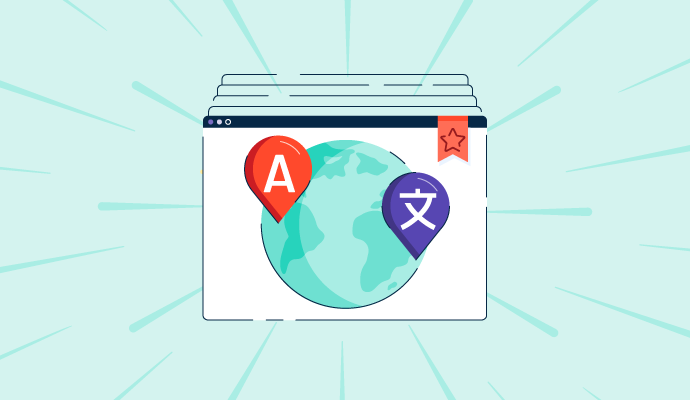
I Compared the 7 Best Machine Translation Software (2027)
What Is Machine Learning? How It Works and What It Is For
20 Revolutionary AI Applications in 2025: Real-World Examples

What Is Image Annotation? Types, Use Cases and More
10 Best Data Labeling Software With G2 User Reviews
AI In Music: Benefits, Challenges, and Tools for Musicians
Brief History of Artificial Intelligence - From 1900 till Now
What Is Artificial Intelligence (AI)? Types, Definition And Examples
What Is TinyML? A Brief Introduction And Benefits
History Of Computers: Timeline, I/O Devices and Networking
AI Image Generation: The Science Behind How It Works
The Rise of AI-Generated Art: From Algorithms to Aesthetics
What Is Artificial General Intelligence (AGI)? The Future Is Here
Mastering ChatGPT: Behrang Asadi on the Growing Effect of Generative AI
Top Digital Transformation Trends in 2021
Innovation in Artificial Intelligence [INFOGRAPHIC]
When Platforms Collide, Analytics Evolves
Tech Companies Bridging the Gap Between AI and Automation
The Industry Impact of AI Regulations in the EU
The Things Have Eyes: An Introduction to IoT
The Data Toolbox: The Expanding Domain of AI & Analytics
CX Tech: Artificial and Intelligent
G2 on Enterprise AI & Analytics: What is It Really & Why Does It Matter?
AI in Retail: How It’s Being Used (+ 4 Brand Examples)
Embedded AI: Embedded Systems Trends for 2019
Artificial Intelligence Software Glossary Terms

Artificial Intelligence Software Discussions
Core AI orchestration platforms aren't built to track brand citations across ChatGPT, Perplexity, and multiple LLMs out of the box. What orchestration platforms can actually offer here is the scheduling and multi-step structure to query several LLMs on a recurring basis and assemble the results yourself, rather than a pre-made dashboard. If your team has actually built a multi-LLM citation-tracking pipeline on one of these, how are you handling the differences in each LLM's API/output format, and has the maintenance stayed manageable as you've added more models to track?
Looking across G2's AI Orchestration category, the platforms best suited to building a recurring, multi-LLM query pipeline are LangChain, Prefect, and Apache Airflow.
Here's a closer look at four worth comparing:
- LangChain: A developer-centered framework that queries ChatGPT, Perplexity, Gemini, and Claude with the same prompt set and compares outputs.
- Apache Airflow (4.4/5, 120+ reviews): Reviewers praise its scheduling and dependency management for exactly this kind of recurring, multi-step job, which queries each LLM, stores results, and makes alerts on changes.
- Astro by Astronomer (4.5/5, 120+ reviews): Reviewers write that it's useful if you want a multi-LLM tracking workflow running without a team owning the infrastructure.
- Workato (4.7/5, 20+ reviews): This software uses APIs on a schedule and sends results to a dashboard or creates an alert.
The biggest challenge seems to be normalizing the results, since each model handles citations, sources, and formatting differently. I’d use a consistent prompt set and store the model, response, cited domain, citation position, and date in a standard schema. Tracking prompt and model-version changes would also be important so shifts in citation share are not mistaken for genuine brand-performance changes.
Competitive intelligence reporting is a good fit for this category specifically because it's a recurring, source-heavy process that pulls updates from multiple places, comparing them to last period's info, and producing a summary. Normally, products in this category don't have a native competitive intelligence module, but they add value by handling recurring, multi-source workflows that a team then builds this report around.
Looking across G2's AI Orchestration category, the platforms best suited to this kind of recurring, multi-system reporting are IBM watsonx Orchestrate, Workato, and Zapier. If you've actually automated something like this, how many hours a week did it save once you accounted for the setup and ongoing maintenance, and how much of the final report still needed manual editing before it went out?
Here's a closer look at four worth comparing.
- IBM watsonx Orchestrate (4.4/5, 40+ reviews): Its natural-language interface lets teams trigger tasks like generating summaries or reports without heavy coding, which fits a recurring competitive intelligence recap that non-engineers need to maintain and adjust over time.
- Workato (4.7/5, 20+ reviews): Its model is designed for pulling data from several sources into one recurring output, and reviewers cite it for cutting hours of manual work.
- Zapier (4.5/5, 60+ reviews): A simpler version that can piece together notifications from multiple sources into a scheduled report that is also faster to set up if the sources are simple.
- Automation Anywhere Agentic Process Automation (4.5/5, 80+ reviews): Users note that this software is useful if part of the reporting workflow involves pulling data out of systems that don't have clean APIs, since its bots can handle that extraction step before the summary is created.
I’d measure the net time saved after including workflow maintenance, failed runs, source changes, and final editing - not just the hours spent generating the report. Automation can handle collection, comparison, and first-draft summaries, but someone still needs to verify the sources, interpret why a competitor’s position changed, and shape the findings for the intended audience.
The question here is which platforms are built so a scheduled workflow keeps running reliably without an engineer checking in on it regularly.
Looking across G2's AI Orchestration category, the platforms most often cited for low-maintenance, hands-off scheduling are IBM watsonx Orchestrate, Zapier, and Astro by Astronomer.
Here's a closer look at five worth comparing:
- IBM watsonx Orchestrate (4.4/5, 40+ reviews): Built around a natural-language interface and low-code agent builder specifically so non-engineering employees can set up and adjust workflows themselves, reducing how often IT needs to get involved once something's up and running.
- Zapier (4.5/5, 60+ reviews): Scheduled "Zaps" are designed to run unattended once they are configured, with error notifications sent directly to the workflow owner rather than requiring an engineer to monitor things.
- Astro by Astronomer (4.5/5, 120+ reviews): Reviewers specifically mention its simpler, more reliable deployment without having to depend on DevOps.
- Workato (4.7/5, 20+ reviews): Reviewers describe the workflow as running reliably once set up, however, changing it later usually still needs someone familiar with the platform.
- Automation Anywhere Agentic Process Automation (4.5/5, 80+ reviews): Built-in audit logs and governance controls mean a scheduled bot's activity is visible without an engineer manually watching each run.
If you've handed one of these off to a non-engineering team to run day-to-day, has it stayed genuinely hands-off, or does it need an engineer's help more often than advertised?
I’d define “hands-off” as a workflow that can retry common failures, alert the business owner with a clear explanation, and recover without engineering support. Even low-code workflows will need occasional attention when credentials expire, APIs change, or source data shifts, so the quality of monitoring and error handling matters as much as the initial setup experience.


![Innovation in Artificial Intelligence [INFOGRAPHIC] Innovation in Artificial Intelligence [INFOGRAPHIC]](https://learn.g2.com/hubfs/Marketing%20Automation-1.png)