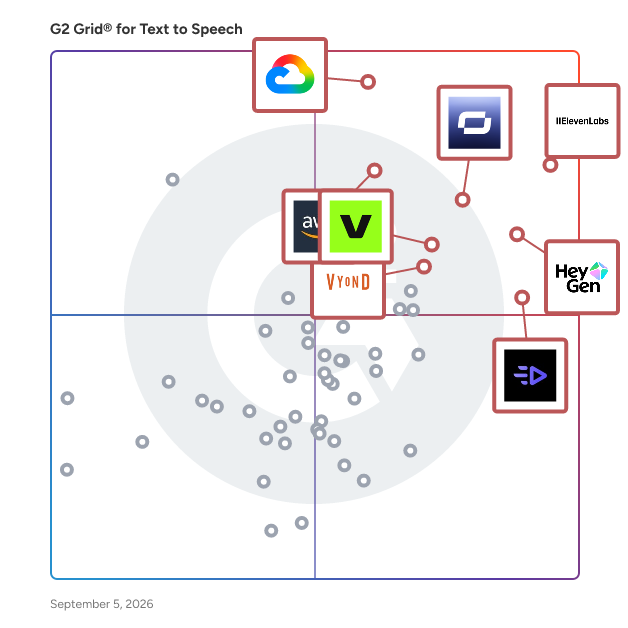
Text-to-speech (TTS) software converts written text into natural-sounding voice outputs, offering features such as voice selection, speed and pitch adjustment, multilingual support, and voice customization, enabling businesses to enhance user experience, improve accessibility, and add synthesized voices to websites or applications via API.
Core Capabilities of Text-to-Speech Software
To qualify for inclusion in the Text-To-Speech (TTS) category, a product must:
- Convert written text to natural-sounding speech
- Integrate with applications and websites via a connector such as an API
- Control aspects of the synthesized voice, such as volume, pitch, and emotion
Common Use Cases for Text-to-Speech Software
Developers, content creators, and accessibility teams use TTS software to make content more accessible and engaging across platforms. Common use cases include:
- Adding synthesized voice narration to websites, e-learning courses, and mobile applications via API
- Creating multilingual audio content by converting text into multiple languages and accents
- Improving accessibility for visually impaired users by converting written content to spoken audio
How Text-to-Speech Software Differs from Other Tools
TTS software converts text into speech, making it the inverse of voice recognition software, which transforms speech data into text. Natural language understanding (NLU) software complements TTS by helping produce natural pauses, phrasing, and prosody that make synthesized speech sound more human, working alongside TTS rather than duplicating its functionality.
Insights from G2 on Text-to-Speech Software
Based on category trends on G2, voice naturalness and API integration flexibility as the most valued capabilities. These platforms deliver improvements in accessibility and time savings in audio content production as primary outcomes of adoption.