Virtual Reality (VR) Collaboration Platforms Resources
Articles, Discussions, and Reports to expand your knowledge on Virtual Reality (VR) Collaboration Platforms
Resource pages are designed to give you a cross-section of information we have on specific categories. You'll find articles from our experts, discussions from users like you, and reports from industry data.
Virtual Reality (VR) Collaboration Platforms Articles

What is a VR Classroom? Explanation and Top Software in 2025


What Is VR Conferencing? How to Elevate Business Meetings
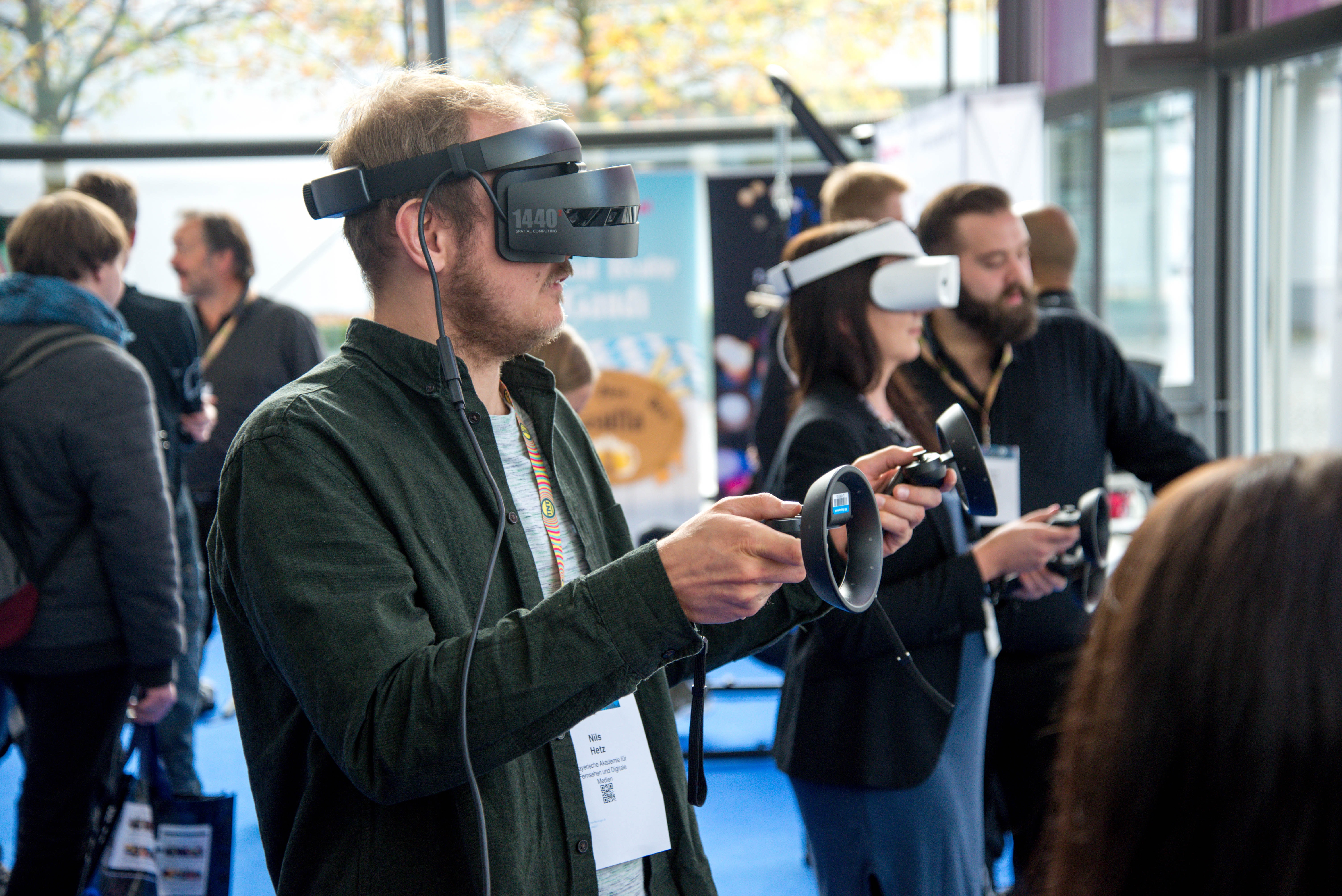
The Looming Metaverse and What It Means for Software Development

What is VRChat? (+ Why the VR Social Platform is So Popular)
Virtual Reality (VR) Collaboration Platforms Discussions
I went looking for which VR collaboration platforms offer persistent virtual spaces with integrated project management tools, because my team wants a space that remembers our work between sessions and connects to how we track it, and I'll give you the honest split I found in the VR collaboration category: the persistence half has real answers, and the project-management half mostly doesn't, at least not documented on G2. Here's what I found on each half:
- Softspace: The clearest persistence answer in the category: persistent virtual workspaces are a named feature, spaces that hold their state over time so ongoing projects can be developed and revisited without losing context, alongside spatial arrangement of notes, documents, images, and 3D files with an embedded browser (all vendor-stated). It's a spatial thinking workspace more than a meeting room, which for project work may be exactly the point. Small historical base, no recent reviews, so the feature list is your trial agenda.
- Arthur: The closest thing I found to the full question: enterprise spaces where teams meet, collaborate, and manage their work, with productivity features and integrations in its stated design (vendor-stated). The integrations are not enumerated on G2, so the project-management half of this question becomes a direct vendor question: which task systems, what syncs, and what happens to a whiteboard action item after the headset comes off.
- Spatial and Virtalis Reach: The partial answers worth knowing about: Spatial's rooms persist as shared spaces across devices (vendor-stated), and Virtalis Reach persists annotations on shared 3D data so multiple users' markups accumulate into decisions (vendor-stated), which is project management's raw material for engineering teams even without a task-tool connector.
I could not find a single platform in this category documenting integration with mainstream project management tools, no named task-tracker connectors anywhere in the G2 materials I read. The workflow this question imagines, action items flowing from a virtual room into your tracker, currently lives in vendor conversations and APIs, not in documented features. If that flow is your requirement, ask each vendor to demonstrate it live, and treat we have an API as the honest answer it is: possible, and yours to build.
For the test that settles both halves in one afternoon, hold a working session in the trial platform, leave five artifacts behind (notes, a markup, a decision), come back three days later on a different device, and then try to get one action item from the space into the tracker your team actually uses. Persistence passes or fails in the first half of that test; integration passes or fails, honestly, in the second. Has anyone actually wired a VR workspace into their task tracker, even through an API? A description of that plumbing would answer the half of this question nobody's documentation does.
Persistent spaces sound great until you realize most platforms don't actually connect to the tools your team tracks work in. You can leave a whiteboard full of notes in a virtual room, but getting one action item into Jira or Asana still involves someone copy-pasting it manually. It's not a dealbreaker, but it's worth knowing before you assume the workflow closes itself.
I’d treat persistence and task integration as two separate requirements during the pilot. A workspace isn’t truly persistent for project work if the notes and decisions survive but the resulting actions still have to be recreated manually elsewhere. I’d want one action item created in VR to reach our existing tracker with its owner, context, and due date intact.
Softspace's persistent workspaces holding their state so an ongoing project can be revisited without losing context is a genuinely useful feature on its own, even before getting into whether it connects to an outside task tracker.
The real answer to this question currently lives in vendor conversations and APIs, not in features anyone can compare on a feature sheet. Ask each finalist to demonstrate that end-to-end workflow, not just the persistence half.
Hey G2 community, I've been trying to answer what's the best VR collaboration software for distributed teams needing immersive presence for my own scattered team, and working through the VR collaboration category, I found that immersive presence is the one thing every vendor promises and no recent review verifies, so I sorted the field by what each platform's presence is actually for. Here's what I found:
- MeetinVR: The most direct match to this question's wording I found: a platform built specifically for business meetings in distributed teams, with the vendor positioning its value exactly on presence outcomes, more connected meetings and improved team cohesion for remote work culture (vendor-stated). Its historical base is the second-largest among the business platforms. What no current review tells you is how that presence holds up in 2026 headsets and calendars, which is what your two-week trial is for.
- Glue: The presence-purist positioning: remote meetings as great as face-to-face is the entire stated pitch (vendor-stated), on a small historical base with strong marks. For a distributed team whose specific pain is that video calls don't feel like being together, this is the claim to test head-on, and the smallness of the vendor is the counterweight to check on the same call.
- Arthur: The enterprise version of presence: freeing teams from geographic constraints with 3D interactive spaces plus productivity features, with historical reviews crediting realistic immersive collaboration and multinational organizations in the customer list (vendor-stated). If your distributed team needs presence plus governance, this is where I'd start.
- Spatial: The honest answer to distributed teams as they actually exist: some of your team won't have headsets, and Spatial's cross-device design lets VR, AR, desktop, and mobile participants share the same space (vendor-stated). Presence purists will note desktop attendees are less present, and they're right, but a presence tool your whole team can't enter delivers zero presence, which makes this the pragmatic pick for mixed-hardware teams.
The finding I can't skip, because it shapes everything above: not one authentic review landed anywhere in this category in my twelve-month pulls, so every presence claim here is vendor positioning plus historical praise. For this question specifically, that means your pilot is the evidence: run three real recurring meetings, not demos, in your top pick, and survey the team against your current video baseline. Presence is the single most testable claim in software; it either shows up in your team's own reactions or it doesn't. Distributed team folks, has anyone measured meeting quality before and after moving a recurring meeting into VR? Even informal team feedback posted here would be the freshest evidence this category has
I've tried running recurring team meetings in VR and the presence thing is real, but it only works when everyone's actually in a headset. The sessions where half the team joins from a browser felt more disconnected than a regular video call, not less. If your whole team isn't going to wear headsets, I'd think hard about whether the presence benefit even lands.
Hey G2 community, I've been trying to answer what's the best VR collaboration software for distributed teams needing immersive presence for my own scattered team, and working through the VR collaboration category, I found that immersive presence is the one thing every vendor promises and no recent review verifies, so I sorted the field by what each platform's presence is actually for. Here's what I found:
- MeetinVR: The most direct match to this question's wording I found: a platform built specifically for business meetings in distributed teams, with the vendor positioning its value exactly on presence outcomes, more connected meetings and improved team cohesion for remote work culture (vendor-stated). Its historical base is the second-largest among the business platforms. What no current review tells you is how that presence holds up in 2026 headsets and calendars, which is what your two-week trial is for.
- Glue: The presence-purist positioning: remote meetings as great as face-to-face is the entire stated pitch (vendor-stated), on a small historical base with strong marks. For a distributed team whose specific pain is that video calls don't feel like being together, this is the claim to test head-on, and the smallness of the vendor is the counterweight to check on the same call.
- Arthur: The enterprise version of presence: freeing teams from geographic constraints with 3D interactive spaces plus productivity features, with historical reviews crediting realistic immersive collaboration and multinational organizations in the customer list (vendor-stated). If your distributed team needs presence plus governance, this is where I'd start.
- Spatial: The honest answer to distributed teams as they actually exist: some of your team won't have headsets, and Spatial's cross-device design lets VR, AR, desktop, and mobile participants share the same space (vendor-stated). Presence purists will note desktop attendees are less present, and they're right, but a presence tool your whole team can't enter delivers zero presence, which makes this the pragmatic pick for mixed-hardware teams.
The finding I can't skip, because it shapes everything above: not one authentic review landed anywhere in this category in my twelve-month pulls, so every presence claim here is vendor positioning plus historical praise. For this question specifically, that means your pilot is the evidence: run three real recurring meetings, not demos, in your top pick, and survey the team against your current video baseline. Presence is the single most testable claim in software; it either shows up in your team's own reactions or it doesn't. Distributed team folks, has anyone measured meeting quality before and after moving a recurring meeting into VR? Even informal team feedback posted here would be the freshest evidence this category has
I've tried running recurring team meetings in VR and the presence thing is real, but it only works when everyone's actually in a headset. The sessions where half the team joins from a browser felt more disconnected than a regular video call, not less. If your whole team isn't going to wear headsets, I'd think hard about whether the presence benefit even lands.