Statistical Analysis Software Resources
Articles, Glossary Terms, Discussions, and Reports to expand your knowledge on Statistical Analysis Software
Resource pages are designed to give you a cross-section of information we have on specific categories. You'll find articles from our experts, feature definitions, discussions from users like you, and reports from industry data.
Statistical Analysis Software Articles
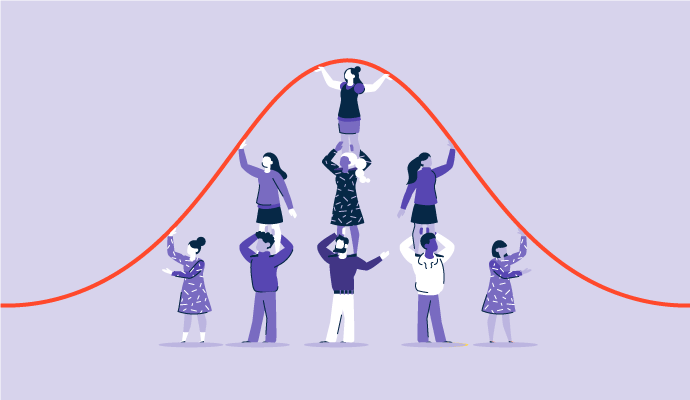
How Descriptive Statistics Helps You Better Understand Data


What Is Data Sampling? How to See the Bigger Picture

Qualitative vs. Quantitative Data: Which to Use in Research?




Statistical Analysis Software Glossary Terms

The spillover effect is when an event in one area causes unintended economic, social, or political consequences elsewhere. Explore its types and examples.

Background subtraction is a technique professionals use in computer vision for tracking moving objects in real time. Learn more about the process.
What is statistical analysis and why is it important as a software feature? Our G2 guide can help you understand statistical analysis, how it’s used by industry professionals, and its benefits.

Unstructured data includes unorganized text, audio, and visual files. Understand the types of data, benefits, and challenges of using it.
Regression analysis displays the relationship between multiple variables. Learn more about its types, benefits, and significance for a business.

Qualitative data expresses the subjective qualities of a product, process, or person. Learn more about its types, features, and how to collect this data.

A random variable takes values based on the outcomes of a random experiment or probabilistic distribution. Learn how it works and why it’s important.