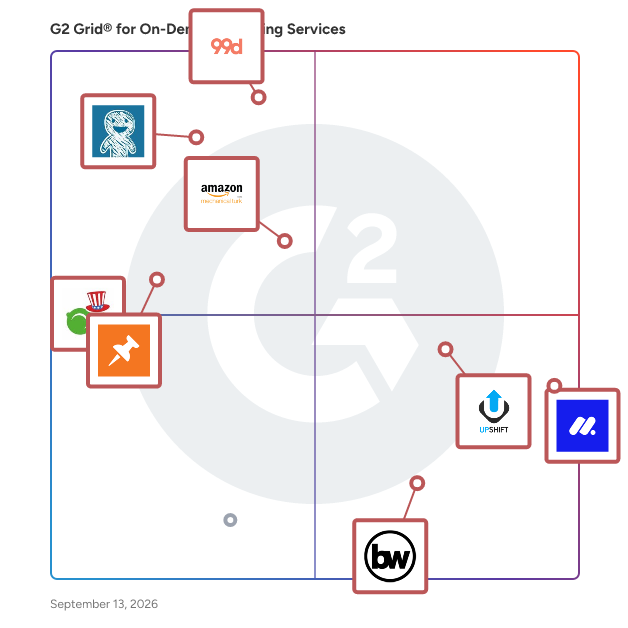
On-demand staffing services, commonly referred to as mobile marketplaces, allow businesses to hire temporary workers for single shifts or short-term positions. Mobile marketplaces let job seekers create online profiles, share work portfolios (if relevant), and search the available job openings based on filters and qualifications.
Some on-demand staffing services partner with staffing agencies, while others provide direct connections between job seekers and employers. Once job seekers apply for a gig or shift, employers can approve or deny the job or shift on their end. Beyond the gig they are hired for, applicants typically do not need to sign any extensive paperwork or make any additional commitments. Following a completed shift or one-off task, both the worker and the hiring company can review their experience, and this data will affect the search placement and reputation of both parties for future users.
Sourcing job seekers through mobile marketplaces differs from sourcing through freelance platforms in that these positions are often one-off projects or shift-based. On-demand staffing platforms are commonly leveraged by hospitality businesses and can also be used for entry-level office work and general labor tasks.
To qualify for inclusion in the On-Demand Staffing category, a services provider must:
- Provide a portal for companies to post their labor needs and for job seekers to create profiles
- Allow companies to search, filter, and compare job seekers to select the best choice for their labor needs
- Enable job seekers and companies to collaborate directly with each other without third-party intervention