Natural Language Processing (NLP) Software Resources
Articles, Glossary Terms, Discussions, and Reports to expand your knowledge on Natural Language Processing (NLP) Software
Resource pages are designed to give you a cross-section of information we have on specific categories. You'll find articles from our experts, feature definitions, discussions from users like you, and reports from industry data.
Natural Language Processing (NLP) Software Articles

What is AI-generated text? Examples and Detection
Seq2Seq Models: How They Work and Why They Matter in AI
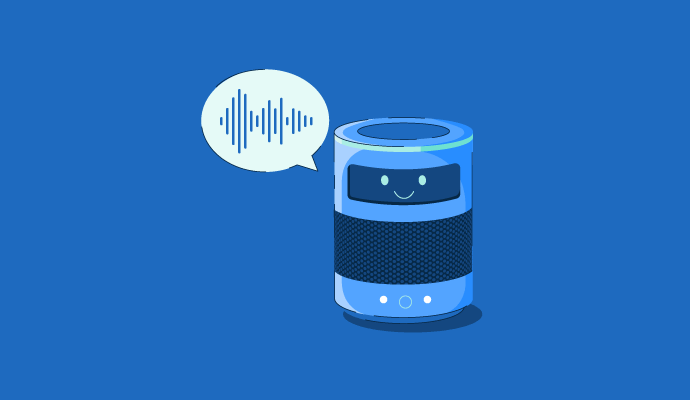
What Is A Voice Assistant? Your Guide to the Talking Tech

Claim Peace of Mind: Decode the Work of Insurance Adjusters
How AI-Driven HR Software Helps Prevent Employee Turnover
2021 Trends in Conversational AI
The Role of Artificial Intelligence in Accounting
Interfacing With Interfaces: Giving Technology a Voice
Artificial Intelligence in Financial Research
Natural Language Processing (NLP) Software Glossary Terms

Natural Language Processing (NLP) Software Discussions
Hi G2 community, I'm researching for a roundup of NLP platforms that offer the fastest implementation and shortest time to value for a team adopting one for the first time. For a first NLP project, the thing that decides success is often how quickly you can go from signup to a working feature without standing up your own model infrastructure. Looking across the Natural Language Processing (NLP) Platforms category, a few come up for getting teams productive quickly.
- NLP Cloud: Serves production-ready models through a clean REST API, so a team can add tasks like sentiment analysis or text generation without managing GPUs or MLOps. Setup is described as quick and the documentation practical, which shortens the path to a first working feature.
- IBM Watson Natural Language Understanding: Gives entity extraction, keywords, sentiment, and classification through a straightforward API with SDKs for Android, Java, and Python, so you skip building the pipeline from scratch. The main value people cite is the development time it saves early on.
- Datasaur: Built so labeling and annotation projects start fast with an intuitive interface and AI-assisted pre-labeling, which gets a team past the slowest part of an NLP project sooner. Initial setup is described as easy, even for non-technical users.
- IBM watsonx Orchestrate: Uses a natural-language interface and pre-built agents plus ready-made integrations, so first workflows can be stood up without much code. Worth noting, advanced setups still need technical involvement, so plan the first project to be a simple one.
For a first NLP rollout, what actually got you to value fastest: a ready API, a labeling head start, or pre-built components? And where did the timeline slip more than you expected on the first project?
A ready API usually gets a first NLP project to value fastest because it removes infrastructure and model-training work from the critical path. The timeline tends to slip later around data quality, edge cases, and integration into the actual product workflow—not the initial API setup.
A ready API would get me to value fastest on a first NLP project because it removes the model infrastructure work entirely. NLP Cloud sounds strongest for that route. I’d expect the timeline to slip once the team moves beyond the first working feature and starts adapting the output to real production workflows.
NLP Cloud's REST API got us to a working sentiment analysis feature within the first week. Not needing to stand up any GPU infrastructure ourselves made the biggest difference in how fast we actually saw something live.
The comment about a ready API removing infrastructure work from the critical path is the real insight. The timeline slip rarely happens at initial setup; it happens later around data quality and edge cases once the API is live. A quick first integration isn't the same as a production-ready deployment.
What kind of support do you offer?
What kind of training is available?