Natural Language Processing (NLP) Software Resources
Articles, Glossary Terms, Discussions, and Reports to expand your knowledge on Natural Language Processing (NLP) Software
Resource pages are designed to give you a cross-section of information we have on specific categories. You'll find articles from our experts, feature definitions, discussions from users like you, and reports from industry data.
Natural Language Processing (NLP) Software Articles

What is AI-generated text? Examples and Detection
Seq2Seq Models: How They Work and Why They Matter in AI
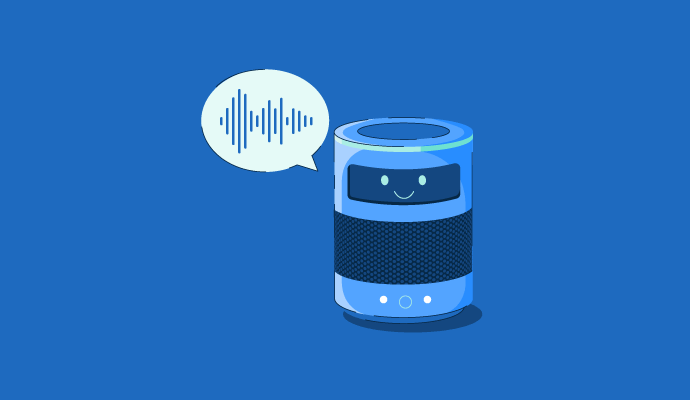
What Is A Voice Assistant? Your Guide to the Talking Tech

Claim Peace of Mind: Decode the Work of Insurance Adjusters
How AI-Driven HR Software Helps Prevent Employee Turnover
2021 Trends in Conversational AI
The Role of Artificial Intelligence in Accounting
Interfacing With Interfaces: Giving Technology a Voice
Artificial Intelligence in Financial Research
Natural Language Processing (NLP) Software Glossary Terms

Natural Language Processing (NLP) Software Discussions
Hi all, I'm researching which NLP platforms are rated highest for the easiest setup and configuration for a team getting started, since a smooth first few hours often decides whether a team sticks with a tool. The useful distinction is between platforms you can configure and call quickly and ones that need a real setup project first. A few in the Natural Language Processing (NLP) Platforms category come up for an easy start.
- NLP Cloud: Reviewers repeatedly call the setup very easy and straightforward, with clear docs and integration into frameworks like FastAPI and Flask, so a team can make API calls quickly rather than configuring infrastructure.
- Datasaur: Described as easy to get started with an intuitive interface, so even non-technical annotators can begin without intense training. Complex nested entity schemas do take longer to configure, which is the part to budget for.
- IBM Watson Natural Language Understanding: Setup is described as simple and something you can inject into an app quickly, with SDKs across languages. Navigating the IBM Cloud console for configuration and credentials is the piece that adds a little friction.
For getting started, what mattered most to your team: the clarity of the docs, the default configuration, or how quickly you got a first result back? And which tool surprised you by being easier or harder to set up than expected?
For a first rollout, clear documentation mattered most because it shortened the gap between setup and a usable result. NLP Cloud seems easiest overall, while IBM Watson NLU adds a little friction around credentials and console navigation despite the API itself being straightforward.
IBM watsonx Orchestrate is the most heavily reviewed NLP platform here and gets credit for a relatively approachable setup for a team just getting started.
Of your three options, I'd pick how quickly you get a first result back, but for a reason that isn't really about convenience. The first call succeeding is what tells you whether the output is any good on your actual text, and that's the question the whole evaluation turns on. Docs and defaults matter because they shorten the path to that moment, not because they're valuable on their own. NLP Cloud reviewers pointing at FastAPI and Flask integration fits that, since the fastest possible test is one you can run against your own messy production strings inside an hour rather than against a sample dataset that was chosen to work.
The test text should be your worst text, not your cleanest. Setup ease counts for little if the first pass on real production strings turns into a preprocessing project.
Hello G2, I've been comparing notes on a practical question: is a paid NLP platform worth it for a small SaaS team? The trade-off is real: a small team can self-host open-source models, but that means owning infrastructure and MLOps, so the question is whether a paid platform pays for itself in time saved. Here's how it looks across the Natural Language Processing (NLP) Platforms category.
- NLP Cloud: Often the strongest fit for a lean team, with a generous free plan to test, clear pricing, and a managed API that removes GPU and hosting overhead so a small team ships AI features without a dedicated ML infrastructure hire. GPU plans do get pricier at higher usage.
- IBM Watson Natural Language Understanding: Works well for small-to-medium workloads and saves real development time by handing you sentiment, entities, and classification through one API, but pricing needs watching as request volume grows.
- Datasaur: Worth it if your bottleneck is labeling training data, since it cuts manual annotation time sharply, though reviewers note its pricing leans enterprise and can feel steep for a very small startup.
For the small-team economics, did a paid platform actually save you more than self-hosting once you counted your own engineering hours? And which pricing model, per-request, subscription, or free-tier-then-scale, fit a small SaaS budget best?
For a small SaaS team, a paid NLP platform is usually worth it once engineering time and infrastructure maintenance are counted honestly. A free-tier-then-scale model feels safest because it lets the team validate demand first, then pay more only as usage grows.
Hey G2, I'm comparing which NLP platforms stay reliable under high demand so developers can build production applications without worrying about downtime or degraded performance at scale. For anything customer-facing, consistent latency and uptime matter as much as raw accuracy. Here's what comes up across the Natural Language Processing (NLP) Platforms category, along with the honest trade-offs.
- NLP Cloud: Runs GPU-backed endpoints that keep latency low even for large transformer models, with reviewers pointing to reliable uptime and simple documentation. The caveat worth weighing is that the heaviest endpoints, like summarization, can be slower to return.
- IBM Watson Natural Language Understanding: Delivers consistent performance for the API workloads people test it on, with a clear response structure that makes results predictable to process in backend services. Costs can climb with high request volume, so usage monitoring matters at scale.
- IBM watsonx Orchestrate: Built for enterprise-scale workflow orchestration with governance and audit trails, though reviewers are candid that response times can slow under high concurrent usage or large data volumes. Strong at scale with that concurrency caveat in mind.
For production workloads, what has held up best for you under real traffic, and where did performance degrade first, latency on heavy models, throughput under concurrency, or something else? Curious how people design around the slower endpoints.
NLP Cloud seems like the strongest fit for keeping production latency predictable without a heavy infrastructure burden. The first degradation point is usually slower responses on larger models like summarization, so I’d use timeouts, queues, caching, and fallback models rather than treating every endpoint the same.
I think tail latency matters more than the average once this reaches production. A platform can look fast overall while a small percentage of requests become painfully slow during traffic spikes. I’d want to compare p95 or p99 latency under concurrency, then decide which NLP tasks need a fallback rather than letting one slow endpoint hold up the whole user flow.
Worth deciding upfront what the product does when a call is slow rather than failed. Timeouts are easy to handle. The awkward case is a response arriving after the user has moved on. Designing the feature to degrade into something still useful, like showing the unprocessed text, often matters more than the platform's uptime number.
Shubham’s point about tail latency is especially useful here. Average response time can hide the exact spikes that hurt production UX, so p95 or p99 performance feels like the better reliability test.