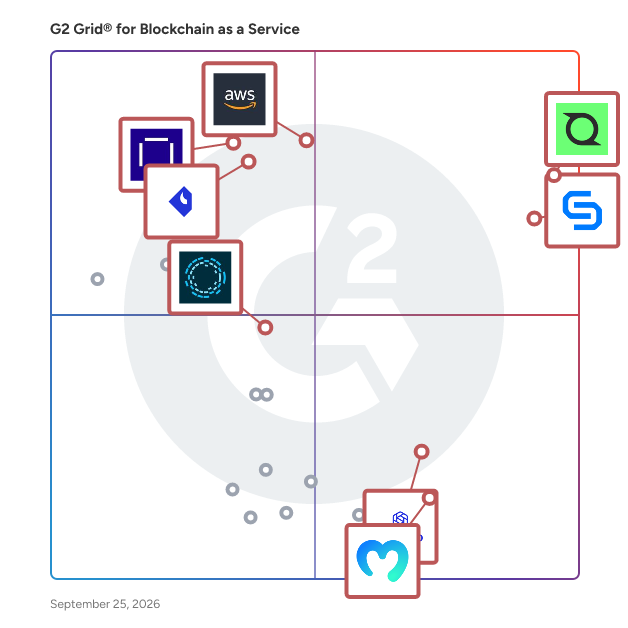
Blockchain as a service providers offer businesses a hosted blockchain infrastructure to build, deploy, and manage blockchain-based applications. Blockchain apps can serve many purposes. Many of these purposes involve a transaction or verification component. As a result, common blockchain applications include tools for payments, identity management, supply chain management, smart contracts, and tokenization.
Companies often use a blockchain as a service provider because they do not have on-premises computing resources capable of hosting large-scale applications. Instead, blockchain as a service providers manage the physical resources.
Banks, insurance companies, and fintech startups leverage this type of service to streamline transactions, improve transparency, and enhance security in financial processes. Retailers, manufacturers, and logistics companies use it to track goods, ensure authenticity, and reduce fraud across supply chains.
Blockchain as a service providers offer customers a pay-as-you-go, cloud-based platform for application development without having to spend money on servers, without needing to spend time implementing machinery, or without requiring staff teams to manage physical resources.
To qualify for inclusion in the Blockchain as a service category, a services provider must:
- Be built upon on a blockchain-based platform or distributed ledger technology (DLT) system
- Provide a hosted and distributed transactional database
- Provide a development environment and prebuilt tools to develop blockchain applications
- Provide application customization and extensibility features