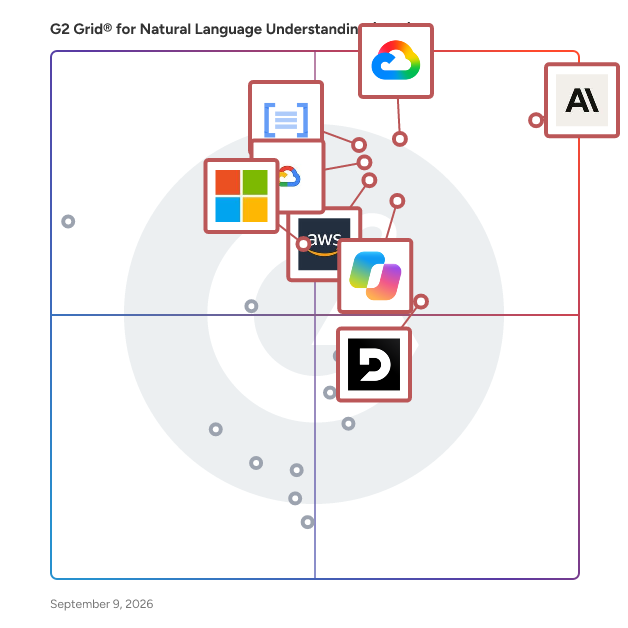
Natural language understanding (NLU) software uses machine learning algorithms and statistical methods to help applications better understand human text, providing outputs such as part-of-speech tagging, sentiment analysis, named entity recognition, automatic summarization, emotion detection, and language detection from language inputs.
Core Capabilities of NLU Software
To qualify for inclusion in the Natural Language Understanding category, a product must:
- Provide a deep learning algorithm specifically for human language interaction
- Connect with language data pools to learn a specific solution or function
- Consume language as an input and provide an outputted solution
Common Use Cases for NLU Software
Developers and AI teams use NLU software to add human language comprehension capabilities to applications and services. Common use cases include:
- Powering chatbots and virtual assistants with intent recognition and multi-turn conversation understanding
- Enabling social media monitoring tools to analyze brand sentiment and detect mentions automatically
- Supporting translation and language detection applications across diverse linguistic data sources
How NLU Software Differs from Other Tools
NLU is a specialized form of natural language processing (NLP) focused specifically on language comprehension and intent understanding, rather than the full spectrum of text processing tasks. NLU algorithms are examples of deep learning and may be offered as prebuilt capabilities within broader AI platform solutions, making them more focused than general NLP platforms that cover text generation and classification alongside understanding.
Insights from G2 on NLU Software
Based on category trends on G2, intent recognition accuracy and ease of integration into conversational applications stand out as top capabilities. These platforms deliver improvements in chatbot understanding and reduction in misclassified user inputs as primary outcomes of adoption.