ERP Systems Resources
Articles, Glossary Terms, Discussions, and Reports to expand your knowledge on ERP Systems
Resource pages are designed to give you a cross-section of information we have on specific categories. You'll find articles from our experts, feature definitions, discussions from users like you, and reports from industry data.
ERP Systems Articles

How Will the Fourth Industrial Revolution Impact Remote Work?
When we think about remote work, we usually imagine employees performing the same tasks they complete in the office at home. This means that anyone who works in a physical environment such as a warehouse, manufacturing facility, or retail store cannot work remotely.
by Gabriel Gheorghiu
ERP vs. CRM: Choosing the Best Solution for Your Business
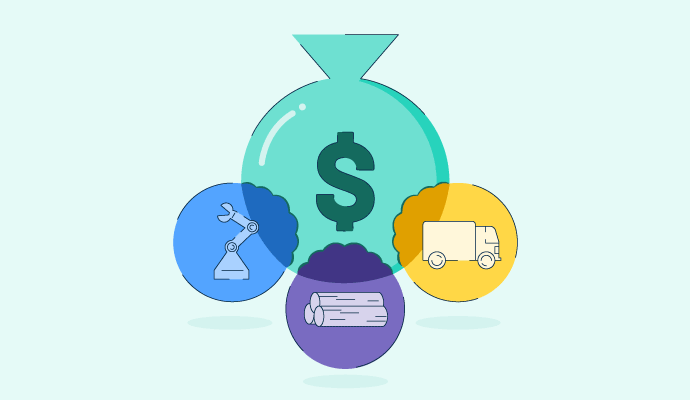
Customers are the fuel of any business. They drive the revenue that organizations need to grow and succeed. Resources, on the other hand, are the machinery required for smooth business operations. Employees, equipment, partners, and working capital all come under resources.
by Harshita Tewari
How to Calculate Cost of Goods Sold (COGS): A Complete Guide

Understanding your costs is essential for sustaining profitability in manufacturing.
by Devin Pickell
15 Best Free CRM Software in 2024
As a salesperson in a small business, you juggle endless spreadsheets, a flooded inbox, and constant pressure from leadership and clients alike. Plus, your budget stays tiny. The result? Missed opportunities, wasted time, and burnout.
by Devyani Mehta
What Is ERP Implementation? Steps, Strategies, and Risks
The implementation of a software system—particularly one as complex and expansive as an Enterprise Resource Planning (ERP)—requires a holistic knowledge of not only the software in question but also an intense understanding of your organization’s business operations and workflows.
by Piper Thomson
History of Accounting: How It's Evolved Over the Years
There’s a good chance you’ve never covered this in your accounting classes.
by Rob Browne
Venture Capital: What It Is, How It Works, and Types
The startup trend is showing no signs of slowing down.
by Mary Clare Novak
Chaos to Cohesion: How Program Management Drives Results
Are you feeling overwhelmed by the number of projects you're juggling? Like you're constantly trying to keep track of multiple projects, all with different deadlines and stakeholders? If so, you're not alone.
by Harshita Tewari
What Is ERP? How It Helps You Accelerate Growth and Profit
One of the amazing aspects of this fourth industrial revolution is that there is a software solution for nearly any issue under the sun.
by Piper Thomson
How to Choose the Right Software Mix for Manufacturing
Manufacturing processes are complex and require multiple tools to achieve the desired results. Certain tools used in the manufacturing sector, such as product lifecycle management (PLM), enterprise resource planning (ERP), and quality management systems (QMS), have unique, but complementary features. At present, companies are looking to combine such software tools to have better visibility into their manufacturing operations. However, it is important that the integration is done in an appropriate manner, or else it fails to maximize the organization’s efficiency.
by Gabriel Gheorghiu
Introducing the Recurring Revenue Finance Category on G2
On December 23rd, 2022, G2 launched its new Recurring Revenue Finance category, which falls under the Accounting & Finance parent category. G2 created this category to represent a more recent, evolved way for high-growth start-up SaaS companies to borrow money without losing a stake (equity or ownership) in their company.
by Nathan Calabrese
The Benefits and Types of Manufacturing Inventory Management
Keeping track of all the goods in your inventory is easier said than done.
by Adithya Siva
2023 Trends in Enterprise Resource Planning (ERP)
This post is part of G2's 2023 digital trends series. Read more about G2’s perspective on digital transformation trends in an introduction from Emily Malis Greathouse, director, market research, and additional coverage on trends identified by G2’s analysts.
by Gabriel Gheorghiu
Highlights From the G2 Spring 2022 ERP Reports
Enterprise resource planning (ERP) is probably one of the most mature software markets, which usually experiences few significant advancements other than the occasional merger or acquisition. At the same time, many changes in the industry may not be considered groundbreaking but can considerably impact ERP buyers and users.
by Gabriel Gheorghiu
How Cloud ERP Helps Manufacturers with Resource Management
In June 2021, I wrote an article that described how cloud enterprise resource planning (ERP) can help solve manufacturing challenges and highlighted integrated systems as the main benefit of software as a service (SaaS) ERP systems.
by Gabriel Gheorghiu
How Cloud ERP Helps Address Manufacturing Challenges
Enterprise resource planning (ERP) systems were created for manufacturing companies decades ago, and they still have an important place in the software ecosystem within this industry.
by Gabriel Gheorghiu
2021 Trends in E-Commerce and Industry 4.0
This post is part of G2's 2021 digital trends series. Read more about G2’s perspective on digital transformation trends in an introduction from Michael Fauscette, G2's chief research officer and Tom Pringle, VP, market research, and additional coverage on trends identified by G2’s analysts.
by Gabriel Gheorghiu
2021 Trends in Accounting and Finance
This post is part of G2's 2021 digital trends series. Read more about G2’s perspective on digital transformation trends in an introduction from Michael Fauscette, G2's chief research officer and Tom Pringle, VP, market research, and additional coverage on trends identified by G2’s analysts.
by Nathan Calabrese
How to Stay Organized When Closing Books Remotely
Almost any public or private business with an accounting and finance department performs a month, quarter, and year-end close, which is a series of steps to review, record, and reconcile accounting information.
For this blog, I’m going to refer to only month-end close for consistency and simplicity.
by Nathan Calabrese
How Industry 4.0 Will Change Project Management
Project management software and methodologies are a form of automation that has been used in business for nearly 50 years. New technologies such as artificial intelligence (AI) and the Internet of Things (IoT) have the potential to automate project management—but, how far will they go?
by Gabriel Gheorghiu
The Importance of Accounts Payable (AP) Automation
The phrase “time is money” has never been more true than it is now.
by Nathan Calabrese
Your Guide To The Most Effective Types of ERP Systems
The development of ERP has strived for an almost utopian ideal: the consolidation of all business processes under a single software system.
by Piper Thomson
How Project-Based Software Helps Companies
Most tasks we do at work are either process or project-based. Processes are made of repetitive tasks that we do repeatedly, with little to no variation. Project work can vary significantly from one project to another and can change based on internal or customer requirements.
by Gabriel Gheorghiu
The Complete History of ERP: Its Rise to a Powerful Solution
With the rapid expansion of technology making communication easier than ever, new and exciting business opportunities have begun to make their way onto the scene.
by Piper Thomson
How SMBs Can Benefit from Industry 4.0
Most Industry 4.0 success stories mention large multinational companies such as GE or ABB.
by Gabriel Gheorghiu
Key Components of Accounting Automation
No matter how dry or stale people think accounting and finance is, these functions are vital to the health of any company. Felipe Torres, a financial analyst at G2, further explains that finance and accounting functions “...help us prepare for the future and drive strategies that ensure we're maximizing our potential.”
by Nathan Calabrese
The Pros and Cons of Different Automation Types
The concept of automation is straightforward: create tools that perform tasks with minimal human involvement. And the motivation for more automation is simple: Companies can do more with less. “More” means companies can sell and deliver a higher volume of products and services than ever before. “Less” refers to the fact that, thanks to automation, fewer resources are required.
by Gabriel Gheorghiu
A Brief History of Data and the Birth of Analytics Platforms
The story of the first business computer could not be more British if it tried.
by Tom Pringle
The G2 on Industry 4.0: Understanding Industrial Revolution on a Global Scale
If you work in manufacturing or supply chain, you’ve probably heard of Industry 4.0. While the term may be used together with buzzwords like digital transformation, interconnectivity, or end-to-end value chain, Industry 4.0 refers to a new industrial revolution.
by Gabriel Gheorghiu
What Is Cash Basis Accounting? (+When You Should Use It)
The products and services your company provides are your lifeblood.
by Rob Browne
How Business Digital Transformation Works In The Real World
Business digital transformation is a buzzword that is misused and not completely clear. For instance, the Wikipedia definition is incomplete and vague: “Digital Transformation (DT) is the use of new, fast-changing digital technology to solve problems often utilizing cloud computing, reducing reliance on user-owned hardware but increasing reliance on subscription-based cloud services.”
by Gabriel Gheorghiu
Using Project Portfolio Management (PPM) to Determine Value
A portfolio is a collection of your best work, put forth in the hopes of making a positive impression.
by Grace Pinegar
Accounting Software Basics (+ Some Key Features to Look For)
Most business owners know that accounting is one of the most important aspects of running a company.
by Devin Pickell
ERP Systems Glossary Terms

ERP Systems Discussions
0
Question on: Rootstock Cloud ERP
Why Should I Choose Rootstock?
Can I give my management some quantitative reasons for choosing a manufacturing ERP?
A manufacturing ERP like Rootstock is specifically designed to support the unique workflows common to all manufacturers to achieve operational targets more efficiently with the right capabilities. A “generic” ERP is focused on the financial workflows that all businesses have but must be configured or customized to support those same workflows. Rootstock refers to our underlying architecture as a “manufacturing operating system” that is purpose built with financial workflows such as accounts receivables (AR) and accounts payable (AP) where AP is intertwined with supply chain functions which are more complex than simple vendor issues. Of course, a manufacturing ERP must support inventory management which is complicated by raw materials coming in and finished goods going out that a non-manufacturer would not need. Finally, all of the specific manufacturing operational processes such as work orders, work instructions, and quality disposition are again, intertwined with all of the above. Building this into a generic ERP is how implementations go wrong and take twice as long as they should. If you’re a manufacturer, you should be using a manufacturing ERP for faster and measurable implementation timelines and faster time to value. If you’re on the Salesforce Platform, you should be using Rootstock because having one platform for your manufacturing function and business functions can significantly reduce total cost of ownership over time.
Not knowing your specifics, we can say this in general. The first thing most companies examine is how much inventory reduction they will obtain with an effective ERP system. Industry analysts generally agree that between a 20 to 30 percent reduction is achievable with improved management of raw material, parts, WIP and finished goods. Even if the incremental improvements are only 10 to 15 percent, this still results in significant savings.
Forecasting and scheduling improvements resulting from an effective ERP system will have a positive impact on purchased materials and components. With the ability to provide firmer commitments with predictable lead times to the company’s vendors, purchasing departments can negotiate better terms which can lead to five percent reductions.
An area often overlooked is the direct labor and indirect labor costs in the production area. Direct labor savings flow from improved scheduling that balances workload and minimizes overtime. If a manufacturing firm is currently using a combination of QuickBooks and spreadsheets, they will be shocked on how much time is being spent feeding the spreadsheet system and emailing documents to substitute as a work flow system. Indirect labor savings resulting from modern ERP systems add up quickly. Most industry analysts believe that a ten percent reduction in labor costs is easily achievable.
The last quantitative area to discuss is accounts receivable. With a manufacturer’s ability to product error free and timely invoices, the turns on receivable can be improved around five percent, resulting in a significant improvement in cash flow.
0
Question on: Sage Intacct
In what ways is Sage Intacct transforming financial management for businesses?
By replacing fractured, manual workflows with an AI-powered, cloud-native platform that drives automated efficiency, real-time visibility, and scalable multi-entity control
Sage Intacct is transforming financial management by combining cloud technology, automation, AI, and real-time analytics to make finance operations faster, more accurate, and more strategic.
0
Question on: QuickBooks Desktop Enterprise
What is QuickBooks Desktop Enterprise used for?
QuickBooks Desktop Enterprise is mainly used for managing business accounting and financial operations. It helps with bookkeeping, invoicing, expense tracking, payroll, inventory management, and financial reporting. It is especially useful for businesses that handle a large number of transactions and need detailed reports and better control over their accounts.
ERP Systems Reports
Mid-Market Grid® Report for ERP Systems
Fall 2026
G2 Report: Grid® Report
Grid® Report for ERP Systems
Fall 2026
G2 Report: Grid® Report
Enterprise Grid® Report for ERP Systems
Fall 2026
G2 Report: Grid® Report
Momentum Grid® Report for ERP Systems
Fall 2026
G2 Report: Momentum Grid® Report
Small-Business Grid® Report for ERP Systems
Fall 2026
G2 Report: Grid® Report
Enterprise Grid® Report for ERP Systems
Summer 2026
G2 Report: Grid® Report
Small-Business Grid® Report for ERP Systems
Summer 2026
G2 Report: Grid® Report
Mid-Market Grid® Report for ERP Systems
Summer 2026
G2 Report: Grid® Report
Grid® Report for ERP Systems
Summer 2026
G2 Report: Grid® Report
Momentum Grid® Report for ERP Systems
Summer 2026
G2 Report: Momentum Grid® Report