ERP Systems Resources
Articles, Glossary Terms, Discussions, and Reports to expand your knowledge on ERP Systems
Resource pages are designed to give you a cross-section of information we have on specific categories. You'll find articles from our experts, feature definitions, discussions from users like you, and reports from industry data.
ERP Systems Articles

How Will the Fourth Industrial Revolution Impact Remote Work?
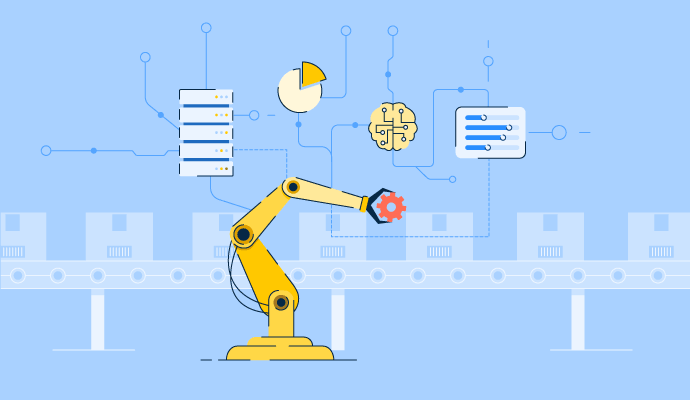
When we think about remote work, we usually imagine employees performing the same tasks they complete in the office at home. This means that anyone who works in a physical environment such as a warehouse, manufacturing facility, or retail store cannot work remotely.
by Gabriel Gheorghiu
ERP vs. CRM: Choosing the Best Solution for Your Business
Customers are the fuel of any business. They drive the revenue that organizations need to grow and succeed. Resources, on the other hand, are the machinery required for smooth business operations. Employees, equipment, partners, and working capital all come under resources.
by Harshita Tewari
How to Calculate Cost of Goods Sold (COGS): A Complete Guide
Understanding your costs is essential for sustaining profitability in manufacturing.
by Devin Pickell
15 Best Free CRM Software in 2024
As a salesperson in a small business, you juggle endless spreadsheets, a flooded inbox, and constant pressure from leadership and clients alike. Plus, your budget stays tiny. The result? Missed opportunities, wasted time, and burnout.
by Devyani Mehta
What Is ERP Implementation? Steps, Strategies, and Risks
The implementation of a software system—particularly one as complex and expansive as an Enterprise Resource Planning (ERP)—requires a holistic knowledge of not only the software in question but also an intense understanding of your organization’s business operations and workflows.
by Piper Thomson
History of Accounting: How It's Evolved Over the Years
There’s a good chance you’ve never covered this in your accounting classes.
by Rob Browne
Venture Capital: What It Is, How It Works, and Types
The startup trend is showing no signs of slowing down.
by Mary Clare Novak
Chaos to Cohesion: How Program Management Drives Results
Are you feeling overwhelmed by the number of projects you're juggling? Like you're constantly trying to keep track of multiple projects, all with different deadlines and stakeholders? If so, you're not alone.
by Harshita Tewari
What Is ERP? How It Helps You Accelerate Growth and Profit
One of the amazing aspects of this fourth industrial revolution is that there is a software solution for nearly any issue under the sun.
by Piper Thomson
How to Choose the Right Software Mix for Manufacturing
Manufacturing processes are complex and require multiple tools to achieve the desired results. Certain tools used in the manufacturing sector, such as product lifecycle management (PLM), enterprise resource planning (ERP), and quality management systems (QMS), have unique, but complementary features. At present, companies are looking to combine such software tools to have better visibility into their manufacturing operations. However, it is important that the integration is done in an appropriate manner, or else it fails to maximize the organization’s efficiency.
by Gabriel Gheorghiu
Introducing the Recurring Revenue Finance Category on G2
On December 23rd, 2022, G2 launched its new Recurring Revenue Finance category, which falls under the Accounting & Finance parent category. G2 created this category to represent a more recent, evolved way for high-growth start-up SaaS companies to borrow money without losing a stake (equity or ownership) in their company.
by Nathan Calabrese
The Benefits and Types of Manufacturing Inventory Management
Keeping track of all the goods in your inventory is easier said than done.
by Adithya Siva
2023 Trends in Enterprise Resource Planning (ERP)
This post is part of G2's 2023 digital trends series. Read more about G2’s perspective on digital transformation trends in an introduction from Emily Malis Greathouse, director, market research, and additional coverage on trends identified by G2’s analysts.
by Gabriel Gheorghiu
Highlights From the G2 Spring 2022 ERP Reports
Enterprise resource planning (ERP) is probably one of the most mature software markets, which usually experiences few significant advancements other than the occasional merger or acquisition. At the same time, many changes in the industry may not be considered groundbreaking but can considerably impact ERP buyers and users.
by Gabriel Gheorghiu
How Cloud ERP Helps Manufacturers with Resource Management
In June 2021, I wrote an article that described how cloud enterprise resource planning (ERP) can help solve manufacturing challenges and highlighted integrated systems as the main benefit of software as a service (SaaS) ERP systems.
by Gabriel Gheorghiu
How Cloud ERP Helps Address Manufacturing Challenges
Enterprise resource planning (ERP) systems were created for manufacturing companies decades ago, and they still have an important place in the software ecosystem within this industry.
by Gabriel Gheorghiu
2021 Trends in E-Commerce and Industry 4.0
This post is part of G2's 2021 digital trends series. Read more about G2’s perspective on digital transformation trends in an introduction from Michael Fauscette, G2's chief research officer and Tom Pringle, VP, market research, and additional coverage on trends identified by G2’s analysts.
by Gabriel Gheorghiu
2021 Trends in Accounting and Finance
This post is part of G2's 2021 digital trends series. Read more about G2’s perspective on digital transformation trends in an introduction from Michael Fauscette, G2's chief research officer and Tom Pringle, VP, market research, and additional coverage on trends identified by G2’s analysts.
by Nathan Calabrese
How to Stay Organized When Closing Books Remotely
Almost any public or private business with an accounting and finance department performs a month, quarter, and year-end close, which is a series of steps to review, record, and reconcile accounting information.
For this blog, I’m going to refer to only month-end close for consistency and simplicity.
by Nathan Calabrese
How Industry 4.0 Will Change Project Management
Project management software and methodologies are a form of automation that has been used in business for nearly 50 years. New technologies such as artificial intelligence (AI) and the Internet of Things (IoT) have the potential to automate project management—but, how far will they go?
by Gabriel Gheorghiu
The Importance of Accounts Payable (AP) Automation
The phrase “time is money” has never been more true than it is now.
by Nathan Calabrese
Your Guide To The Most Effective Types of ERP Systems
The development of ERP has strived for an almost utopian ideal: the consolidation of all business processes under a single software system.
by Piper Thomson
How Project-Based Software Helps Companies
Most tasks we do at work are either process or project-based. Processes are made of repetitive tasks that we do repeatedly, with little to no variation. Project work can vary significantly from one project to another and can change based on internal or customer requirements.
by Gabriel Gheorghiu
The Complete History of ERP: Its Rise to a Powerful Solution
With the rapid expansion of technology making communication easier than ever, new and exciting business opportunities have begun to make their way onto the scene.
by Piper Thomson
How SMBs Can Benefit from Industry 4.0
Most Industry 4.0 success stories mention large multinational companies such as GE or ABB.
by Gabriel Gheorghiu
Key Components of Accounting Automation
No matter how dry or stale people think accounting and finance is, these functions are vital to the health of any company. Felipe Torres, a financial analyst at G2, further explains that finance and accounting functions “...help us prepare for the future and drive strategies that ensure we're maximizing our potential.”
by Nathan Calabrese
The Pros and Cons of Different Automation Types
The concept of automation is straightforward: create tools that perform tasks with minimal human involvement. And the motivation for more automation is simple: Companies can do more with less. “More” means companies can sell and deliver a higher volume of products and services than ever before. “Less” refers to the fact that, thanks to automation, fewer resources are required.
by Gabriel Gheorghiu
A Brief History of Data and the Birth of Analytics Platforms
The story of the first business computer could not be more British if it tried.
by Tom Pringle
The G2 on Industry 4.0: Understanding Industrial Revolution on a Global Scale
If you work in manufacturing or supply chain, you’ve probably heard of Industry 4.0. While the term may be used together with buzzwords like digital transformation, interconnectivity, or end-to-end value chain, Industry 4.0 refers to a new industrial revolution.
by Gabriel Gheorghiu
What Is Cash Basis Accounting? (+When You Should Use It)
The products and services your company provides are your lifeblood.
by Rob Browne
How Business Digital Transformation Works In The Real World
Business digital transformation is a buzzword that is misused and not completely clear. For instance, the Wikipedia definition is incomplete and vague: “Digital Transformation (DT) is the use of new, fast-changing digital technology to solve problems often utilizing cloud computing, reducing reliance on user-owned hardware but increasing reliance on subscription-based cloud services.”
by Gabriel Gheorghiu
Using Project Portfolio Management (PPM) to Determine Value
A portfolio is a collection of your best work, put forth in the hopes of making a positive impression.
by Grace Pinegar
Accounting Software Basics (+ Some Key Features to Look For)
Most business owners know that accounting is one of the most important aspects of running a company.
by Devin Pickell
ERP Systems Glossary Terms

ERP Systems Discussions
0
Question on: NetSuite
Freight Cost
How can I link my freight cost to a sales order. I have been trying to match my costs with revenues. So far NetSuite is matching COGS and Sales Revenue but I am unable to match freight out the cost to a sales order.
I am looking for ways to incorporate all the container inbound cost that come in such as demurrage, detention, etc and track those all against landed cost. What is the best way to accomplish this? We import internationally so costs are in EUR and USD depending on where the invoice is from.
0
Question on: NetSuite
How can I have my invoices send out automatically?
We have customers with 4 year contracts and they need to be billed either monthly, quarterly or annually.
We use Advanced Billing to establish billing schedules which allow you to specify a number a variables for billing purposes. For example, we offer a number of depot service contracts with flexible terms and payment options. We may have a customer that wants an annual contract, billed monthly. We create a Billing Schedule to split the total amount over a period of 12 months and invoice 1/12 on the same date of each month. The advanced rev rec keeps our revenue in line throughout the periods to ensure proper accounting. We have billing schedules created to accommodate monthly, quarterly, semi-annual and annual installment options for terms ranging from a single month to 5 years.
The sales order transaction maintains a status of "Pending Billing" through the duration of the billing schedule where each time a bill date arrives, NetSuite automatically creates the monthly invoice and our Email Invoice workflow picks them all up through a day-end process and emails to the customer each night. Completely hands off process ensuring we never miss a scheduled invoice creation or delivery!
Hope this helps!
If you mean how to send out the created invoices as PDF, I would suggest to use a scheduled workflow
You can create a billing schedule where the customers can be billing from a sales order automatically and check the preference to send the Invoice as email automatically.
0
Question on: MRPeasy
How do you use MRPeasy?
To use MRPeasy for manufacturing operations, you can follow these steps:
Overview of MRPeasy:
Familiarize yourself with MRPeasy by reviewing the overview section. This will give you a broad understanding of the software's capabilities and how it can be applied to your manufacturing operations.
Play with demo data:
Before entering your own data, you can play with the demo data provided to get a feel for how the system works. This step is crucial for understanding the functionality without affecting your actual data.
Remove demo data and prepare a test task:
Once you're comfortable, remove the demo data and prepare a test task to start using the system with your own information.
Enter parts and products:
Input the details of the parts and products you will be manufacturing. This includes creating your Bill of Materials (BOM) and setting up your inventory items.
Plan and report production:
Use MRPeasy's production planning tools to schedule and manage your manufacturing operations. Report production progress and track the use of materials.
Buy parts and materials:
Manage procurement by creating purchase orders for the parts and materials needed for production.
Sell products:
Handle customer orders and sales processes within MRPeasy.
Stock management:
Keep track of your inventory levels, plan material purchases, and manage stock movements.
Usage tips:
Explore additional tips and best practices for using MRPeasy effectively.
To bring your manufacturing operations to a new level of efficiency with MRPeasy, start your free trial today and explore these steps in more detail.
ERP Systems Reports
Mid-Market Grid® Report for ERP Systems
Fall 2026
G2 Report: Grid® Report
Grid® Report for ERP Systems
Fall 2026
G2 Report: Grid® Report
Enterprise Grid® Report for ERP Systems
Fall 2026
G2 Report: Grid® Report
Momentum Grid® Report for ERP Systems
Fall 2026
G2 Report: Momentum Grid® Report
Small-Business Grid® Report for ERP Systems
Fall 2026
G2 Report: Grid® Report
Enterprise Grid® Report for ERP Systems
Summer 2026
G2 Report: Grid® Report
Small-Business Grid® Report for ERP Systems
Summer 2026
G2 Report: Grid® Report
Mid-Market Grid® Report for ERP Systems
Summer 2026
G2 Report: Grid® Report
Grid® Report for ERP Systems
Summer 2026
G2 Report: Grid® Report
Momentum Grid® Report for ERP Systems
Summer 2026
G2 Report: Momentum Grid® Report