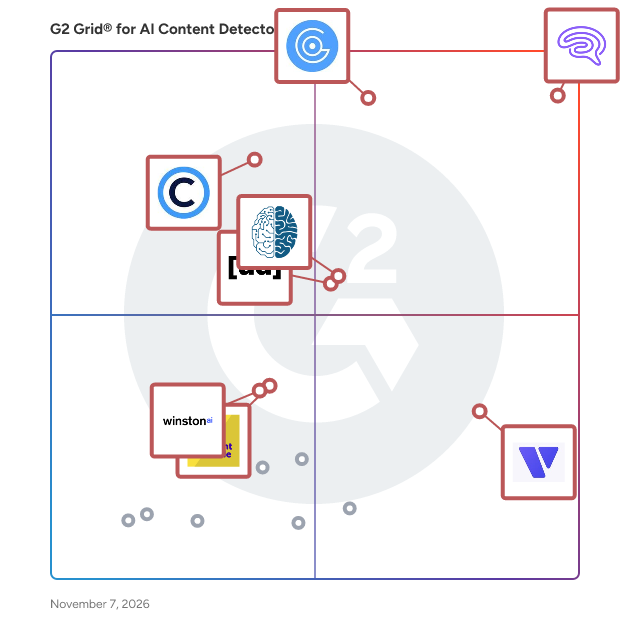
AI content detector software analyzes text or other content to determine whether it was generated by AI, producing confidence scores and, in some cases, identifying which model produced the content, helping businesses bring clarity and transparency to AI-generated content in an environment where synthetic media creation is increasingly prevalent.
Core Capabilities of AI Content Detector Software
To qualify for inclusion in the AI Content Detectors category, a product must:
- Provide the capability to analyze text or other forms of content to determine if it was generated by AI models
- Identify and tag AI-generated content within a given document
- Produce a confidence score indicating how confident the software is that the content is AI-generated
Common Use Cases for AI Content Detector Software
Educators, publishers, content teams, and compliance professionals use AI content detectors to verify content authenticity and maintain trust. Common use cases include:
- Screening submitted academic work or professional content for AI-generated text
- Identifying AI-generated content in brand communications to ensure authenticity standards are met
- Auditing content pipelines where AI writing tools are used to maintain editorial transparency
How AI Content Detectors Differ from Other Tools
AI content detectors are similar to plagiarism checker software in that both verify whether content was produced by the person claiming authorship, but AI content detectors focus specifically on identifying machine-generated content rather than human plagiarism. While AI writing assistants and synthetic media software enable content generation at scale, AI content detectors serve as a transparency layer to identify when such tools have been used.
Insights from G2 on AI Content Detector Software
Based on category trends on G2, confidence scoring and granular authorship analysis stand out as top capabilities. Improved content authenticity oversight and reduced manual review effort stand out as primary benefits of adoption.