

Tenable
581 reviews
- 9 profiles
- 20 categories
Average star rating
4.5
#1 in 1 categories
Grid® leader
Serving customers since
Tenable Solutions
Discover ready-made solutions that bring related products, reviews, and resources together in one place.
Featured Products

All Products & Services
Tenable Reviews

IM
Verified User in Mining & Metals
Extensive Coverage Across On-Prem and Cloud Infrastructure
Extensive coverage across on-premise and cloud infrastructure.
AC
Verified User in Computer Software
Unified Exposure Management with Actionable Risk Insights
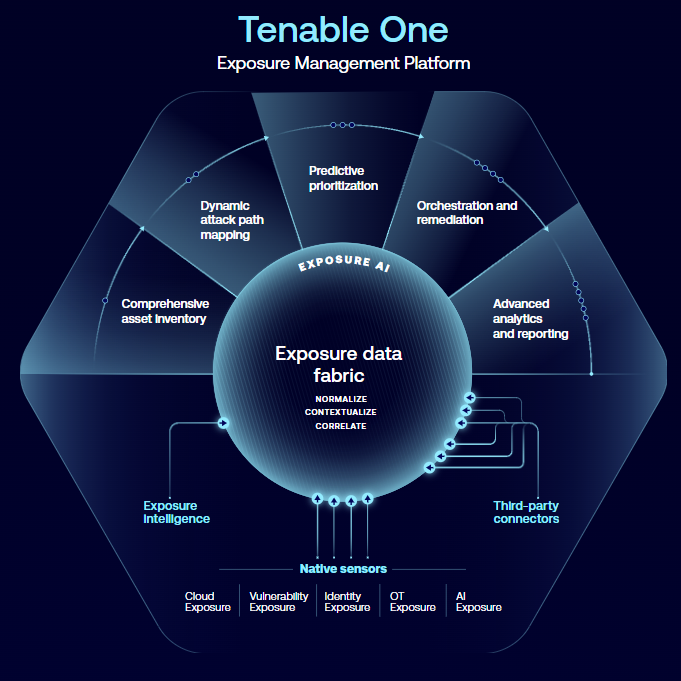
What I like best about Tenable One is its ability to provide a single platform for managing cyber exposure across assets, vulnerabilities, identities, cloud resources, and attack paths. In my day-to-day work, I use the Asset Inventory, Exposure View, risk-based dashboards, and reporting capabilities to identify high-risk assets and prioritize remediation activities. Having everything centralized significantly reduces the time spent correlating data from multiple security tools.
The risk-based prioritization capabilities are particularly valuable. Instead of focusing only on CVSS scores, Tenable One provides additional context such as asset criticality, exposure relationships, and attack path analysis, allowing our team to focus on the findings that present the greatest business risk. This has improved our vulnerability management process and helped us make more informed remediation decisions.
From a UI and UX perspective, the dashboards are intuitive and make it easy to move between assets, exposures, vulnerabilities, and remediation workflows. The visual reporting helps communicate security posture and remediation progress to both technical teams and management stakeholders without requiring extensive manual analysis.
The platform also provides strong integration capabilities with tools such as ServiceNow, Jira, Microsoft Sentinel, and Splunk. These integrations streamline remediation tracking, ticket management, and security operations workflows, helping security and operations teams collaborate more effectively.
Performance has been consistently reliable even when reviewing large numbers of assets and findings. Search, filtering, and reporting functions allow us to quickly identify priority issues and track remediation progress over time.
Another area I appreciate is the intelligence built into the platform. The exposure-focused approach, attack path visibility, and contextual risk insights help reduce alert fatigue and improve decision-making. Rather than reviewing thousands of findings individually, we can focus on the exposures most likely to impact the organization.
From an ROI perspective, Tenable One has reduced the effort required to manually analyze vulnerability data, improved remediation prioritization, and provided a clearer view of overall risk. The onboarding process was straightforward, and the available documentation and support resources helped us become productive quickly.
Overall, Tenable One provides comprehensive exposure management, strong risk prioritization, actionable intelligence, useful integrations, and effective reporting capabilities that help improve security operations and reduce organizational risk.

SD
Soumyajit D.
Enterprise Portfolio & Project Management || Cyber Security Solution Architect || Strategic Technical AdvisorClear, Actionable Cloud Risk with Accurate Visibility and Prioritized Findings
What stands out most is how it turns cloud complexity into clear, actionable risk. Modern cloud environments are dynamic and distributed across multiple providers, services, and ephemeral workloads. Tenable Cloud Security combines broad discovery with continuous checks for vulnerabilities and misconfigurations, then layers risk-based prioritization on top so teams aren’t overwhelmed by noise. That combination—accurate visibility plus prioritized, contextualized findings—makes security work practical instead of purely reactive.
About
What is Tenable?
Tenable, the Exposure Management company, empowers organizations to understand and reduce cyber risk.
Details
Ownership
NASDAQ: TENB
Website
www.tenable.com