Relational Databases Resources
Articles, Glossary Terms, Discussions, and Reports to expand your knowledge on Relational Databases
Resource pages are designed to give you a cross-section of information we have on specific categories. You'll find articles from our experts, feature definitions, discussions from users like you, and reports from industry data.
Relational Databases Articles
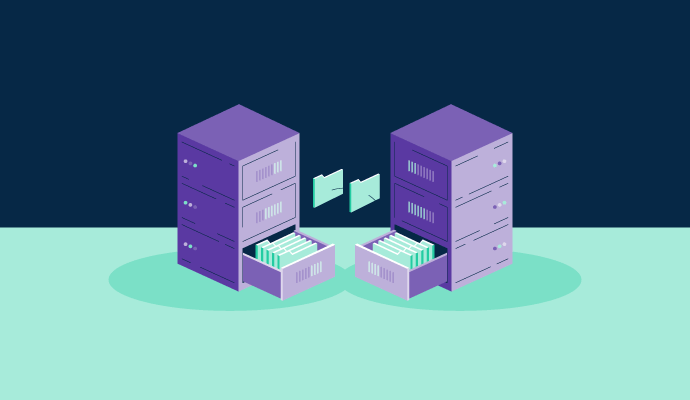
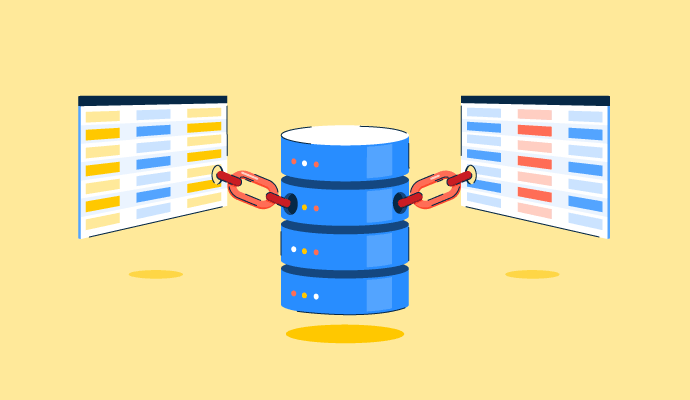
What is Database Replication? Everything You Need To Know
Consistent and reliable technology is the backbone of any successful business. While many organizations use multiple desktop and mobile devices, they often rely on a single database for critical operations. So, what happens when that database goes down?
by Holly Landis
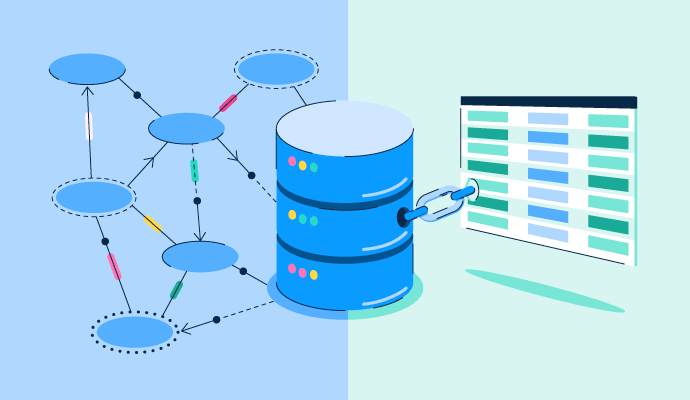
Graph Database Vs. Relational Database: Which One Wins?

Data remains an invaluable resource. When processed properly, it fuels savvy business decisions. How you store data has a lot to do with the ways you’re able to further process it.
by Sagar Joshi
What Is an Entity-Relationship Diagram? A Complete Guide
When designing a relational database, engineers create an entity-relationship diagram to represent how different pieces of data are related. These diagrams provide a clear visualization of data relationships, making it easier to understand the overall structure.
by Sagar Joshi
What Is Database Normalization? Types and Examples
Without adequate data collection and analysis, decision-making in any organization often goes haywire.
by Sagar Joshi
Mastering CRUD: Create, Read, Update, and Delete Data Effectively
You’ve probably thought about how data is created and used for web applications, databases, and content management systems. But think about this: do you ever get frustrated by the challenges of managing that data? Slow queries, information scattered across different systems, and a clunky user experience are all too common.
by Samudyata Bhat
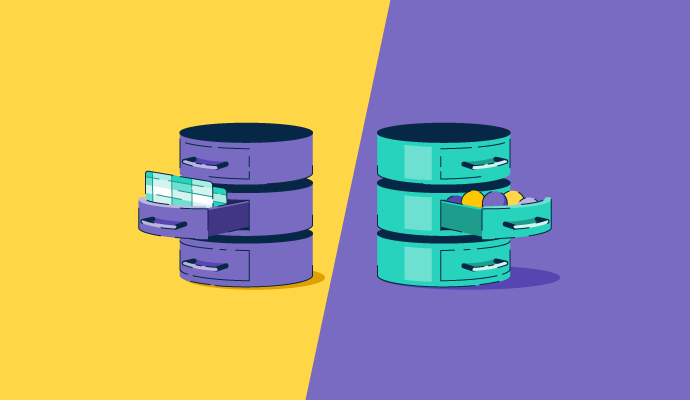
SQL vs. NoSQL: What Are the Key Differences?
The choice of SQL vs. NoSQL isn't technical; it's strategic.
by Washija Kazim
What Is a Relational Database? How Does RDBMS Organize Data
Imagine you run an e-commerce store. You have to keep daily track of customer information, order details, and product inventory. Without a proper system in place, chaos is just one sale away.
by Dibyani Das
What Makes DBaaS the Next Big “As a Service” Offering?
Whenever I hear the word database, I picture a mega-sized Oracle system at the back of a building collecting and storing our data. But if only were databases that simple!
by Preethica Furtado
Relational Databases Glossary Terms
Relational Databases Discussions
0
Question on: MySQL
What is MySQL used for?
MySQL is a relational database management system, and as its name suggests you can easily import, export, and manipulate data file upto 10 TBSs. It also lets you create procedures, triggers, and perform indexing and joins on the data.
MySQL is a widely used relational database management system (RDBMS) that serves various purposes across different industries and applications. Here are some common uses for MySQL:
Web Development:
MySQL is frequently employed as the backend database for websites and web applications, storing data such as user profiles, content, and transaction information.
Content Management Systems (CMS):
Many popular CMS platforms, like WordPress and Joomla, utilize MySQL to manage and store website content, user data, and configurations.
E-commerce:
E-commerce platforms use MySQL to store product information, customer data, and transaction details, ensuring efficient and reliable order processing.
Data Warehousing:
MySQL can be used to build and manage data warehouses, facilitating the storage, organization, and analysis of large volumes of structured data.
Business Applications:
MySQL serves as a backend database for various business applications, helping organizations manage and process data related to operations, customer relations, and more.
Mobile App Backend:
Mobile applications often use MySQL to store and retrieve data from servers, managing user accounts, preferences, and other app-related information.
Analytics and Reporting:
MySQL is utilized in conjunction with business intelligence tools for data analysis, reporting, and generating insights from structured data.
Educational Systems:
Educational institutions use MySQL to manage student records, grades, course information, and other academic data.
Log and Event Management:
MySQL can be employed for storing logs and event data, providing a structured way to monitor system activities, errors, and user interactions.
Collaboration Tools:
MySQL is used in various collaboration tools and platforms, helping manage data related to projects, team collaboration, and document sharing.
Geospatial Applications:
MySQL supports spatial data types and can be used for geospatial applications, such as mapping and location-based services.
Network and Systems Management:
MySQL is used in network and systems management tools to store configuration data, monitor network performance, and track system activities.
It's important to note that MySQL's versatility, performance, and open-source nature contribute to its widespread adoption across different domains and use cases. The specific application of MySQL depends on the requirements and goals of the project or organization using it.
It is basically the standard for relational databases. In my projects, I use it for any structured data because it’s so reliable and easy to scale with tools like Docker and AWS.
0
Question on: IBM Db2
What is IBM Db2 used for?
It is a name of the database which is used in IBM I system.
0
Question on: PostgreSQL
What is PostgreSQL used for?
PostgreSQL is an open-source database used to store, manage, and retrieve data. It's known for its reliability, scalability, and support for complex queries, making it ideal for web apps, data analytics, and enterprise systems.
Relational Databases Reports
Mid-Market Grid® Report for Relational Databases
Fall 2026
G2 Report: Grid® Report
Grid® Report for Relational Databases
Fall 2026
G2 Report: Grid® Report
Enterprise Grid® Report for Relational Databases
Fall 2026
G2 Report: Grid® Report
Momentum Grid® Report for Relational Databases
Fall 2026
G2 Report: Momentum Grid® Report
Small-Business Grid® Report for Relational Databases
Fall 2026
G2 Report: Grid® Report
Enterprise Grid® Report for Relational Databases
Summer 2026
G2 Report: Grid® Report
Small-Business Grid® Report for Relational Databases
Summer 2026
G2 Report: Grid® Report
Mid-Market Grid® Report for Relational Databases
Summer 2026
G2 Report: Grid® Report
Grid® Report for Relational Databases
Summer 2026
G2 Report: Grid® Report
Momentum Grid® Report for Relational Databases
Summer 2026
G2 Report: Momentum Grid® Report