Relational Databases Resources
Articles, Glossary Terms, Discussions, and Reports to expand your knowledge on Relational Databases
Resource pages are designed to give you a cross-section of information we have on specific categories. You'll find articles from our experts, feature definitions, discussions from users like you, and reports from industry data.
Relational Databases Articles
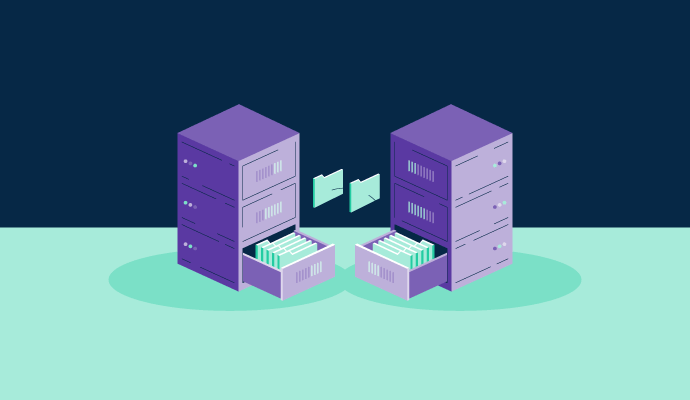
What is Database Replication? Everything You Need To Know
Consistent and reliable technology is the backbone of any successful business. While many organizations use multiple desktop and mobile devices, they often rely on a single database for critical operations. So, what happens when that database goes down?
by Holly Landis
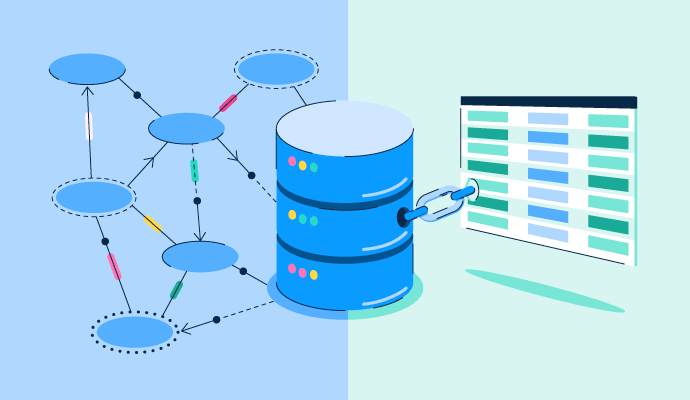
Graph Database Vs. Relational Database: Which One Wins?

Data remains an invaluable resource. When processed properly, it fuels savvy business decisions. How you store data has a lot to do with the ways you’re able to further process it.
by Sagar Joshi
What Is an Entity-Relationship Diagram? A Complete Guide
When designing a relational database, engineers create an entity-relationship diagram to represent how different pieces of data are related. These diagrams provide a clear visualization of data relationships, making it easier to understand the overall structure.
by Sagar Joshi
What Is Database Normalization? Types and Examples
Without adequate data collection and analysis, decision-making in any organization often goes haywire.
by Sagar Joshi
Mastering CRUD: Create, Read, Update, and Delete Data Effectively
You’ve probably thought about how data is created and used for web applications, databases, and content management systems. But think about this: do you ever get frustrated by the challenges of managing that data? Slow queries, information scattered across different systems, and a clunky user experience are all too common.
by Samudyata Bhat
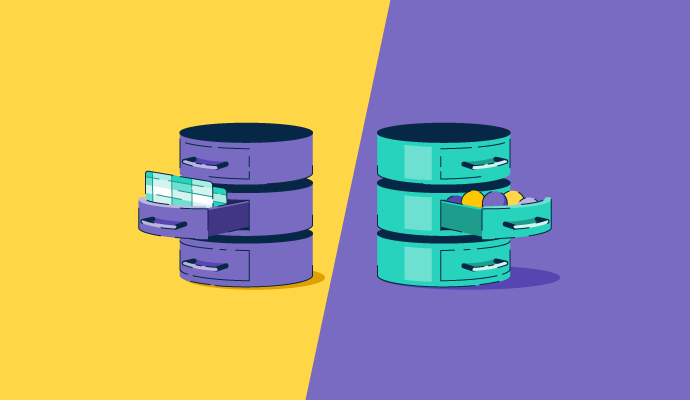
SQL vs. NoSQL: What Are the Key Differences?
The choice of SQL vs. NoSQL isn't technical; it's strategic.
by Washija Kazim
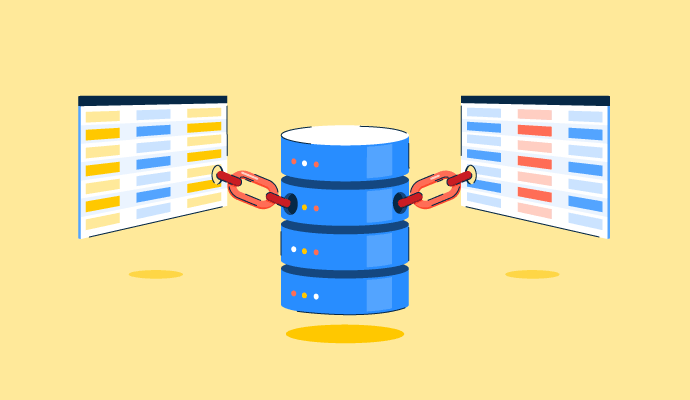
What Is a Relational Database? How Does RDBMS Organize Data
Imagine you run an e-commerce store. You have to keep daily track of customer information, order details, and product inventory. Without a proper system in place, chaos is just one sale away.
by Dibyani Das
What Makes DBaaS the Next Big “As a Service” Offering?
Whenever I hear the word database, I picture a mega-sized Oracle system at the back of a building collecting and storing our data. But if only were databases that simple!
by Preethica Furtado
Relational Databases Glossary Terms
Relational Databases Discussions
0
Want to replace KDB+ with DB2 BLU
Please check:
https://db-engines.com/en/system/IBM+Db2%3BKdb%2B
0
Question on: MySQL
Could you explain how to optimize MySQL database performance for a new user handling large-scale data?
Try these steps:
1) try normalization
2) use indexes
3) try to separate workloads using different techinques
Indexing is your best friend here. I always make sure queries aren't hitting the whole table. Also, tuning the innodb_buffer_pool_size to around 75% of your RAM keeps the heavy lifting in memory instead of on the disk.
For handling large-scale data in MySQL, I would start with proper indexing on columns that are frequently used in WHERE, JOIN, and ORDER BY clauses. It's also important to avoid SELECT * and fetch only the required columns. As the database grows, query optimization using EXPLAIN helps identify slow queries. For very large tables, partitioning can improve performance. Additionally, increasing the InnoDB buffer pool size, using connection pooling, and implementing caching with tools like Redis can significantly reduce database load. Regular monitoring and database maintenance are also essential to ensure consistent performance.
0
Question on: Microsoft SQL Server
What are the latest advancements in Microsoft SQL Server that are enhancing database management for businesses?
In fact, many feature additions have been made. A very comprehensive explanation has been made on the Microsoft website and the article has been included. Among the main features that draw attention; maximum data analysis thanks to Azure Synapse Link for SQL, more queries, data virtualization, object storage and management, much faster data recovery, improvements and speed increase in TCP connections, microsoft entra authentication, interaction with defender, dynamic masking, new arrangements from log files, less memory consumption and many feature additions.
The 2025 version incorporates significant improvements in Intelligent Query Processing (IQP). The innovations focus on greater automation and performance optimization through the use of AI. The cardinality estimator, introduced in 2022, is capable of adjusting estimates with more accurate results.
Relational Databases Reports
Mid-Market Grid® Report for Relational Databases
Fall 2026
G2 Report: Grid® Report
Grid® Report for Relational Databases
Fall 2026
G2 Report: Grid® Report
Enterprise Grid® Report for Relational Databases
Fall 2026
G2 Report: Grid® Report
Momentum Grid® Report for Relational Databases
Fall 2026
G2 Report: Momentum Grid® Report
Small-Business Grid® Report for Relational Databases
Fall 2026
G2 Report: Grid® Report
Enterprise Grid® Report for Relational Databases
Summer 2026
G2 Report: Grid® Report
Small-Business Grid® Report for Relational Databases
Summer 2026
G2 Report: Grid® Report
Mid-Market Grid® Report for Relational Databases
Summer 2026
G2 Report: Grid® Report
Grid® Report for Relational Databases
Summer 2026
G2 Report: Grid® Report
Momentum Grid® Report for Relational Databases
Summer 2026
G2 Report: Momentum Grid® Report