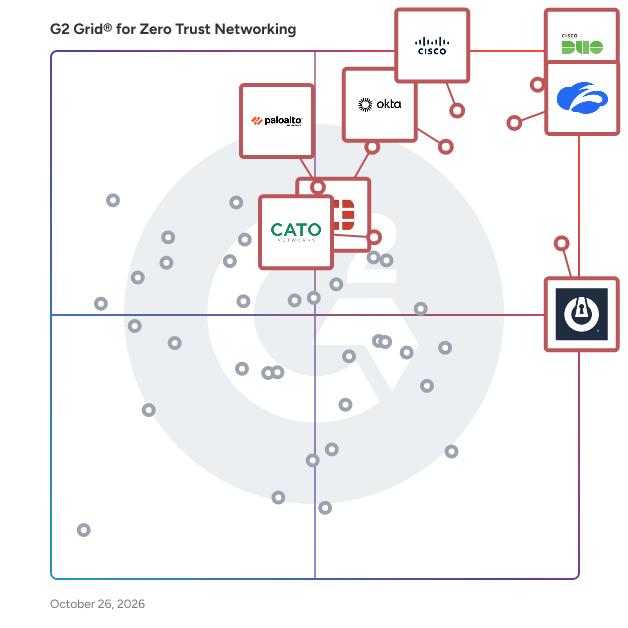
Zero trust networking software implements the zero trust security model, which assumes every user, internal or external, is a potential threat until verified. Unlike traditional castle-and-moat security systems, these solutions continuously monitor network activity and user behavior, adapting authentication requirements based on individual risk signals to enforce strict access controls across decentralized networks and locations.
Core Capabilities of Zero Trust Networking Software
To qualify for inclusion in the Zero Trust Networking category, a product must:
- Utilize adaptive authentication to continuously verify user permissions
- Allow for network segmentation to simplify and broaden policy enforcement
- Monitor traffic and user behavior for ongoing inspection and analysis
How Zero Trust Networking Software Differs from Other Tools
Zero trust networking software uses similar authentication methods to risk-based authentication software, but is specifically designed for network access control. Risk-based authentication applies broadly, to networks, applications, databases, and other privileged resources, while zero trust networking is purpose-built to enforce least-privilege access across network infrastructure, making it the preferred choice for organizations managing complex, distributed IT environments.
Insights from G2 on Zero Trust Networking Software
Based on category trends on G2, continuous verification and behavioral monitoring stand out as the standout features driving adoption. Security teams from enterprises with distributed workforces note that zero trust networking is essential for managing access controls across multiple locations and cloud environments without relying on perimeter-based defenses.