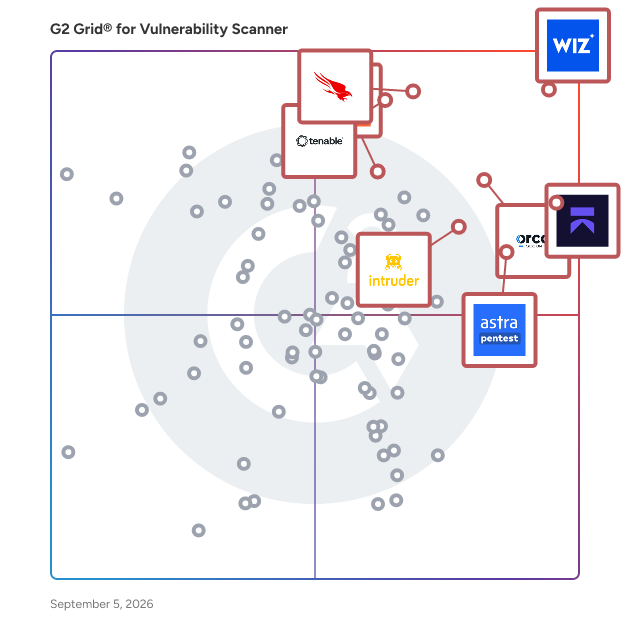
Vulnerability scanners continuously monitor applications and networks against an up-to-date database of known vulnerabilities, identifying potential exploits, producing analytical reports on the security state of applications and networks, and providing recommendations to remedy known issues.
Core Capabilities of Vulnerability Scanner Software
To qualify for inclusion in the Vulnerability Scanner category, a product must:
- Maintain a database of known vulnerabilities
- Continuously scan applications for vulnerabilities
- Produce reports analyzing known vulnerabilities and new exploits
Common Use Cases for Vulnerability Scanner Software
Security and IT teams use vulnerability scanners to proactively identify and address weaknesses before they can be exploited. Common use cases include:
- Running scheduled and on-demand scans of applications and network infrastructure for known CVEs
- Generating prioritized vulnerability reports to guide remediation efforts
- Testing application and network security posture as part of ongoing compliance and risk management programs
How Vulnerability Scanner Software Differs from Other Tools
Some vulnerability scanners operate similarly to dynamic application security testing (DAST) tools, but the key distinction is that vulnerability scanners test applications and networks against known vulnerability databases rather than mimicking real-world attacks or performing penetration tests. DAST tools simulate attacker behavior to uncover runtime vulnerabilities, while scanners focus on identification and reporting of known weaknesses.
Insights from G2 on Vulnerability Scanner Software
Based on category trends on G2, continuous scanning and comprehensive vulnerability reporting stand out as standout capabilities. Faster identification of critical exposures and improved compliance readiness stand out as primary benefits of adoption.