Relational Databases Resources
Articles, Glossary Terms, Discussions, and Reports to expand your knowledge on Relational Databases
Resource pages are designed to give you a cross-section of information we have on specific categories. You'll find articles from our experts, feature definitions, discussions from users like you, and reports from industry data.
Relational Databases Articles
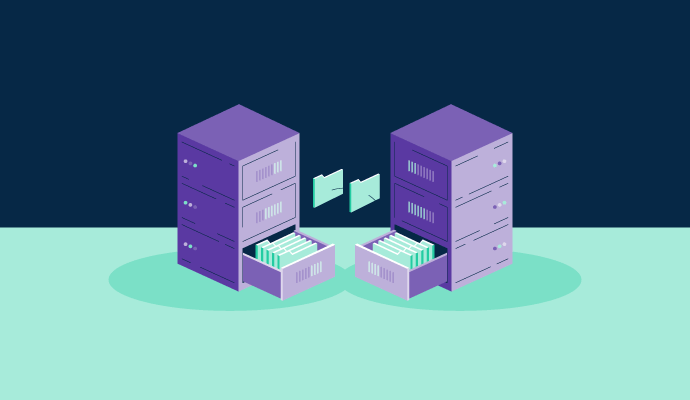
What is Database Replication? Everything You Need To Know
Consistent and reliable technology is the backbone of any successful business. While many organizations use multiple desktop and mobile devices, they often rely on a single database for critical operations. So, what happens when that database goes down?
by Holly Landis
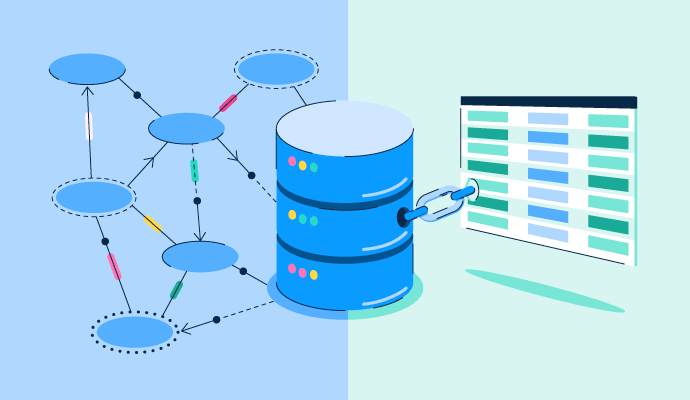
Graph Database Vs. Relational Database: Which One Wins?
Data remains an invaluable resource. When processed properly, it fuels savvy business decisions. How you store data has a lot to do with the ways you’re able to further process it.
by Sagar Joshi
What Is an Entity-Relationship Diagram? A Complete Guide
When designing a relational database, engineers create an entity-relationship diagram to represent how different pieces of data are related. These diagrams provide a clear visualization of data relationships, making it easier to understand the overall structure.
by Sagar Joshi
What Is Database Normalization? Types and Examples
Without adequate data collection and analysis, decision-making in any organization often goes haywire.
by Sagar Joshi
Mastering CRUD: Create, Read, Update, and Delete Data Effectively
You’ve probably thought about how data is created and used for web applications, databases, and content management systems. But think about this: do you ever get frustrated by the challenges of managing that data? Slow queries, information scattered across different systems, and a clunky user experience are all too common.
by Samudyata Bhat
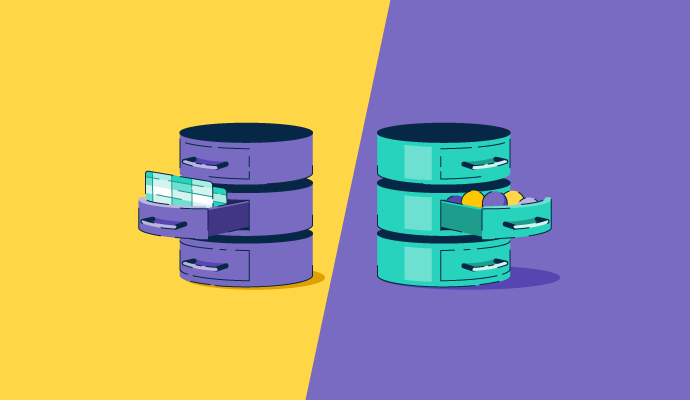
SQL vs. NoSQL: What Are the Key Differences?
The choice of SQL vs. NoSQL isn't technical; it's strategic.
by Washija Kazim
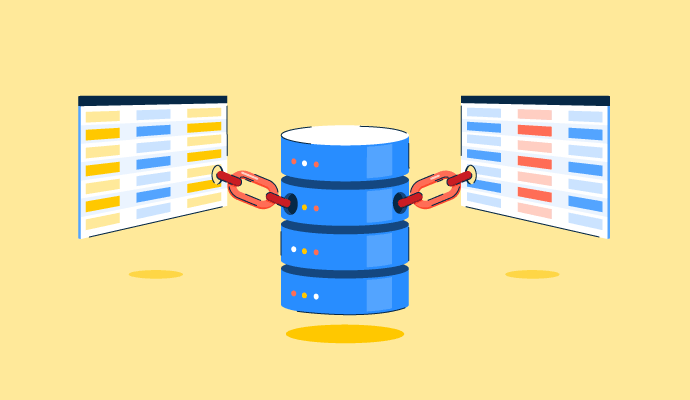
What Is a Relational Database? How Does RDBMS Organize Data
Imagine you run an e-commerce store. You have to keep daily track of customer information, order details, and product inventory. Without a proper system in place, chaos is just one sale away.
by Dibyani Das
What Makes DBaaS the Next Big “As a Service” Offering?
Whenever I hear the word database, I picture a mega-sized Oracle system at the back of a building collecting and storing our data. But if only were databases that simple!
by Preethica Furtado
Relational Databases Glossary Terms
Relational Databases Discussions
0
Question on: SAP HANA Cloud
How is SAP HANA makes data processing and transactions very fastHow is SAP HANA makes data processing and transactions very fast
Show More
Show Less
by minimizing the no. of business process steps by 30 to 40%
Show More
Show Less
There are multiple factor involves that makes HANA very fast
1. In memory database - all data resides in RAM that makes it faster
2. Storage Arhitecture - Data in table can be stored in column oriented and row oriented fashion. It depend upon how table content gonna used.
3. Multicore architecture.
These are few primary reasons that makes HANA very fast.
Show More
Show Less
0
Question on: InterSystems Caché
Caché database on-line replicationMy company has a LIS Systems based on caché database and we need to know if someone has been done some kind of database replication between two servers on different locations like a datacenter and a company server. Is it possible with caché? There are some technical brochure or information about it someone can share with me? Thank you in advance, Valmir
Show More
Show Less
One technology that may help you with it named Mirroring. You can have as many copies of your data as you need, in different datacenters. Link to documentation
https://docs.intersystems.com/irislatest/csp/docbook/Doc.View.cls?KEY=GHA_mirror_set#GHA_mirror_set_comm_network_dual
Show More
Show Less
0
Question on: SAP HEC (HANA Enterprise Cloud)
GoodGood One to go ahead!!
Show More
Show Less
Relational Databases Reports
Mid-Market Grid® Report for Relational Databases
Spring 2026
G2 Report: Grid® Report
Grid® Report for Relational Databases
Spring 2026
G2 Report: Grid® Report
Enterprise Grid® Report for Relational Databases
Spring 2026
G2 Report: Grid® Report
Momentum Grid® Report for Relational Databases
Spring 2026
G2 Report: Momentum Grid® Report
Small-Business Grid® Report for Relational Databases
Spring 2026
G2 Report: Grid® Report
Enterprise Grid® Report for Relational Databases
Winter 2026
G2 Report: Grid® Report
Small-Business Grid® Report for Relational Databases
Winter 2026
G2 Report: Grid® Report
Mid-Market Grid® Report for Relational Databases
Winter 2026
G2 Report: Grid® Report
Grid® Report for Relational Databases
Winter 2026
G2 Report: Grid® Report
Momentum Grid® Report for Relational Databases
Winter 2026
G2 Report: Momentum Grid® Report