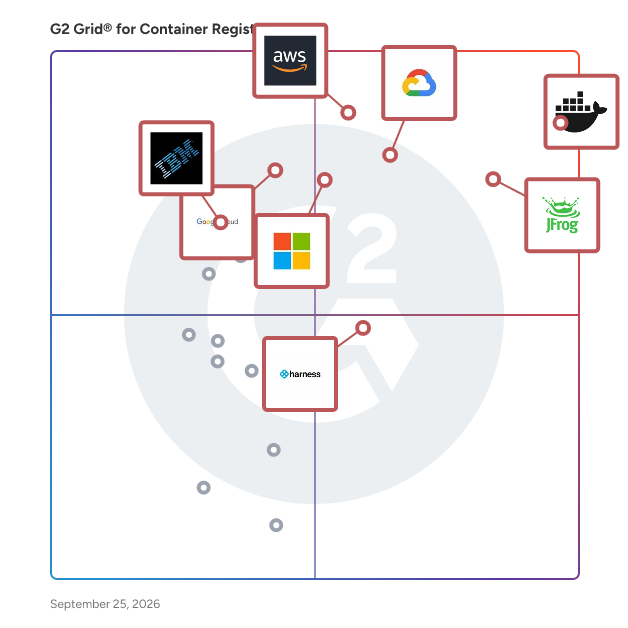
# Best Container Registry Software - Page 18

  *By [Adam Crivello](https://research.g2.com/insights/author/adam-crivello)*

   Container registries allow users to manage containers distributed throughout their applications and networks. The registry controls privileges to individual containers and allows users to organize and govern their visibility and accessibility. These registries can come in the form of a hosted service or an on-premise solution using local infrastructure. Companies utilize container registries to manage container configurations, store container images, and access them for deployment. Registries can benefit DevOps practices and facilitate continuous delivery practices by increasing container organization. Role-based assignments also increase security by requiring authentication policies for access. [container management software](https://www.g2.com/categories/container-management) and [container orchestration software](https://www.g2.com/categories/container-orchestration) solutions access containers from the registry and deploy them to their specified endpoint.

To qualify for inclusion in the Container Registry category, a product must:

- Store container images
- Provide a solution to organize and find individual containers
- Require authentication for container access
- Push containers to container management or orchestration solutions


## Category Overview

**Total Products under this Category:** 20


## Trust & Credibility Stats

**Why You Can Trust G2's Software Rankings:**

- 30 Analysts and Data Experts
- 1,100+ Authentic Reviews
- 20+ Products
- Unbiased Rankings

G2's software rankings are built on verified user reviews, rigorous moderation, and a consistent research methodology maintained by a team of analysts and data experts. Each product is measured using the same transparent criteria, with no paid placement or vendor influence. While reviews reflect real user experiences, which can be subjective, they offer valuable insight into how software performs in the hands of professionals. Together, these inputs power the G2 Score, a standardized way to compare tools within every category.


## Best Container Registry Software At A Glance

- **Leader:** [Docker](https://www.g2.com/products/docker-inc-docker/reviews)
- **Highest Performer:** [Harness Platform](https://www.g2.com/products/harness-platform/reviews)
- **Easiest to Use:** [Docker](https://www.g2.com/products/docker-inc-docker/reviews)
- **Top Trending:** [JFrog](https://www.g2.com/products/jfrog-2024-03-28/reviews)
- **Best Free Software:** [JFrog](https://www.g2.com/products/jfrog-2024-03-28/reviews)


---

**Sponsored**

### JFrog

JFrog Ltd. (Nasdaq: FROG), the creators of the unified DevOps, DevSecOps, DevGovOps and MLOps platform, is on a mission to create a world of software delivered without friction from development to production. Driven by a “Liquid Software” vision, the JFrog Platform is a software supply chain system of record that is designed to power organizations as they build, manage, and distribute secure software with speed and scale. Holistic security features help identify, protect, and remediate against threats and vulnerabilities. The universal, hybrid, multi-cloud JFrog Platform is available as both SaaS services across major cloud service providers and self-hosted. Millions of users and approximately 6,600 organizations worldwide, including a majority of the Fortune 100, depend on JFrog solutions to securely embrace digital transformation in the AI era. Learn more at www.jfrog.com or follow us on X @JFrog.


[Visit company website](https://www.g2.com/external_clickthroughs/record?secure%5Bad_program%5D=ppc&amp;secure%5Bad_slot%5D=category_product_list&amp;secure%5Bcategory_id%5D=1133&amp;secure%5Bdisplayable_resource_id%5D=1133&amp;secure%5Bdisplayable_resource_type%5D=Category&amp;secure%5Bmedium%5D=sponsored&amp;secure%5Bplacement_reason%5D=page_category&amp;secure%5Bplacement_resource_ids%5D%5B%5D=1133&amp;secure%5Bprioritized%5D=false&amp;secure%5Bproduct_id%5D=143017&amp;secure%5Bresource_id%5D=1133&amp;secure%5Bresource_type%5D=Category&amp;secure%5Bsource_type%5D=category_page&amp;secure%5Bsource_url%5D=https%3A%2F%2Fwww.g2.com%2Fcategories%2Fcontainer-registry%3Fpage%3D12&amp;secure%5Btoken%5D=168a213d636e5fbe846bc8f76a10c444d382798be42de3e9a1b040aa47d072e2&amp;secure%5Burl%5D=https%3A%2F%2Fjfrog.com%2Fartifactory%2F%3Futm_source%3Dg2%26utm_medium%3Dcpc_social%26utm_campaign%3Dbrand_awareness_banner_ad%26utm_content%3Du-bin&amp;secure%5Burl_type%5D=custom_url)

---


## Parent Category

[Containerization Software](https://www.g2.com/categories/containerization)


## Related Categories

- [Repository Management Software](https://www.g2.com/categories/repository-management)


---

## Buyer Guide

### What You Should Know About Container Registry Software

### What is Container Registry Software?

A container image is a package of all tools, libraries, and settings required to run containerized apps in any system. A container registry is a catalog of container images.&amp;nbsp;

Container registry software helps developers manage container images, and control access, permissions, and authentication of these images. This ensures their security remains intact as developers upload, download, or modify these images.

Containers are extensively used by cloud services developers to package their apps, as containerized apps can be run on any machine, providing flexibility. Container images are files or information needed to run containerized cloud-native applications. They contain information such as tools, metadata, libraries, and configurations required to run respective cloud-native applications.&amp;nbsp;

Container registry software, generally a hosted service, connects to container orchestration and container management platforms. It provides access to container or docker images for the cloud-native application development lifecycle and deployment so that developers can seamlessly use them to run their applications as required.

#### What Types of Container Registry Software Exist?

Container registry software can be of two types:

**Public container registry**

Public container registries have lesser security restrictions. Smaller organizations use them to set up their container registry at lower costs quickly. But security risks and control issues can be prevalent in public container registries.

**Private registry**

This type of registry for private repositories is hosted on-premises or remotely for organizations. A private registry provides better security measures, permissions, configurations, access control, and support. **&amp;nbsp;**

### What are the Common Features of Container Registry Software?

The following are some core features within container registry software that can help users:

**Security:** Container registry software can scan vulnerabilities and misconfigurations to ensure security controls are in place. It can also send notifications when there are any breaches.

**Access control and authentication:** The software provides role-based access to container images and defines privileges for different personas.

**Logging:** The software maintains a log of all personas accessing the repositories that can be analyzed in case of any issues or breaches.&amp;nbsp;

**Analytics:** Container registry systems provide tools to analyze the repositories and logs to identify risks and optimization areas.

**Multi-cloud environments:** As developers create cloud services in multi-cloud environments, these tools allow comfortable integration across environments.

### What are the Benefits of Container Registry Software?

Container registry software helps developers in their continuous delivery/continuous deployment (CI/CD) pursuits.

**Safe storage space:** Container registry software provides a secure way for caching, migrating, replicating, and storing container images in between usages. It provides security and vulnerability scanning features to ensure container images are not compromised.

**Easy to track:** The image catalog offers an easy way to manage hundreds of container images flowing around scores of apps.

**Agility:** This software allows developers to quickly scale or develop new apps by managing container images containing tools, libraries, and information to run containerized apps.

**Automation** : This software helps DevOps developers automate container image access processes and to migrate images from docker container repositories.

### Who Uses Container Registry Software?

**Developers:** Developers package cloud-native applications in containers because containers provide the flexibility of deploying SaaS applications anywhere. Docker container images are repositories that hold the information required to run these containers. A container registry provides a way to manage these repositories. So developers use container registries in cloud-native application development and deployment of codes in their DevOps journey.

#### Software Related to Container Registry Software

Related solutions that can be used together with container registry software include:

[Container management software](https://www.g2.com/categories/container-management) **:** Container management software helps organize container workloads, ensuring they have all the components required for runtime. It also helps schedule container executions. A container or docker registry helps it access container or docker images required for running containerized applications.

[Container engine software](https://www.g2.com/categories/container-engine) **:** This software helps create virtual machines (VMs) or serverless environments to run container workloads. They add a level of abstraction to containers and create a virtual environment where containers can be executed.

### Challenges with Container Registry Software

Software solutions can come with their own set of challenges. Below are some of the challenges organizations might face while using container registry software:

**Redundant access control:** Different container-related software might have access control features, in which case another access control layer and authentication become redundant.

**Security:** If security is not adequately implemented, risk exposure and chances of security breaches increase.

### Which Companies Should Buy Container Registry Software?

Companies that use containerized apps, docker hub, SDK, open source options such as Kubernetes clusters, and DevOps methodology to develop new apps and deploy their software must buy container registry software.

### How to Buy Container Registry Software?

#### Requirements Gathering (RFI/RFP) for Container Registry Software

One important thing to consider while buying a container registry software is the software’s ability to integrate with development lifecycle workflows, cloud infrastructure, other container software, and APIs.

It is an added advantage if the container registry software vendor offers a free trial so the buyer can evaluate the product before investing. Depending on the scope of the deployment, it might be helpful to produce an RFI, a one-page list with a few bullet points describing what is needed from the software.

#### Compare Container Registry Products

**Create a long list**

Buyers need to identify features and use cases that they need from their container registry tools and start with a large pool of software providers. They must then evaluate the pros and cons of each product.

**Create a short list**

Short lists help cross reference the results of initial vendor evaluations with other buyer reviews on third-party review sites such as[g2.com](http://www.g2.com), which will help the buyer narrow in on a list with three to five products. From there, buyers can compare pricing and features to determine the best fit.

**Conduct demos**

Companies should demo all of the products on their short list. During demos, buyers should ask specific questions about the functionalities and use cases they care about the most; for example, one might ask for a demo of how the tool would enforce access control.

#### Selection of Container Registry Software

**Choose a selection team**

Regardless of a company’s size, involving the most relevant personnel is crucial during the software selection process. The team should include relevant company stakeholders who can use the software, scrutinize it, and check whether it will meet the organization’s requirements. The individuals responsible for the day-to-day use of container registry software must be a part of the selection team.&amp;nbsp;

**Negotiation**

The cost of the software varies based on the features offered, the number of instances, and the number of users. Buyers looking to trim costs should negotiate down to the specific functions that matter to them to get the best price. More often than not, the price and specifications mentioned on the vendor’s pricing page can be negotiated. Negotiation on implementation, support, and other professional services are also crucial. Buyers should ensure they’ll receive adequate support to get the product up and running.

**Final decision**

Before deciding to purchase the software, testing it for a short period is advisable. The day-to-day users of the software are the best individuals to perform this test. They can use and analyze the software product&#39;s capabilities and offer valuable feedback. In most cases, software service providers offer a short-term product trial. If the selection team is satisfied with what the software offers, buyers can proceed with the purchase or contracting process.