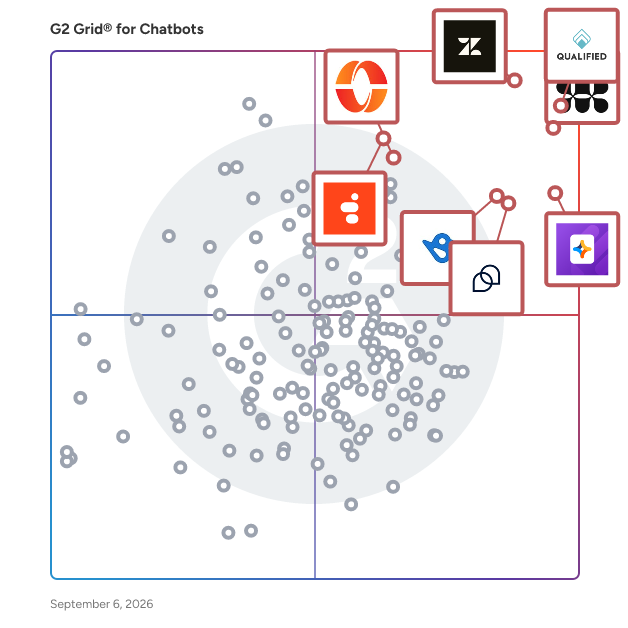
Chatbots, also called virtual agents or virtual assistants, are used in place of humans to conduct specific tasks or provide information based on written or spoken requests, allowing users to interact with applications in a conversational manner to automate tasks that formerly required human intervention.
Core Capabilities of Chatbot Software
To qualify for inclusion in the Chatbots category, a product must:
- Provide an output based on the initial request in written or speech form
- Allow for the automation of formerly human-necessary tasks
- Be sold as a standalone chatbot solution, and not simply contain NLP or speech recognition within a conversational interface
Common Use Cases for Chatbot Software
Businesses use chatbots to automate customer-facing and internal interactions across a growing range of functions. Common use cases include:
How Chatbot Software Differs from Other Tools
Although chatbots frequently use natural language processing (NLP) or speech recognition to understand requests, they primarily function through scripted conversations, distinguishing them from intelligent virtual assistants, which use natural language understanding (NLU) to conduct more dynamic, human-like conversations. Chatbots are rules-driven and best suited for predictable, structured interactions, while AI-powered alternatives offer greater flexibility and intent comprehension.
Insights from G2 on Chatbot Software
Based on category trends on G2, ease of scripting and deployment speed stand out as key strengths. These platforms deliver reductions in routine inquiry volume and improved first-response times as primary outcomes of chatbot adoption.