  # Best Artificial Neural Network Software - Page 3

  *By [Tian Lin](https://research.g2.com/insights/author/tian-lin)*

   Artificial neural network (ANN) software provides computational models that mimic the neural networks of the human brain, adapting to new information to automate complex tasks, support predictive analytics, and enable deep learning functionalities such as image recognition, natural language processing, and voice recognition across industries including healthcare, finance, and automotive.

### Core Capabilities of Artificial Neural Network Software

To qualify for inclusion in the Artificial Neural Networks category, a product must:

- Provide a network based on interconnected neural units to enable learning capabilities
- Offer a backbone for deeper learning algorithms, including deep neural networks (DNNs) with multiple hidden layers
- Link to data sources to feed the neural network information
- Support model training, testing, and evaluation processes
- Integrate with other machine learning (ML) and AI tools and frameworks
- Enable scalability to handle large datasets and complex computations
- Include documentation and support resources for users

### Common Use Cases for Artificial Neural Network Software

Data scientists, ML engineers, and researchers use ANN software to build intelligent applications across a wide range of domains. Common use cases include:

- Powering predictive analytics, anomaly detection, and customer behavior analysis in business applications
- Enabling image recognition, NLP, and voice recognition through deep neural network architectures
- Supporting healthcare diagnostics, financial fraud detection, and recommendation engine development

### How Artificial Neural Network Software Differs from Other Tools

ANNs form the foundational layer for a wide range of deep learning algorithms, making them more fundamental than specialized ML tools focused on specific tasks. While [machine learning software](https://www.g2.com/categories/machine-learning) provides tools for capabilities like recommendation engines and pattern recognition, ANN platforms specifically focus on building and training interconnected neural unit networks that power deeper learning architectures including DNNs.

### Insights from G2 on Artificial Neural Network Software

Based on category trends on G2, scalability for large datasets and flexibility in model architecture stand out as standout capabilities. These platforms deliver improvements in prediction accuracy and the ability to power complex deep learning applications as primary benefits of adoption.
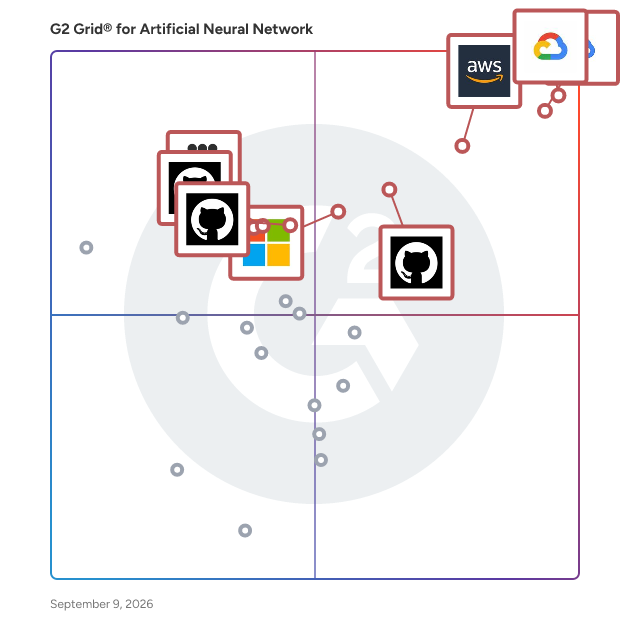


## How Many Artificial Neural Network Software Products Does G2 Track?
**Total Products under this Category:** 91

### Category Stats (May 2026)
- **Average Rating**: 4.27/5
- **New Reviews This Quarter**: 3
- **Buyer Segments**: Mid-Market 67% │ Small-Business 33%
- **Top Trending Product**: AIToolbox (+0.011)
*Last updated: May 18, 2026*

  
## How Does G2 Rank Artificial Neural Network Software Products?

**Why You Can Trust G2's Software Rankings:**

- 30 Analysts and Data Experts
- 500+ Authentic Reviews
- 91+ Products
- Unbiased Rankings

G2's software rankings are built on verified user reviews, rigorous moderation, and a consistent research methodology maintained by a team of analysts and data experts. Each product is measured using the same transparent criteria, with no paid placement or vendor influence. While reviews reflect real user experiences, which can be subjective, they offer valuable insight into how software performs in the hands of professionals. Together, these inputs power the G2 Score, a standardized way to compare tools within every category.

  
## Which Artificial Neural Network Software Is Best for Your Use Case?

- **Leader:** [AWS Deep Learning AMIs](https://www.g2.com/products/aws-deep-learning-amis/reviews)
- **Highest Performer:** [Torch](https://www.g2.com/products/torch/reviews)
- **Easiest to Use:** [Keras](https://www.g2.com/products/keras/reviews)
- **Top Trending:** [Keras](https://www.g2.com/products/keras/reviews)
- **Best Free Software:** [H2O](https://www.g2.com/products/h2o/reviews)

  
  ## What Are the Top-Rated Artificial Neural Network Software Products in 2026?
### 1. [Apache SINGA](https://www.g2.com/products/apache-singa/reviews)
  Apache SINGA is an Apache Top Level Project, focusing on distributed training of deep learning and machine learning models


**Who Is the Company Behind Apache SINGA?**

- **Seller:** [Apache](https://www.g2.com/sellers/apache)
- **Year Founded:** 1999
- **HQ Location:** Houston, US
- **LinkedIn® Page:** http://www.linkedin.com/company/the-apache-software-foundation (2,408 employees on LinkedIn®)


### 2. [asimovinstitute.org](https://www.g2.com/products/asimovinstitute-org/reviews)
  The Asimov Institute is a non-profit AI research organization dedicated to exploring the intersection of deep learning and creativity. By publishing fundamental breakthroughs in neural network research and developing tools for the creative industry—including architects, graphic designers, fashion designers, marketers, and music producers—the institute aims to harness automated novelty as a valuable asset across various sectors. Their neural networks are designed to generate new products, content, styles, and ideas, thereby pushing the boundaries of artificial creativity. Key Features and Functionality: - Neural Network Research: Conducts in-depth studies on neural network architectures and their applications in creative processes. - Creative Industry Tools: Develops AI-driven tools tailored for professionals in architecture, graphic design, fashion, marketing, and music production. - Automated Content Generation: Utilizes neural networks to produce innovative products, content, styles, and ideas, enhancing creative workflows. - Educational Resources: Provides insights and publications on neural network architectures, such as the &quot;Neural Network Zoo,&quot; to educate and inform the AI community. Primary Value and Solutions: The Asimov Institute addresses the growing need for innovation in the creative industry by integrating deep learning technologies into creative processes. By automating the generation of novel content and ideas, the institute empowers professionals to overcome creative constraints, streamline their workflows, and explore new artistic possibilities. This fusion of AI and creativity not only enhances productivity but also opens up new avenues for artistic expression and design.


**Who Is the Company Behind asimovinstitute.org?**

- **Seller:** [Asimovinstitute](https://www.g2.com/sellers/asimovinstitute)
- **HQ Location:** N/A
- **LinkedIn® Page:** https://www.linkedin.com/company/No-Linkedin-Presence-Added-Intentionally-By-DataOps (1 employees on LinkedIn®)


### 3. [Atomwise](https://www.g2.com/products/atomwise-atomwise/reviews)
  Atomwise is a technology-driven pharmaceutical company that leverages artificial intelligence (AI) to revolutionize small molecule drug discovery. By pioneering the use of deep learning for structure-based drug design, Atomwise has developed a best-in-class AI discovery engine capable of identifying and optimizing novel chemical compounds. This innovative approach has been extensively validated, demonstrating the ability to discover compounds with therapeutic potential across a diverse range of protein types and numerous challenging targets. Atomwise is advancing a proprietary pipeline of small-molecule drug candidates, aiming to transform the drug discovery process and deliver better medicines to patients more efficiently. Key Features and Functionality: - AtomNet® Technology: The first deep convolutional neural network designed for drug discovery, capable of screening over 16 billion compounds in less than two days. - Extensive Validation: Demonstrated success in over 185 projects, including a wide variety of protein types and numerous &quot;hard-to-drug&quot; targets. - Collaborative Partnerships: Engaged in over 775 collaborations with more than 250 partners worldwide, addressing over 600 unique disease targets. - Proprietary Pipeline: Developing a pipeline of small-molecule drug candidates advancing into preclinical studies. Primary Value and Problem Solved: Atomwise addresses the inefficiencies and limitations of traditional drug discovery methods by integrating AI and deep learning into the process. This approach enables the rapid and accurate identification of potential drug candidates, significantly reducing the time and resources required for hit discovery, lead optimization, and toxicity predictions. By overcoming physical barriers and expanding the chemical space for screening, Atomwise enhances the likelihood of discovering effective and safe therapeutics, ultimately accelerating the development of better medicines for patients.


**Who Is the Company Behind Atomwise?**

- **Seller:** [Atomwise](https://www.g2.com/sellers/atomwise-3749891b-5a89-42f9-ab9e-befd3a3297f5)
- **Year Founded:** 2012
- **HQ Location:** San Francisco, US
- **LinkedIn® Page:** https://www.linkedin.com/company/atomwise/ (32 employees on LinkedIn®)


### 4. [Avey](https://www.g2.com/products/avey/reviews)
  Avey AI C-Suite is a comprehensive suite of AI-driven tools designed to enhance healthcare delivery by providing instant diagnostic support, recommending care plans, automating clinical documentation, and accurately coding medical concepts. Tailored for healthcare providers, this suite integrates seamlessly into existing workflows, empowering physicians with clinical-grade AI capabilities to improve patient outcomes and operational efficiency. Key Features and Functionality: - Diagnostic Support: Offers real-time assistance in diagnosing medical conditions, aiding physicians in making accurate and timely decisions. - Care Plan Recommendations: Suggests personalized care plans based on patient data, ensuring evidence-based treatment approaches. - Automated Documentation: Streamlines the creation of clinical notes and reports, reducing administrative burdens and allowing more focus on patient care. - Medical Coding: Accurately codes medical concepts, facilitating precise billing and compliance with healthcare regulations. Primary Value and Solutions Provided: Avey AI C-Suite addresses several critical challenges in the healthcare sector: - Enhanced Diagnostic Accuracy: By providing instant diagnostic support, it reduces the likelihood of errors and improves patient safety. - Operational Efficiency: Automating documentation and coding processes minimizes administrative tasks, allowing healthcare professionals to dedicate more time to patient care. - Compliance and Precision: Ensures accurate medical coding, which is essential for proper billing and adherence to healthcare standards. By integrating Avey AI C-Suite into their practices, healthcare providers can achieve higher efficiency, accuracy, and improved patient outcomes.


**Who Is the Company Behind Avey?**

- **Seller:** [Avey](https://www.g2.com/sellers/avey)
- **Year Founded:** 2023
- **HQ Location:** Doha, QA
- **LinkedIn® Page:** https://www.linkedin.com/company/avey-ai (40 employees on LinkedIn®)


### 5. [BigDL](https://www.g2.com/products/bigdl/reviews)
  BigDL makes it easier for data scientists and data engineers to build end-to-end, distributed AI applications.


**Who Is the Company Behind BigDL?**

- **Seller:** [Intel Corporation](https://www.g2.com/sellers/intel-corporation)
- **Year Founded:** 1968
- **HQ Location:** Santa Clara, CA
- **Twitter:** @intel (4,473,118 Twitter followers)
- **LinkedIn® Page:** https://www.linkedin.com/company/1053/ (109,417 employees on LinkedIn®)
- **Ownership:** NASDAQ:INTC


### 6. [BIOS Health](https://www.g2.com/products/bios-health/reviews)
  BIOS Health is a pioneering neurotechnology company that leverages artificial intelligence (AI) and advanced neural interfaces to decode and modulate the body&#39;s neural signals. By translating the complex &#39;code&#39; of the nervous system, BIOS Health aims to develop precise, data-driven therapies for a range of chronic conditions, including cardiovascular diseases, diabetes, and neurodegenerative disorders. Key Features and Functionality: - Real-Time Neural Insights: Utilizing proprietary neural interfaces combined with AI, BIOS Health can measure and analyze neural data in real-time across both acute and chronic settings. - Neural Biomarkers Discovery: The company has developed a programming language for the nervous system, enabling the identification of novel neural biomarkers that can lead to groundbreaking disease insights and innovative treatments. - Precision Health Solutions: By harnessing real-time feedback from the nervous system, BIOS Health facilitates the creation of more targeted pharmaceuticals and software-delivered therapies, enhancing treatment efficacy and patient outcomes. Primary Value and User Solutions: BIOS Health addresses the critical need for personalized and effective treatments for chronic diseases by providing a platform that interprets and interacts with neural data. This approach allows for the development of therapies that are tailored to individual neural profiles, potentially improving the quality of life for millions of patients worldwide. By bridging the gap between neural data and therapeutic interventions, BIOS Health is at the forefront of a new era in precision medicine.


**Who Is the Company Behind BIOS Health?**

- **Seller:** [BIOS Health](https://www.g2.com/sellers/bios-health)
- **HQ Location:** Cambridge, GB
- **LinkedIn® Page:** https://www.linkedin.com/company/12979655 (5,965 employees on LinkedIn®)


### 7. [BrainKey](https://www.g2.com/products/brainkey/reviews)
  BrainKey is an innovative platform that leverages artificial intelligence to analyze brain MRI scans, providing personalized insights into brain health. By transforming complex medical imaging data into clear, intuitive visualizations, BrainKey empowers individuals and healthcare professionals to better understand and monitor neurological well-being. Key Features and Functionality: - AI-Powered Analysis: Utilizes advanced AI algorithms to examine MRI scans, identifying key biomarkers and assessing brain health at a biological level. - Personalized Visualizations: Converts intricate brain imaging data into user-friendly, interactive visual representations of individual brain anatomy. - 3D Brain Printing: Offers a unique service to create a 3D-printed model of a user&#39;s brain, based on their MRI scan, providing a tangible representation of their brain structure. Primary Value and User Solutions: BrainKey addresses the challenge of interpreting complex neurological data by making brain health information more accessible and understandable. This empowers users to take proactive steps in managing their cognitive health, facilitates early detection of potential issues, and supports healthcare providers in delivering personalized care. By demystifying brain imaging, BrainKey aims to prevent cognitive decline and contribute to a future where conditions like dementia are no longer prevalent.


**Who Is the Company Behind BrainKey?**

- **Seller:** [BrainKey](https://www.g2.com/sellers/brainkey)
- **Year Founded:** 2018
- **HQ Location:** San Francisco, US
- **LinkedIn® Page:** https://www.linkedin.com/company/brainkeyai/ (2,079 employees on LinkedIn®)


### 8. [BrainScan](https://www.g2.com/products/brainscan/reviews)
  BrainScan CT is an advanced AI-powered system designed to revolutionize the analysis of human brain CT scans. By leveraging artificial intelligence, it automatically detects and highlights potential pathological changes, providing rapid and accurate diagnostic support to healthcare professionals. The system integrates seamlessly with existing medical infrastructure, enhancing diagnostic efficiency and patient care. Key Features and Functionality: - Comprehensive Pathology Detection: Identifies and classifies 30 critical brain pathologies, covering over 90% of findings in non-contrast CT imaging, with an average accuracy of 95% and up to 99% for hemorrhages. - Rapid Analysis: Processes scans in seconds, delivering results promptly to support timely clinical decisions. - Intuitive Results Presentation: Provides analysis outcomes in the form of infographics and structured text, which are returned to the PACS server from which they were sent. - Seamless Integration: Compatible with any PACS or DICOM viewer, ensuring smooth incorporation into existing radiology workflows. - Flexible Deployment Options: Offers both cloud-based and on-premise installations, catering to diverse institutional needs. - Regulatory Compliance: Holds CE MDR 2017/745 certification, affirming adherence to European medical device regulations. Primary Value and User Solutions: BrainScan CT addresses the critical need for swift and precise interpretation of brain CT scans, particularly in emergency settings. By automating the detection of significant brain pathologies, it reduces the workload on radiologists, minimizes diagnostic errors, and accelerates patient management. This leads to improved patient outcomes, optimized resource utilization, and enhanced overall efficiency in healthcare delivery.


**Who Is the Company Behind BrainScan?**

- **Seller:** [BrainScan](https://www.g2.com/sellers/brainscan)
- **Year Founded:** 2016
- **HQ Location:** Gdańsk, PL
- **LinkedIn® Page:** https://www.linkedin.com/company/brainscan-ai (17 employees on LinkedIn®)


### 9. [captum.ai](https://www.g2.com/products/captum-ai/reviews)
  Captum is an open-source library developed by Facebook AI that provides interpretability and understanding of PyTorch models. It offers a suite of algorithms to help researchers and developers gain insights into the predictions made by neural networks, facilitating the identification of model behavior and potential biases. Key Features and Functionality: - Attribution Methods: Captum includes various algorithms such as Integrated Gradients, Saliency Maps, and DeepLIFT to attribute model predictions to input features. - Layer and Neuron Attribution: It allows for detailed analysis at the layer and neuron level, enabling users to understand the contribution of specific components within the network. - Feature Visualization: The library provides tools to visualize feature importance, aiding in the interpretation of complex models. - Model-Agnostic: Captum is designed to work seamlessly with any PyTorch model, ensuring flexibility across different architectures. Primary Value and User Solutions: Captum addresses the challenge of model interpretability in deep learning by offering tools that elucidate how models arrive at their predictions. This transparency is crucial for building trust in AI systems, debugging models, and ensuring compliance with regulatory standards. By providing detailed insights into model behavior, Captum empowers users to develop more reliable and accountable AI applications.


**Who Is the Company Behind captum.ai?**

- **Seller:** [captum.ai](https://www.g2.com/sellers/captum-ai)
- **HQ Location:** N/A
- **LinkedIn® Page:** https://www.linkedin.com/company/No-Linkedin-Presence-Added-Intentionally-By-DataOps (1 employees on LinkedIn®)


### 10. [Cebra](https://www.g2.com/products/cebra-cebra/reviews)
  Cebra is a learnable latent embedding for joint behavioral and neural analysis, providing valuable insights for research.


**Who Is the Company Behind Cebra?**

- **Seller:** [Cebra](https://www.g2.com/sellers/cebra)
- **Year Founded:** 2014
- **HQ Location:** Las Condes, CL
- **LinkedIn® Page:** https://www.linkedin.com/company/cebralatam (129 employees on LinkedIn®)


### 11. [Cortica](https://www.g2.com/products/cortica/reviews)
  Cortica is a pioneering company in the field of Autonomous Artificial Intelligence (AI), dedicated to developing technologies that enable machines to process information and learn in a manner akin to the human brain. Over the past 15 years, Cortica has invested over $250 million to build a comprehensive portfolio of Autonomous AI technologies, safeguarded by more than 300 patents. The company collaborates with global market leaders to establish Autonomous AI enterprises that possess a significant technological and business edge, addressing substantial market opportunities. Key Features and Functionality: - Signatures: Cortica&#39;s technology simulates human brain function by transitioning from traditional AI labels to generic representations. This approach indexes and compresses information into neural responses, facilitating efficient data processing. - Adaptive Architecture: The AI exhibits brain-like, scenario-focused contextual adaptability. It applies a sparse set of resources during processing, resulting in superior performance and enhanced efficiency. - Self-Learning: Cortica&#39;s neural network algorithms are capable of self-learning in dynamic environments, operating independently of manually labeled data and remaining unaffected by data biases. - Speed and Scalability: The technology is designed to process and index large volumes of data on low-compute platforms, ensuring rapid and scalable performance. - Versatility: Mirroring the human cortex, Cortica&#39;s systems can handle various types of signals, including visual, audio, radar, time series, and more. Primary Value and Solutions: Cortica&#39;s Autonomous AI technology offers transformative solutions across multiple industries by enabling machines to think and learn autonomously. This capability leads to significant advancements in sectors such as autonomous vehicles, security, and healthcare. By replicating human-like perception and learning, Cortica&#39;s AI enhances efficiency, reduces costs, and improves performance in complex tasks, thereby providing substantial value to its users.


**Who Is the Company Behind Cortica?**

- **Seller:** [Cortica](https://www.g2.com/sellers/cortica)
- **HQ Location:** N/A
- **LinkedIn® Page:** https://www.linkedin.com/company/No-Linkedin-Presence-Added-Intentionally-By-DataOps (1 employees on LinkedIn®)


### 12. [Dadabots](https://www.g2.com/products/dadabots/reviews)
  Dadabots is an innovative project at the intersection of music and artificial intelligence, dedicated to creating neural networks that autonomously generate music across various genres. By leveraging advanced machine learning techniques, Dadabots produces continuous streams of AI-composed music, including 24/7 live streams of technical death metal. Their work encompasses writing code, publishing scientific research, collaborating with artists, and performing live shows, all aimed at exploring the creative potential of AI in music. Key Features and Functionality: - AI-Generated Music Streams: Continuous live streams of AI-composed music, such as technical death metal, available 24/7. - Collaborative Projects: Partnerships with artists and bands to create unique AI-assisted compositions. - Scientific Research: Publication of research papers on neural synthesis and music generation, contributing to the academic field. - Live Performances: Live shows featuring AI-generated music, showcasing the capabilities of neural networks in real-time. Primary Value and User Solutions: Dadabots offers a groundbreaking approach to music creation by harnessing AI to generate original compositions, pushing the boundaries of traditional music production. This innovation provides musicians, researchers, and enthusiasts with new tools and perspectives for exploring music, fostering creativity, and expanding the possibilities of sound. By automating aspects of music generation, Dadabots enables artists to experiment with novel ideas and collaborate with AI, leading to unique and diverse musical experiences.


**Who Is the Company Behind Dadabots?**

- **Seller:** [DadaBots](https://www.g2.com/sellers/dadabots)
- **Year Founded:** 2012
- **HQ Location:** Boston, US
- **LinkedIn® Page:** https://www.linkedin.com/company/dadabots/ (2 employees on LinkedIn®)


### 13. [Darmiyan](https://www.g2.com/products/darmiyan/reviews)
  Darmiyan is a pioneering medical technology company specializing in brain health diagnostics. Their flagship product, BrainSee, is an FDA-approved, AI-powered software platform designed to predict the progression from amnestic mild cognitive impairment (aMCI) to Alzheimer&#39;s dementia within a five-year timeframe. By integrating standard clinical MRI scans with cognitive assessments, BrainSee generates an objective score that assists physicians in evaluating a patient&#39;s risk of developing Alzheimer&#39;s disease. Key Features and Functionality: - Advanced Image Analysis: Utilizes proprietary algorithms to analyze whole-brain MRI scans, detecting subtle cellular-level changes indicative of neurodegeneration. - AI Integration: Employs artificial intelligence to enhance diagnostic accuracy and provide predictive insights. - Non-Invasive Testing: Offers a non-invasive method for assessing brain health, eliminating the need for more invasive procedures. - Rapid Results: Delivers same-day test results, facilitating timely clinical decision-making. - Clinical Workflow Integration: Designed to seamlessly integrate into existing clinical workflows, enhancing efficiency for healthcare providers. Primary Value and User Benefits: BrainSee addresses the critical need for early detection and risk stratification in Alzheimer&#39;s disease. By identifying individuals at higher risk of progression from aMCI to Alzheimer&#39;s dementia, it enables proactive management strategies, potentially delaying the onset of dementia symptoms. For patients at lower risk, BrainSee provides reassurance, reducing the necessity for costly and invasive tests. This approach transforms the patient experience from prolonged uncertainty to proactive health management, ultimately aiming to improve quality of life and reduce the emotional and financial burdens associated with Alzheimer&#39;s disease.


**Who Is the Company Behind Darmiyan?**

- **Seller:** [Darmiyan](https://www.g2.com/sellers/darmiyan)
- **Year Founded:** 2016
- **HQ Location:** San Francisco, US
- **LinkedIn® Page:** https://www.linkedin.com/company/18104337 (2,829 employees on LinkedIn®)


### 14. [Dde](https://www.g2.com/products/dde/reviews)
  Data Design Engineering (DDE) is a pioneering company specializing in the development of data-driven AI solutions and services. Established in 2014 in Seoul, Korea, DDE has expanded its presence to countries including Singapore and Luxembourg. The company focuses on creating AI technologies that are highly accurate, efficient, and fully automatable without necessitating changes to existing systems. DDE&#39;s AI solutions are designed to be ecological, evolutionary, and human-centric, capable of replicating expert human behaviors and conducting precise causal analyses. Key Features and Functionality: - Convergence AI Technologies: DDE integrates various AI technologies such as Image Processing, Natural Language Processing (NLP), Internet of Things (IoT), and Predictive Analysis to develop sophisticated models for critical missions. - Space and Earth Observation Solutions: The company designs AI models deployable on ground stations, aircraft, and spacecraft, facilitating immediate use in space and earth observation missions. These models automatically capture and validate anomalies with high accuracy. - On-Device AI Customization: DDE offers customized on-device AI solutions, including predictive analysis algorithms that calculate patterns and influences of various variables to precisely tune systems, such as automatic parking systems. Primary Value and User Solutions: DDE&#39;s AI solutions provide organizations with the ability to implement advanced, data-driven technologies that enhance operational efficiency and decision-making processes. By offering fully automatable and accurate AI models, DDE addresses the need for seamless integration of AI into existing systems without significant overhauls. Their technologies are particularly valuable in critical applications such as space and earth observation, where precision and reliability are paramount. Additionally, DDE&#39;s on-device AI customization allows for real-time predictive analysis, enabling precise control and optimization of various systems, thereby reducing operational costs and improving performance.


**Who Is the Company Behind Dde?**

- **Seller:** [dende](https://www.g2.com/sellers/dende)
- **HQ Location:** N/A
- **LinkedIn® Page:** https://www.linkedin.com/company/No-Linkedin-Presence-Added-Intentionally-By-DataOps (1 employees on LinkedIn®)


### 15. [Deep Genomics](https://www.g2.com/products/deep-genomics/reviews)
  Deep Genomics is a pioneering biopharmaceutical company that leverages artificial intelligence (AI) to decode RNA biology, facilitating the development of life-changing genetic medicines. By integrating AI with molecular biology, Deep Genomics aims to revolutionize drug discovery and development, offering innovative solutions for genetic diseases. Key Features and Functionality: - AI Foundation Model Platform: Deep Genomics has developed a cohesive AI foundation model platform, including BigRNA, the first transformer neural network for RNA biology and therapeutics. This platform accelerates therapeutic discovery across various RNA modalities. - BigRNA: A flagship AI foundation model comprising nearly two billion tunable parameters, trained on thousands of datasets with over a trillion genomic signals. BigRNA predicts tissue-specific regulatory mechanisms of RNA expression, protein and microRNA binding sites, and the effects of variants and candidate therapeutics. - REPRESS Model: An advanced deep learning model that accurately predicts microRNA (miRNA) binding and mRNA degradation directly from RNA sequences, enhancing the understanding of post-transcriptional biology and therapeutic design. - Project Saturn: An initiative utilizing the AI platform to evaluate over 69 billion oligonucleotide molecules against one million targets in silico, generating a library of 1,000 compounds experimentally verified to manipulate cell biology as intended. Primary Value and Problem Solved: Deep Genomics addresses the complexity of RNA biology by integrating AI to decode vast amounts of data, identifying novel targets, mechanisms, and molecules inaccessible through traditional methods. This approach accelerates the development of steric-blocking oligonucleotides (SBOs) that increase gene expression for treating genetic diseases. By combining AI with molecular biology, Deep Genomics enhances the predictability, reduces risks, and expedites the time to market for new therapies, ultimately aiming to deliver life-saving therapeutics to patients worldwide.


**Who Is the Company Behind Deep Genomics?**

- **Seller:** [Deep Genomics](https://www.g2.com/sellers/deep-genomics)
- **Year Founded:** 2014
- **HQ Location:** Toronto, CA
- **LinkedIn® Page:** https://www.linkedin.com/company/deep-genomics (92 employees on LinkedIn®)


### 16. [Deeplearning4j](https://www.g2.com/products/konduit-deeplearning4j/reviews)
  Deeplearning4j is a suite of tools for running deep learning on the JVM. It&#39;s the only framework that allows you to train models from java while interoperating with the python ecosystem through a mix of python execution via our cpython bindings, model import support, and interop of other runtimes such as tensorflow-java and onnxruntime.


**Who Is the Company Behind Deeplearning4j?**

- **Seller:** [Konduit](https://www.g2.com/sellers/konduit)
- **HQ Location:** N/A
- **LinkedIn® Page:** https://www.linkedin.com/company/No-Linkedin-Presence-Added-Intentionally-By-DataOps (1 employees on LinkedIn®)


### 17. [Doctorina](https://www.g2.com/products/doctorina/reviews)
  Doctorina is an AI-powered healthcare platform designed to provide accessible and accurate medical insights to individuals worldwide, especially those without access to live doctors. By analyzing user-provided information—such as text, voice, images, and videos—Doctorina offers 24/7 personalized health assessments, helping users understand their health concerns effectively. Available on Android, iOS, and web platforms, Doctorina supports multiple languages, ensuring universal accessibility. It securely stores personalized health records, allowing users to manage and share their health information with professionals as needed. By minimizing the risk of misdiagnosis and identifying potential health threats, Doctorina democratizes medical care, making quality healthcare knowledge available to everyone, anytime, anywhere. Key Features and Functionality: - 24/7 Availability: Provides round-the-clock health insights using AI-based symptom analysis from various input formats, including text, voice, images, and videos. - Enhancing Diagnostic Accuracy: Reduces the risk of misdiagnosis by identifying probable healthcare threats and conditions. - Universal Accessibility: Supports multiple languages and is accessible on Android, iOS, and web platforms, ensuring high-quality healthcare knowledge is available globally. - Personalized Health Records: Securely stores user health information, allowing for easy management and sharing with healthcare professionals. Primary Value and User Solutions: Doctorina addresses the critical issue of healthcare accessibility by providing AI-driven medical insights to over 4 billion people lacking access to live doctors. It empowers users to understand and manage their health concerns effectively, offering a reliable and always-available alternative to traditional medical consultations. By leveraging advanced AI technology, Doctorina transforms healthcare delivery, making it more inclusive and efficient for individuals worldwide.


**Who Is the Company Behind Doctorina?**

- **Seller:** [Doctorina](https://www.g2.com/sellers/doctorina)
- **Year Founded:** 2024
- **HQ Location:** Berlin, DE
- **LinkedIn® Page:** https://www.linkedin.com/company/doctorina (16 employees on LinkedIn®)


### 18. [EchoNous](https://www.g2.com/products/echonous/reviews)
  EchoNous is a medical technology company specializing in advanced point-of-care ultrasound (POCUS) devices that integrate artificial intelligence (AI) with miniaturized ultrasound technology. Their flagship product, the Kosmos platform, is an ultraportable ultrasound system that provides high-quality imaging and advanced features typically found in larger machines. Enhanced by Kosmos AI, it assists clinicians in acquiring correct image orientations and automates complex cardiac analyses. Key Features and Functionality: - High-Quality Imaging: Kosmos delivers cart-based performance in a portable device, offering high-end 2D imaging, M-Mode, and advanced Doppler capabilities, including Pulsed Wave (PW), Continuous Wave (CW), and Tissue Doppler Imaging (TDI). - AI Integration: The platform leverages proprietary deep learning algorithms to provide real-time guidance for probe positioning, image quality grading, and automated cardiac analyses, such as auto-ejection fraction calculation and auto-VTI tracing. - Device Compatibility: Kosmos is compatible with select Apple iOS and Android tablets, as well as EchoNous&#39;s proprietary Bridge platform, ensuring flexibility and ease of use across various devices. - Software Solutions: Through strategic partnerships, Kosmos addresses POCUS challenges comprehensively, offering advanced echo workflows, comprehensive telehealth solutions, and specialized Cloud PACS integration. Primary Value and User Solutions: EchoNous&#39;s Kosmos platform revolutionizes point-of-care diagnostics by combining portability with high-performance imaging and AI-driven guidance. This integration empowers clinicians to make faster, more accurate decisions at the bedside, enhancing patient care and streamlining workflows. By providing advanced diagnostic tools in a compact, user-friendly format, EchoNous addresses common challenges in healthcare, such as the need for rapid assessments and the accessibility of high-quality imaging in diverse clinical settings.


**Who Is the Company Behind EchoNous?**

- **Seller:** [EchoNous](https://www.g2.com/sellers/echonous)
- **Year Founded:** 2016
- **HQ Location:** Redmond, US
- **LinkedIn® Page:** https://www.linkedin.com/company/echonous-inc (134 employees on LinkedIn®)


### 19. [Embedl AB](https://www.g2.com/products/embedl-ab/reviews)
  Embedl AB specializes in optimizing deep learning models for deployment in embedded systems, offering solutions that enhance performance while reducing energy consumption and hardware costs. Their flagship product, the Model Optimization SDK, automates the refinement of neural networks, ensuring they operate efficiently on resource-constrained devices. This technology is particularly beneficial in industries like automotive, defense, and robotics, where real-time processing and energy efficiency are critical. Key Features and Functionality: - Neural Architecture Search (NAS): Automates the design of efficient deep learning architectures tailored to specific hardware. - Pruning: Eliminates redundant parameters, reducing model complexity and size. - Quantization: Converts models to lower precision formats, maintaining accuracy while enhancing execution speed. - Knowledge Distillation: Transfers knowledge from complex models to simpler ones, facilitating faster inference. - Hardware-Aware Optimization: Ensures models are optimized for various hardware platforms, including CPUs, GPUs, FPGAs, and ASICs. Primary Value and Problem Solved: Embedl&#39;s solutions address the challenges of deploying deep learning models on embedded systems by significantly reducing energy consumption (up to 83%), memory usage (up to 95%), and inference times (up to 18x faster). This enables companies to implement advanced AI functionalities without the need for expensive hardware upgrades, thereby accelerating product development cycles and reducing time-to-market. By optimizing AI models for edge devices, Embedl empowers businesses to deliver high-performance, energy-efficient, and cost-effective AI solutions across various industries.


**Who Is the Company Behind Embedl AB?**

- **Seller:** [Embedl AB](https://www.g2.com/sellers/embedl-ab)
- **Year Founded:** 2018
- **HQ Location:** Göteborg, SE
- **LinkedIn® Page:** https://www.linkedin.com/company/13991327 (35 employees on LinkedIn®)


### 20. [Evom AI](https://www.g2.com/products/evom-ai/reviews)
  Evom AI is a medical technology company specializing in artificial intelligence solutions for cardiovascular diagnostics. Their platform enhances the accuracy and efficiency of heart disease detection and prevention by automating the analysis of electrocardiograms (ECG) and echocardiography data. By integrating AI into these diagnostic processes, Evom AI aims to close gaps in cardiovascular care through timely and precise diagnoses. Key Features and Functionality: - Evom Echo: This AI-driven tool automatically measures 30 to 60 echocardiographic parameters within seconds and drafts standardized reports, significantly reducing scan times and increasing laboratory throughput. - Evom ECG: Designed to instantly identify critical ECG abnormalities, such as STEMI and STEMI-equivalent conditions, this feature accelerates patient triage and minimizes false positives. - Multimodal Insights: By combining echocardiography, ECG, and clinical data, Evom AI provides comprehensive cardiovascular risk assessments and decision support in a unified view. Primary Value and User Solutions: Evom AI addresses the challenges of traditional cardiovascular diagnostics, which often involve time-consuming manual measurements and are susceptible to human error. By automating these processes, the platform enhances diagnostic accuracy, reduces the time required for assessments, and supports proactive and preventive patient care. Clinicians benefit from real-time insights and standardized reporting, leading to improved patient outcomes and more efficient healthcare delivery.


**Who Is the Company Behind Evom AI?**

- **Seller:** [Evom AI](https://www.g2.com/sellers/evom-ai)
- **Year Founded:** 2025
- **HQ Location:** Seoul, KR
- **LinkedIn® Page:** https://www.linkedin.com/company/evom-ai (7 employees on LinkedIn®)


### 21. [fastai](https://www.g2.com/products/fastai/reviews)
  fastai is a deep learning library which provides practitioners with high-level components that can quickly and easily provide state-of-the-art results in standard deep learning domains, and provides researchers with low-level components that can be mixed and matched to build new approaches. It aims to do both things without substantial compromises in ease of use, flexibility, or performance. This is possible thanks to a carefully layered architecture, which expresses common underlying patterns of many deep learning and data processing techniques in terms of decoupled abstractions. These abstractions can be expressed concisely and clearly by leveraging the dynamism of the underlying Python language and the flexibility of the PyTorch library


**Who Is the Company Behind fastai?**

- **Seller:** [fast.ai](https://www.g2.com/sellers/fast-ai)
- **Year Founded:** 2018
- **HQ Location:** San Francisco, US
- **LinkedIn® Page:** https://www.linkedin.com/school/fast-ai/ (6 employees on LinkedIn®)


### 22. [Flexion Robotics](https://www.g2.com/products/flexion-robotics/reviews)
  Flexion Robotics develops an AI-driven autonomy platform for humanoid robots to enhance automation and space exploration.


**Who Is the Company Behind Flexion Robotics?**

- **Seller:** [Flexion Robotics](https://www.g2.com/sellers/flexion-robotics)
- **HQ Location:** Zurich, CH
- **LinkedIn® Page:** https://www.linkedin.com/company/flexion-robotics (43 employees on LinkedIn®)


### 23. [Helm.ai](https://www.g2.com/products/helm-ai/reviews)
  Helm.ai develops AI software for driver assistance systems, autonomous driving, and robotics.


**Who Is the Company Behind Helm.ai?**

- **Seller:** [Helm.ai](https://www.g2.com/sellers/helm-ai)
- **Year Founded:** 2016
- **HQ Location:** Redwood City, US
- **LinkedIn® Page:** https://www.linkedin.com/company/helm.ai (89 employees on LinkedIn®)


### 24. [Lowfade](https://www.g2.com/products/lowfade/reviews)
  Low Fade AI is an innovative platform that leverages advanced neural network technology to provide photorealistic visualizations of low fade hairstyles tailored to individual facial features. By analyzing 87 facial landmark points and hair texture patterns, the system generates hairstyle transformations with a 99.2% fidelity to professional barber results. This empowers users to confidently explore and select hairstyles that best suit their unique profiles. Key Features and Functionality: - Neural Image Transformation: Utilizes GAN-based architecture to create personalized low fade hairstyle variations. - Realtime Visualization: Delivers multi-angle previews with an average render time of 2.7 seconds, allowing users to assess styles under different lighting conditions. - Curated Style Taxonomy: Offers a comprehensive database of 142 low fade variations, complete with technical specifications and maintenance guidelines. - Technical Consultation: Provides barber-vetted advice tailored to individual hair types and growth patterns, enhancing communication between clients and stylists. Primary Value and User Solutions: Low Fade AI addresses the common challenge of visualizing potential hairstyle changes before committing to them. By offering accurate, personalized previews, it eliminates uncertainty in hairstyle decision-making. This not only boosts user confidence but also streamlines consultations with barbers, ensuring desired outcomes are achieved with precision.


**Who Is the Company Behind Lowfade?**

- **Seller:** [Low Fade AI](https://www.g2.com/sellers/low-fade-ai)
- **HQ Location:** N/A
- **LinkedIn® Page:** https://www.linkedin.com/company/No-Linkedin-Presence-Added-Intentionally-By-DataOps (1 employees on LinkedIn®)


### 25. [Mach Intelligent Driving](https://www.g2.com/products/mach-intelligent-driving/reviews)
  Mach Intelligent Driving is a pioneering company specializing in autonomous driving solutions, leveraging advanced artificial intelligence and computer vision technologies to deliver comprehensive, end-to-end intelligent driving systems and sensor modules for the automotive industry. Key Features and Functionality: - Perception: Utilizes the proprietary BEVDepth framework to achieve multi-sensor, end-to-end processing without post-processing, enhancing the generalization, accuracy, and efficiency of autonomous driving perception systems. - Prediction: Expands multi-sensor fusion perception to detect a wide range of objects, including vehicles, non-motorized vehicles, and pedestrians. Integrates environmental information such as lane markings and traffic signals to implement a deep learning-based model that combines tracking, prediction, and decision-making. - Planning: Accurately predicts the future trajectories of surrounding objects while planning the vehicle&#39;s own movement, ensuring safety and comfort while improving traffic efficiency. - Control: Connects various vehicle control systems to the decision-making system via bus communication, precisely managing acceleration, braking, steering, and lighting to achieve autonomous driving. Primary Value and Solutions: Mach Intelligent Driving offers solutions ranging from Level 2 assisted driving to Level 4 autonomous driving and parking, providing comprehensive coverage for intelligent driving needs. Their technology enables point-to-point autonomous driving on highways, including autonomous lane changes and on/off-ramp navigation. In urban environments, their systems handle complex scenarios with diverse traffic participants, intricate road markings, and traffic signals, facilitating accurate vehicle guidance and management for a more relaxed parking experience. By focusing on intelligent driving, Mach Intelligent Driving addresses challenges such as traffic congestion, safety concerns, and the demand for efficient transportation solutions, ultimately enhancing the driving experience and contributing to the advancement of autonomous vehicle technology.


**Who Is the Company Behind Mach Intelligent Driving?**

- **Seller:** [Mach Intelligent Driving](https://www.g2.com/sellers/mach-intelligent-driving)
- **HQ Location:** N/A
- **LinkedIn® Page:** https://www.linkedin.com/company/No-Linkedin-Presence-Added-Intentionally-By-DataOps (1 employees on LinkedIn®)


    ## What Is Artificial Neural Network Software?
  [Deep Learning Software](https://www.g2.com/categories/deep-learning)

  
---

## How Do You Choose the Right Artificial Neural Network Software?

### What You Should Know About Artificial Neural Network Software

### What is Artificial Neural Network Software?

Artificial neural network (ANN) software, often used synonymously with deep learning software, automates tasks for users by leveraging artificial neural networks to produce an output, often in the form of a prediction. Although some will distinguish between ANNs and deep learning (arguing that the latter refers to the training of ANNs), this guide will use the terms interchangeably. These solutions are typically embedded into various platforms and have use cases across various industries. Solutions built on artificial neural networks improve the speed and accuracy of desired outputs by constantly refining them as the application digests more training data.

Deep learning software improves processes and introduces efficiency to multiple industries, from [financial services](https://www.g2.com/categories/financial-services) to [agriculture](https://www.g2.com/categories/agriculture). Applications of this technology include process automation, customer service, security risk identification, and contextual collaboration. Notably, end users of deep learning-powered applications do not interact with the algorithm directly. Rather, deep learning powers the backend of the artificial intelligence (AI) that users interact with. Some prime examples include [chatbots software](https://www.g2.com/categories/chatbots) and automated [insurance claims management software](https://www.g2.com/categories/insurance-claims-management).

#### What Types of Artificial Neural Network Software Exist?

There are two main types of artificial neural network software: recurrent neural networks (RNNs) and convolutional neural networks (CNNs). The type of neural network doesn’t generally affect the end product that customers will use but might affect the accuracy of the outcome. For example, whether an image recognition tool is built using CNNs or RNNs matters little to the companies that employ it to deal with customers. Companies care more about the potential impact of deploying a well-made virtual assistant to their business model.

**Convolutional neural networks (CNNs)**

Convolutional neural networks (CNNs) extract features directly from data, such as images, eliminating the need for manual feature extraction. Manual feature extraction would require the data scientist to go in and determine the various components and aspects of the data. With this technology, the neural network determines this by itself. None of the features are pre-trained; instead, they are learned by the network when it trains on the given set of images. This automated feature extraction characteristic makes deep learning models highly effective for object classification and other computer vision applications.

**Recurrent neural networks (RNNs)**

Recurrent neural networks (RNNs) use sequential data or time series data. These deep learning algorithms are commonly used for ordinal or temporal problems. They are primarily leveraged using time series data to make predictions about future events, such as sales forecasting.

### What are the Common Features of Artificial Neural Network Software?

Core features within artificial neural network software help users improve their applications, allowing for them to transform their data and derive insights from it in the following ways:

**Data:** Connection to third-party data sources is the key to the success of a machine learning application. To function and learn properly, the algorithm must be fed large amounts of data. Once the algorithm has digested this data and learned the proper answers to typically asked queries, it can provide users with an increasingly accurate answer set. Often, deep learning applications offer developers sample datasets to build their applications and train their algorithms. These prebuilt datasets are crucial for developing well-trained applications because the algorithm needs to see a ton of data before it’s ready to make correct decisions and give correct answers. In addition, some solutions will include data enrichment capabilities, like annotating, categorizing, and enriching datasets.

**Algorithms:** The most crucial feature of any machine learning offering, deep learning or otherwise, is the algorithm. It is the foundation on which everything else is based. Solutions either provide prebuilt algorithms or allow developers to build their own in the application.

### What are the Benefits of Artificial Neural Network Software?

Artificial neural network software is useful in many different contexts and industries. For example, AI-powered applications typically use deep learning algorithms on the backend to provide end users with answers to queries.

**Application development:** Artificial neural network software drives the development of AI applications that streamline processes, identify risks, and improve effectiveness.

**Efficiency:** Deep learning-powered applications are constantly improving because of the recognition of their value and the need to stay competitive in the industries in which they are used. They also increase the efficiency of repeatable tasks. A prime example of this can be seen in eDiscovery, where deep learning has created massive leaps in the efficiency with which legal documents are looked through, and relevant ones are identified.

**Risk reduction:** Risk reduction is one of the most significant use cases in financial services for machine learning applications. Deep learning-powered AI applications identify potential risks and automatically flag them based on historical data of past risky behaviors. This eliminates the need for manual identification of risks, which is prone to human error. Deep learning-driven risk reduction is useful in the insurance, finance, and regulation industries, among others.

### Who Uses Artificial Neural Network Software?

AI software has applications across nearly every industry. Some industries that benefit from deep learning applications include financial services, cybersecurity, recruiting, customer service, energy, and regulation.

**Marketing:** Deep learning-powered marketing applications help marketers identify content trends, shape content strategy, and personalize marketing content. Marketing-specific algorithms segment customer bases, predict customer behavior based on past behavior and customer demographics, identify high potential prospects, and more.

**Finance:** Financial services institutions are increasing their use of machine learning-powered applications to stay competitive with others in the industry who are doing the same. Through robotic process automation (RPA) applications, which are typically powered by machine learning algorithms, financial services companies are improving the efficiency and effectiveness of departments, including fraud detection, anti-money laundering, and more. However, the departments in which these applications are most effective are ones in which there is a great deal of data to manage and many repeatable tasks that require little creative thinking. Some examples may include trawling through thousands of insurance claims and identifying ones with a high potential to be fraudulent. The process is similar, and the machine learning algorithm can digest the data to achieve the desired outcome much quicker.

**Cybersecurity:** Deep learning algorithms are being deployed in security applications to better identify threats and automatically deal with them. The adaptive nature of certain security-specific algorithms allows applications to tackle evolving threats more easily.

### What are the Alternatives to Artificial Neural Network Software?

Alternatives to artificial neural network software that can replace it either partially or completely include:

[Natural language processing (NLP) software](https://www.g2.com/categories/natural-language-processing-nlp): Businesses focused on language-based use cases (e.g., examining large swaths of review data to better understand the reviewers’ sentiment) can also look to NLP solutions, such as natural language understanding software, for solutions specifically geared toward this type of data. Use cases include finding insights and relationships in text, identifying the language of the text, and extracting key phrases from a text.

[Image recognition software](https://www.g2.com/categories/image-recognition): For computer vision or image recognition, companies can adopt image recognition software. These tools can enhance their applications with features such as image detection, face recognition, image search, and more.

#### Software Related to Artificial Neural Network Software

Related solutions that can be used together with artificial neural network software include:

[Chatbots software](https://www.g2.com/categories/chatbots) **:** Businesses looking for an off-the-shelf conservational AI solution can leverage chatbots. Tools specifically geared toward chatbot creation helps companies use chatbots off the shelf, with little to no development or coding experience necessary.

[Bot platforms software](https://www.g2.com/categories/bot-platforms) **:** Companies looking to build their own chatbot can benefit from bot platforms, which are tools used to build and deploy interactive chatbots. These platforms provide development tools such as frameworks and API toolsets for customizable bot creation.

### Challenges with Artificial Neural Network Software

Software solutions can come with their own set of challenges.&amp;nbsp;

**Automation pushback:** One of the biggest potential issues with applications powered by ANNs lies in the removal of humans from processes. This is particularly problematic when looking at emerging technologies like self-driving cars. By completely removing humans from the product development lifecycle, machines are given the power to decide in life or death situations.&amp;nbsp;

**Data quality:** With any deployment of AI, data quality is key. As such, businesses must develop a strategy around data preparation, ensuring there are no duplicate records, missing fields, or mismatched data. A deployment without this crucial step can result in faulty outputs and questionable predictions.&amp;nbsp;

**Data security:** Companies must consider security options to ensure the correct users see the correct data. They must also have security options that allow administrators to assign verified users different levels of access to the platform.

### Which Companies Should Buy Machine Learning Software?

Pattern recognition can help businesses across industries. Effective and efficient predictions can help these businesses make data-informed decisions, such as dynamic pricing based upon a range of data points.

**Retail:** An e-commerce site can leverage a deep learning API to create rich, personalized experiences for every user.

**Finance:** A bank can use this software to improve its security capabilities by identifying potential problems, such as fraud, early on.

**Entertainment:** Media organizations are able to leverage recommendation algorithms to serve their customers with relevant and related content. With this enhancement, businesses can continue to capture the attention of their viewers.

### How to Buy Artificial Neural Network Software

#### Requirements Gathering (RFI/RFP) for Artificial Neural Network Software

If a company is just starting out and looking to purchase their first artificial neural network software, wherever they are in the buying process, g2.com can help select the best machine learning software for them.

Taking a holistic overview of the business and identifying pain points can help the team create a checklist of criteria. The checklist serves as a detailed guide that includes both necessary and nice-to-have features, including budget, features, number of users, integrations, security requirements, cloud or on-premises solutions, and more. Depending on the scope of the deployment, it might be helpful to produce an RFI, a one-page list with a few bullet points describing what is needed from a machine learning platform.

#### Compare Artificial Neural Network Software Products

**Create a long list**

From meeting the business functionality needs to implementation, vendor evaluations are an essential part of the software buying process. For ease of comparison, after the demos are complete, it helps to prepare a consistent list of questions regarding specific needs and concerns to ask each vendor.

**Create a short list**

From the long list of vendors, it is advisable to narrow down the list of vendors and come up with a shorter list of contenders, preferably no more than three to five. With this list in hand, businesses can produce a matrix to compare the features and pricing of the various solutions.

**Conduct demos**

To ensure the comparison is thoroughgoing, the user should demo each solution on the short list with the same use case and datasets. This will allow the business to evaluate like for like and see how each vendor stacks up against the competition.

#### Selection of Machine Learning Software

**Choose a selection team**

Before getting started, creating a winning team that will work together throughout the entire process, from identifying pain points to implementation, is crucial. The software selection team should consist of organization members with the right interest, skills, and time to participate in this process. A good starting point is to aim for three to five people who fill roles such as the main decision maker, project manager, process owner, system owner, or staffing subject matter expert, as well as a technical lead, IT administrator, or security administrator. In smaller companies, the vendor selection team may be smaller, with fewer participants multitasking and taking on more responsibilities.

**Negotiation**

Prices on a company&#39;s pricing page are not always fixed (although some companies will not budge). It is imperative to open up a conversation regarding pricing and licensing. For example, the vendor may be willing to give a discount for multi-year contracts or for recommending the product to others.

**Final decision**

After this stage, and before going all in, it is recommended to roll out a test run or pilot program to test adoption with a small sample size of users. If the tool is well used and well received, the buyer can be confident that the selection was correct. If not, it might be time to go back to the drawing board.

### What Does Artificial Neural Network Software Cost?

Artificial neural network software is generally available in different tiers, with the more entry-level solutions costing less than the enterprise-scale ones. The former will usually lack features and may have caps on usage. Vendors may have tiered pricing, in which the price is tailored to the users’ company size, the number of users, or both. This pricing strategy may come with some degree of support, either unlimited or capped at a certain number of hours per billing cycle.

Once set up, they do not often require significant maintenance costs, especially if deployed in the cloud. As these platforms often come with many additional features, businesses looking to maximize the value of their software can contract third-party consultants to help them derive insights from their data and get the most out of the software.

#### Return on Investment (ROI)

Businesses decide to deploy deep learning software to derive some degree of an ROI. As they are looking to recoup the losses from the software purchase, it is critical to understand the costs associated with it. As mentioned above, these platforms are typically billed per user, sometimes tiered depending on the company size.&amp;nbsp;

More users will typically translate into more licenses, which means more money. Users must consider how much is spent and compare that to what is gained, both in terms of efficiency as well as revenue. Therefore, businesses can compare processes between pre- and post-deployment of the software to better understand how processes have been improved and how much time has been saved. They can even produce a case study (either for internal or external purposes) to demonstrate the gains they have seen from their use of the platform.

### Artificial Neural Network Software Trends

**Automation**

The adoption of deep learning is related to a broader trend around automation. RPA is driving an increased interest in the deep learning space because machine learning enables RPA. RPA is gaining in popularity across multiple verticals, being particularly useful in industries heavy on data entry, like financial services, because of its ability to process data and increase efficiency.

**Human vs. machine**

With the adoption of deep learning and the automation of repetitive tasks, businesses can deploy their human workforce to more creative projects. For example, if an algorithm automatically displays personalized advertisements, the human marketing team can work on producing creative material.


